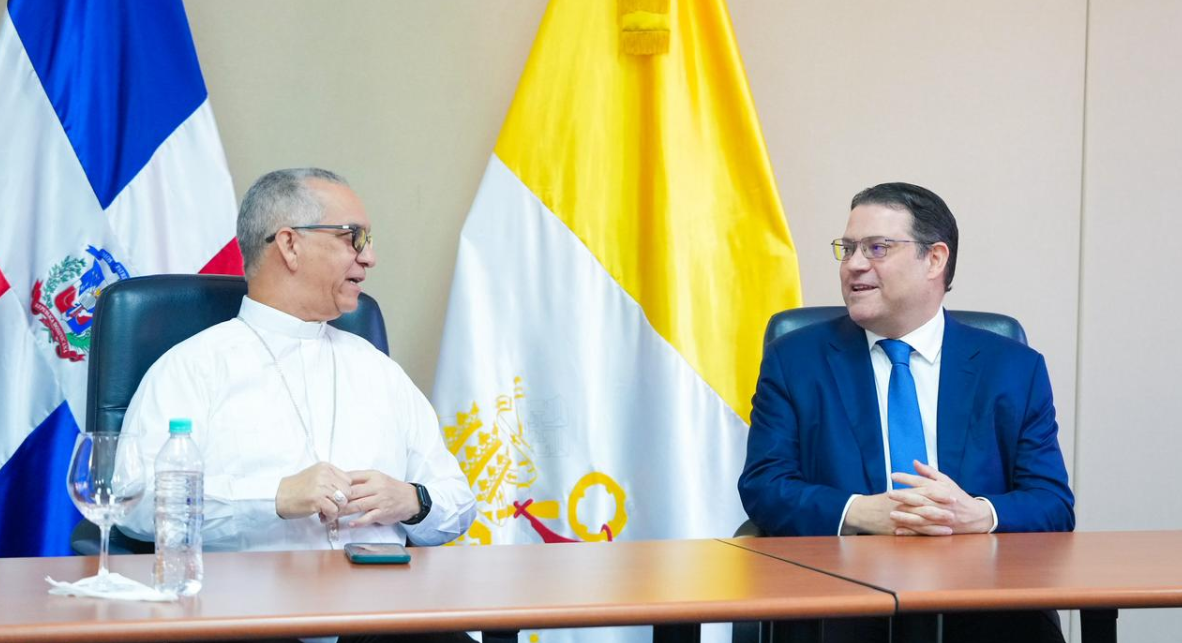
SANTO DOMINGO – Top Dominican government officials have held a high-stakes working meeting with the Permanent Council of the Dominican Episcopate, where they laid out a comprehensive national strategy to mitigate the economic spillover from ongoing global turbulence. The government delegation, led by Industry and Commerce Minister Yayo Sanz Lovatón, included two other senior cabinet members: Administrative Minister of the Presidency Andrés Bautista and Public Administration Minister Sigmund Freund. During the discussions, Lovatón revealed that close to 10 billion Dominican pesos have already been earmarked specifically for fuel subsidies, a targeted intervention designed to shield low-income and vulnerable households from skyrocketing inflation driven by international market shifts.
The cross-sector economic stabilization plan is built around three core pillars that anchor the government’s response: safeguarding the purchasing power of everyday Dominican families, keeping local production lines active and preserving existing employment positions, and offsetting global commodity price increases through targeted state financial support. Beyond the fuel subsidy program already put in motion, the plan includes additional relief measures: subsidies for agricultural fertilizers to keep food production costs manageable, systematic price monitoring across markets to prevent unfair hikes and stabilize costs for essential consumer goods and public transportation services, and a strategic reallocation of existing public budget resources to expand and strengthen social protection programs that serve the most vulnerable segments of the population.
The talks also highlighted the long-standing critical role of the Catholic Church in Dominican civil society as a central social actor, especially during periods of economic uncertainty and public crisis. Government representatives made clear during the meeting that they intend to maintain ongoing, open coordination with a wide range of public and private sectors across the country. This collaborative approach will allow authorities to adjust and adapt their policy measures as evolving global economic conditions continue to shape domestic challenges in the Dominican Republic.