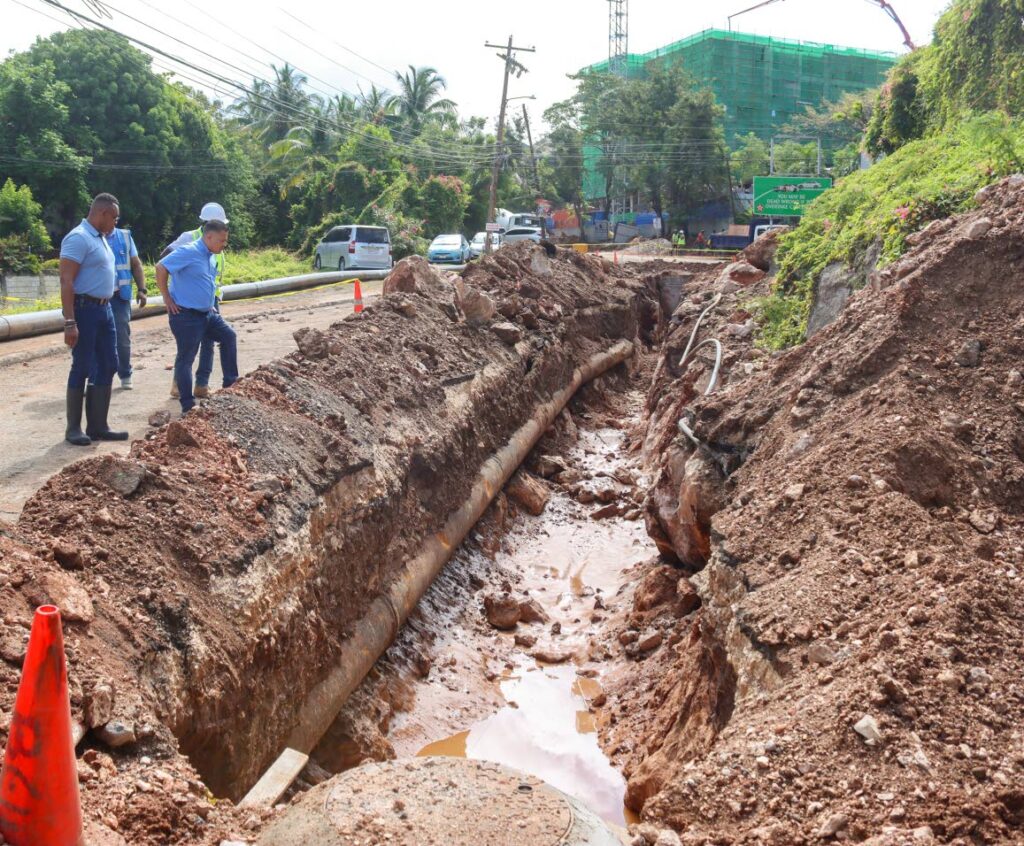
Commuters traveling through the busy Old Hope Road, Munroe Road, and Liguanea corridor in Kingston, Jamaica’s capital, are bracing for at least six more weeks of significant traffic congestion as the National Water Commission (NWC) advances a billion-dollar water and sewerage modernization project across the area. The $1.2 billion initiative, which includes replacing aging potable water mains and laying entirely new sewer infrastructure, is designed to deliver long-term transformative benefits for local residents, according to government officials who are urging the public to bear with short-term inconveniences.
During an on-site press tour of active work zones along Munroe Road and Wellington Drive, Matthew Samuda, Jamaica’s minister with oversight for water, acknowledged that peak-hour commuters already face extended travel delays along the route. However, he pushed back against widespread claims that the NWC project was the sole cause of the severe gridlock that locked down portions of Kingston’s Corporate Area last Friday, which left motorists stuck for hours on trips that typically take minutes between 4 p.m. and 7 p.m.
Samuda attributed last week’s crippling traffic to a confluence of multiple unrelated factors, starting with heavy overnight and daytime rainfall that left three major gullies impassable for many vehicles. He added that two separate ongoing construction projects, one at the base of Red Hills Road and another near Maxfield Avenue, also contributed heavily to the systemic backup. While Samuda confirmed that the NWC’s water infrastructure work does add to regional congestion around Wellington Drive, Munroe Road, and Seymour Avenue, he emphasized it was not the primary driver of Friday’s standstill.
In response to growing public frustration over extended delays, senior government and NWC leaders conducted the weekend site inspection to verify project timelines and confirm that work is advancing to minimize disruptions for both local residents and through commuters. According to Samuda, the overall project remains on track, with all current construction phases on schedule for completion by September 2025, matching the original timeline set when ground broke in May 2025. He acknowledged that some level of travel disruption and local inconvenience will persist through the end of the project timeline, but noted that work has progressed as smoothly as possible given the massive scope of overhauling the area’s entire water and sewage distribution network.
Commuters will see tangible relief from congestion along the Munroe Road corridor as early as the end of May, Samuda confirmed. By that date, the NWC plans to fully repave the Munroe Road work zone, complete pressure testing for new water lines, connect all new infrastructure to the regional network, and shift construction crews to other phases of the project. To speed completion without unnecessarily disturbing nearby residents, the NWC has already shifted non-intrusive work to overnight shifts where possible, and will expand this practice over the next month when conditions allow. Samuda explained that loud, disruptive work like heavy digging and trenching will not be moved to nights out of respect for local residents’ sleep, but the agency will target public holidays for intensive work, when regional traffic volumes are far lower and full road closures can be done with minimal broader disruption.
Kevin Kerr, the NWC’s acting president, backed Samuda’s end-of-May timeline for the Munroe Road segment, calling the deadline entirely achievable. “We have heard the public’s concerns loud and clear, and we are here today to provide clear updates and transparency around this project,” Kerr told reporters during the tour. “What we are doing will drastically improve water and sewer services for our customers, and we recognize that the next six months will bring continued discomfort. We will share regular schedule updates across all our public platforms to keep commuters informed, and we remain committed to completing the Munroe Road segment by the end of May with high-quality road restoration.”
Project engineer Gary Walters acknowledged that construction on Munroe Road has faced unexpected challenges, specifically unusually hard rock formations in the sub-surface that required specialized excavation equipment and slowed progress temporarily. Even with this unforeseen hurdle, Walters confirmed the project remains on schedule and the team will meet the end-of-May deadline for the corridor.
Beyond improved water service, the project carries major long-term environmental and public health benefits, Samuda reiterated, a core priority he highlighted when the initiative launched last year. Outdated, failing sewer systems and widespread unregulated backyard septic pits have contaminated local groundwater supplies, leaving multiple productive wells in the area unusable due to dangerously high nitrate levels. Once complete, the new sewer infrastructure will eliminate this contamination, unlocking these critical local water sources for future use.
The press tour marked the latest government effort to address public concerns over the construction impacts, with leadership emphasizing that short-term disruptions will lay the groundwork for more reliable, sustainable water and sewer services for the Kingston corridor for decades to come.