Micro, small and medium-sized enterprises (MSMEs) across Barbados are set to gain unprecedented access to critical capital, after the Central Bank of Barbados officially launched the Enhanced Credit Guarantee Fund (ECGF) – a risk-sharing initiative designed to break down long-standing barriers to business financing.
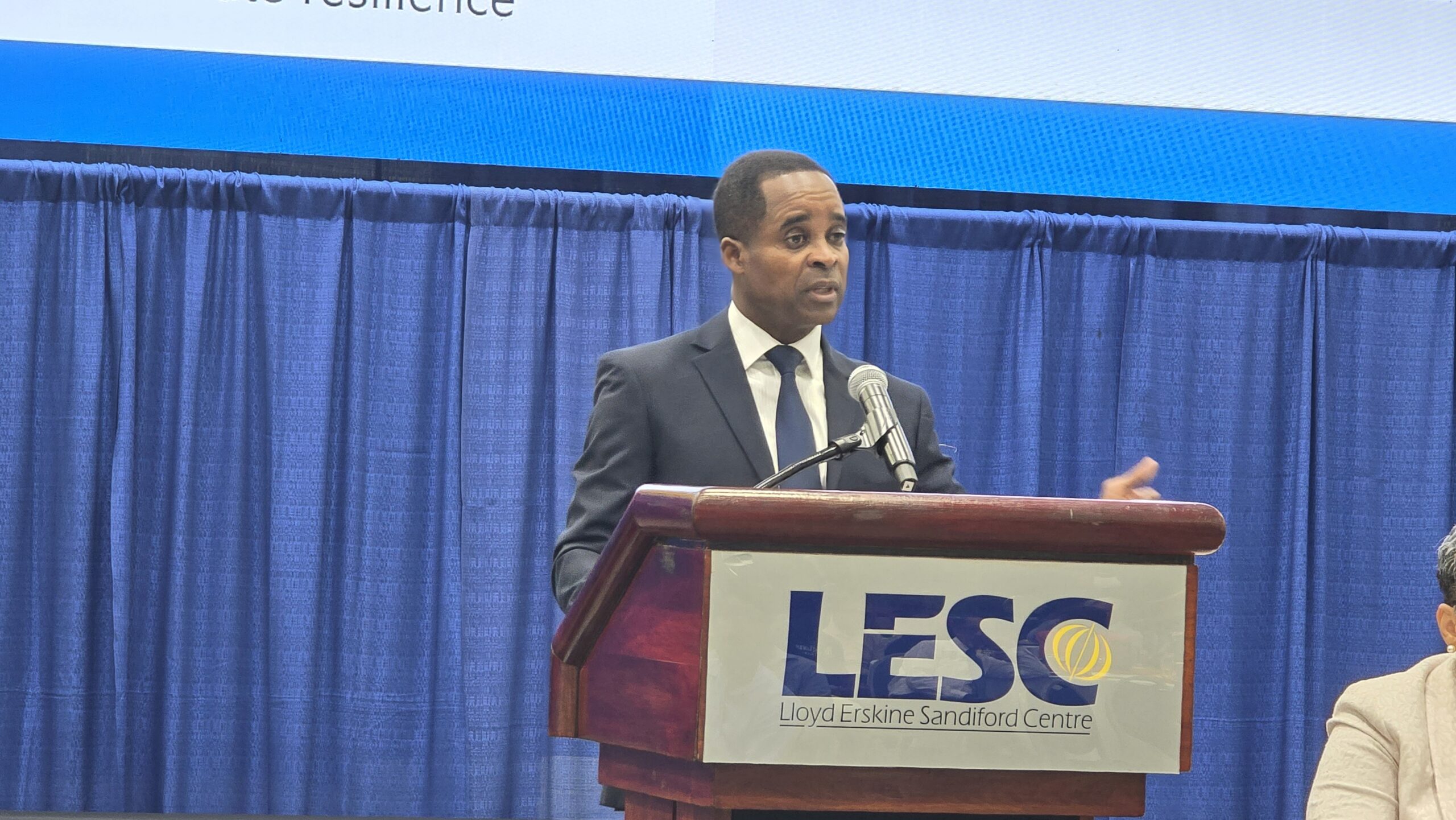
The formal announcement was delivered Wednesday by Darrin Downes, Director of Foreign Exchange and Fund Management at the Central Bank, during the annual State of the Sector conference hosted at the Lloyd Erskine Sandiford Centre. The program directly addresses a well-documented structural gap in Barbados’ small business economy: a 2024 study led by University of the West Indies management scholar Professor Dwayne Devonish found that the majority of local MSMEs are locked out of commercial lending simply because they lack the traditional collateral that banks require to approve loans.
Rather than issuing loans directly to businesses, the ECGF operates as a partial guarantee scheme administered by the Central Bank. Under the model, the fund shares a large portion of the default risk with commercial financial institutions, shifting the sector’s historic approach to small business lending from risk aversion to collaborative risk sharing. This reduction in lender risk is intended to encourage banks to approve credit for viable MSME projects that would otherwise be rejected due to insufficient collateral.
Capital accessed through the ECGF can be allocated to a wide range of productive business uses, including purchasing new equipment, acquiring commercial property, expanding operational infrastructure, and upgrading digital technology. To clear up common public misconceptions about the program, Downes emphasized that the Central Bank does not evaluate loan applications or issue funds directly to borrowers. All application and underwriting processes remain in the hands of commercial banks, where existing customers can discuss their eligibility and loan needs with their account managers.
The program has clear eligibility requirements designed to target formally operating legitimate MSMEs. To qualify, businesses must be incorporated entities holding all required operating licenses and permits to conduct business in Barbados. Currently, around 45 percent of Barbados’ micro-enterprises meet the incorporation requirement, making them immediately eligible to access the program via their financial institution. Additional caps on size limit participation to businesses with no more than $20 million in annual assets and revenue, and fewer than 200 full-time employees.
To streamline processing, the entire application workflow is digital, managed through a custom Central Bank platform called CBD Flows. After a commercial bank collects all required documentation from the applicant, the bank submits the request electronically through the portal. The Central Bank reviews the submission and issues a formal decision to the bank within seven business days, creating a fast turnaround for participating businesses.
Loan sizes under the program start at just $20,000, with total cumulative support per business capped at $6 million. The fund guarantees up to 80 percent of an outstanding loan balance, with a maximum guarantee of $2 million per individual loan. Guarantees have a 10-year tenure, and a 0.7 percent fee is charged on outstanding guaranteed balances, covered by the participating financial institution. Crucially, the program only applies to new loans, not existing outstanding debt.
Rules are in place to preserve the long-term sustainability of the fund. If a borrower defaults on a loan and the bank submits a successful guarantee claim, the borrowing business becomes permanently ineligible for future support through the ECGF. In the event of default, the Central Bank pays out 100 percent of the guaranteed portion of the loan immediately, and the commercial bank retains responsibility for recovering the remaining 20 percent of the outstanding balance through its standard debt recovery processes.
The initiative marks a major policy shift to support Barbados’ MSME sector, which forms the backbone of the local economy, addressing one of the most commonly cited barriers to small business growth and job creation across the country.