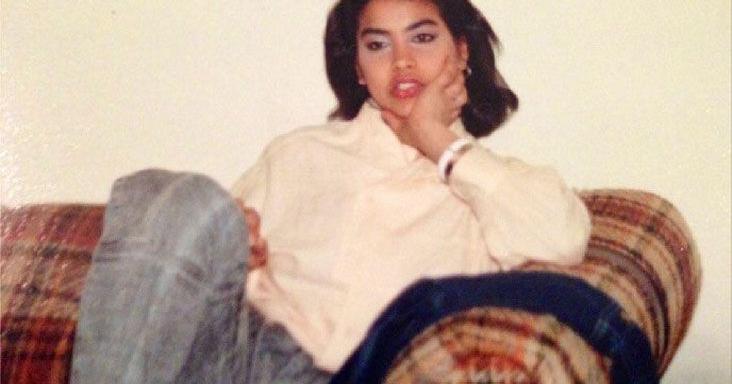
For 31 years, the family of Sandra Rajkumar-Costilla carried unanswered questions about her brutal murder. Now, their long wait for a formal admission of guilt has come to an end, as convicted serial killer Rex Heuermann has pleaded guilty to taking her life, closing one of the longest cold chapters in the Long Island serial killing case.
Sandra’s story is one stitched together by generational trauma and fractured family ties that trace back to a 1975 tragedy in her native Trinidad. It was June of that year when her father Ramkissoon “Ramki” Rajkumar murdered his wife Milly — Sandra’s mother — before taking his own life in a murder-suicide that ripped the young family apart. Now, 49 years later, Ramki’s surviving sister still refers to that day only as “the incident,” the trauma too raw to name outright.
After the 1975 murder-suicide, Sandra, then between 10 and 12 years old, and her younger brother Manny were taken into legal custody by their maternal grandparents, who moved the pair to Arima, Trinidad. Ramki’s sister says the couple blocked the paternal side of the family from seeing the children, despite multiple attempts to visit that even included police escorts. The children were entitled to a monthly government pension as part of their father’s employment benefits, and both Ramki’s sister and Manny believe the grandparents took custody primarily to access these funds, leaving the young orphans with little in the way of emotional care or guidance. “They were the grab bag, the meal ticket,” Manny recalled of their childhood.
Sandra lived with her maternal grandmother for seven years, attending Arima Senior Comprehensive (now renamed Arima North Secondary) while Manny went to Five Rivers Secondary. When Sandra was around 16, she made a surprise visit to her paternal aunt with school friends, a meeting her aunt still remembers decades later. “She was a beautiful girl,” she said. “We cannot turn back time. We always say if and but, but if circumstances were different, if they had lived with us, who knows if they could have had a different outcome. We are sad.”
In 1982, when Sandra was 17 and Manny 14, their ailing maternal grandmother could no longer care for them. Their half-brother Anthony, who served in the U.S. Army, stepped forward to adopt the pair, and the siblings left Trinidad for a new life in the United States. After a short stay with their half-sister Ruth in New York, they moved to Hawaii, where Sandra married and Manny enrolled at Waipahu High School. Sandra’s childhood best friend, Nicky — who asked to remain anonymous — remembers Sandra leaving Trinidad to join her new life, leaving her high school boyfriend behind. Four years later, in 1986, Sandra briefly returned to Trinidad to bring her boyfriend back to the U.S., a reunion Nicky witnessed firsthand before she herself migrated to the U.S. in 1988. The pair stayed close after Nicky’s move, and Nicky says she was the last person to speak to Sandra before she disappeared.
After moving back to the U.S. with her boyfriend, Sandra became pregnant, and the young couple stayed briefly with Manny (who had moved to New York after stints in Hawaii and North Carolina) before finding their own place. Life in New York was unforgiving for the young family; they struggled financially, and Manny often helped cover expenses. When Sandra’s relationship with her boyfriend collapsed, Manny says his sister’s mental health declined rapidly. “In my opinion, he destroyed my sister mentally. When he came into the picture, everything changed. The relationship wasn’t what she expected and she was disappointed. She started drinking,” Manny said. “I believe she was in a bar somewhere drinking. Absolutely that’s how it happened” when she encountered Heuermann.
Manny has pushed back against long-standing assumptions that his sister worked as a sex worker, matching the profile of Heuermann’s other known victims. He says Sandra worked payroll and bookkeeping roles through temp agencies, meeting wealthy business leaders in Manhattan through her work, and was never involved in sex work. He described his sister as trusting and naive, unable to spot malicious intent in others, saying “it’s probably just by chance this guy happened by her in a bar, picked her up and perhaps said, ‘I have a house in Long Island; let’s take a drive; there’s a beach there…’ and she fell for it and this happened.”
In the pre-cell phone era of the early 1990s, Sandra would occasionally disappear for a day at a time, always calling Manny from a public payphone to let him know where she was. That changed on a cold November day in 1993, when 28-year-old Sandra left her 2-year-old son with a neighbor and never returned. That same day, Nicky — by then living in Massachusetts — received a call from Sandra at a payphone. Sandra told her her relationship was falling apart and she was struggling, and Nicky immediately invited her to come to Massachusetts to start over, offering to help her get a bus ticket. Sandra agreed to come the next morning, but she never called to say she had arrived at the bus station. “I waited and waited for her to call and say she was at the bus stop so I could go pick her up. She never called,” Nicky said.
After several days without contact, Manny and his family reported Sandra missing. A week after Nicky’s final conversation with Sandra, police found her body in the North Sea area of Long Island. DNA from hair found on her body matched Heuermann, an architect who had been linked to a string of murders of women along Long Island’s Gilgo Beach starting in the 1990s. Heuermann was arrested in 2023, and officially charged with Sandra’s murder in 2024. Last week, he pleaded guilty to Sandra’s murder, admitting he had strangled her to death. He is set to be formally sentenced on June 17.
Today, many members of Sandra’s family are unable or unwilling to speak out or attend the sentencing. Her half-sister Ruth, who lives in Florida, has not responded to requests for comment. Half-brother Anthony was arrested on larceny charges in North Carolina in 2022. Manny is currently awaiting trial in Trinidad on undisclosed charges. Only Nicky says she plans to be in court for Sandra.
For Nicky and Manny, the case still leaves open one painful loose end: the whereabouts of Sandra’s son, who would now be 35 years old. After Sandra’s murder, her son was briefly cared for by Ruth before his father took custody, and he has not been in contact with Sandra’s remaining loved ones. “She asked me to promise that when the time is right, I will let her son know how much she loved him. I’ve been looking for him for years to deliver that message,” Nicky said. Reflecting on the life Sandra could have had, Nicky added: “Sandra was about to start a whole new life. I told her come, I don’t care what you have done in the past, whatever it is we can fix it.”