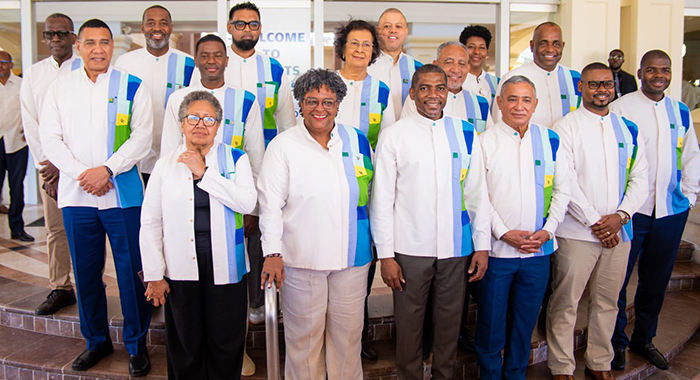
BRIDGETOWN, BARBADOS – A growing public dispute over the reappointment of CARICOM’s top administrative leader has pushed internal governance tensions within the 15-nation Caribbean integration bloc into the open, with CARICOM Chairman and St. Kitts and Nevis Prime Minister Terrance Drew pushing back directly against claims from Trinidad and Tobago that it was deliberately locked out of the key decision-making meeting.
In a detailed public statement released late Saturday, Drew clarified the timeline of events surrounding Carla Barnett’s reappointment as CARICOM Secretary-General for a second five-year term, a decision reached during a leadership retreat held on February 26 alongside the bloc’s 50th Regular Conference of Heads of Government in Basseterre. To back his account, Drew also published 11 pages of official correspondence exchanged between the bloc secretariat and all member states in the lead-up to the February 24-27 summit.
Drew’s account contradicts Trinidad and Tobago Prime Minister Kamla Persad-Bissessar’s assertion that the country was uninvited to the retreat, where the reappointment vote took place. According to Drew, Persad-Bissessar departed the summit on the evening of February 25, a full day before the scheduled retreat. Later that night, at 10:33 p.m., Trinidad and Tobago’s Foreign and CARICOM Affairs Minister Sean Sobers contacted then-Secretary-General Barnett via WhatsApp to ask if he could attend the retreat in his prime minister’s absence. Drew confirmed Sobers was told he was welcome to attend, noting that other departing heads of government had previously been allowed to send their foreign ministers as representatives.
In response, Sobers told officials he was experiencing severe seasickness and likely could not attend the boat-based retreat. Just under two hours later, at 12:37 a.m. on February 26, Barnett replied, confirming that the CARICOM chairman would fully understand if Sobers opted not to attend due to illness. Drew emphasized that Sobers never followed up to confirm he was able and willing to participate in the retreat after that exchange.
Trinidad and Tobago’s leadership has publicly decried the reappointment process as “surreptitious and odious”, with Persad-Bissessar repeating calls for full transparency in a recent Facebook post, arguing the flawed process could have long-term negative impacts on Trinidad and Tobago’s interests. Earlier this week, Sobers announced the country would demand a full CARICOM meeting to challenge the reappointment, and even floated the possibility of holding new elections for the secretary-general post. When regional leaders held a virtual follow-up meeting on the dispute this Friday, neither Persad-Bissessar nor Sobers attended.
Sobers has stressed that Trinidad and Tobago is not seeking to leave the 51-year-old integration bloc, but has deep concerns about CARICOM’s operational inefficiency and lack of transparency. He also confirmed the country would re-evaluate its financial contribution to the grouping in light of the dispute.
Drew countered that all member states, including Trinidad and Tobago, received full official notification of all summit events, including the retreat’s date, location, and planned agenda items, well in advance of the conference. All member states formally acknowledged receipt of this correspondence, he added.
During the retreat, Drew explained, leaders took up the reappointment under the agenda item focused on CARICOM governance and financing. The decision to reappoint Barnett followed the procedures laid out in Article 24 of the Revised Treaty of Chaguaramas, CARICOM’s founding governing document. Barnett, who first took office as the bloc’s eighth secretary-general in August 2021 after a unanimous appointment, was not present for the discussion or vote on her reappointment, Drew noted.
Leaders agreed to delay the public announcement of the decision as a courtesy to allow absent leaders to be informed first, but multiple attempts to contact Persad-Bissessar via email and phone were unsuccessful, Drew said. After failed attempts to reach the prime minister, the chairman was only able to connect with Sobers.
In addition to the reappointment, Drew confirmed that regional leaders used the retreat to advance other key governance work: they established a new sub-committee of heads from Barbados, Dominica, Guyana, and Jamaica to conduct a full review of governance and financing for all CARICOM institutions, and agreed to issue an official statement on the bloc’s recent meeting with U.S. Secretary of State Marco Rubio.
As the dispute unfolds, two member states – Guyana and Belize – have already issued public statements confirming their support for the reappointment process. Barnett, who made history as the first woman to hold the CARICOM secretary-general post, will now serve her second five-year term in the role.
Drew closed his statement by noting that the release of internal correspondence was aligned with agreements reached during Friday’s leaders’ meeting, and expressed hope that the bloc could return to using internal dispute resolution mechanisms to address future tensions. “Lest unfortunate and erroneous statements diminish the progress towards deepening the integration process for the benefit of the people of the Region,” he added.