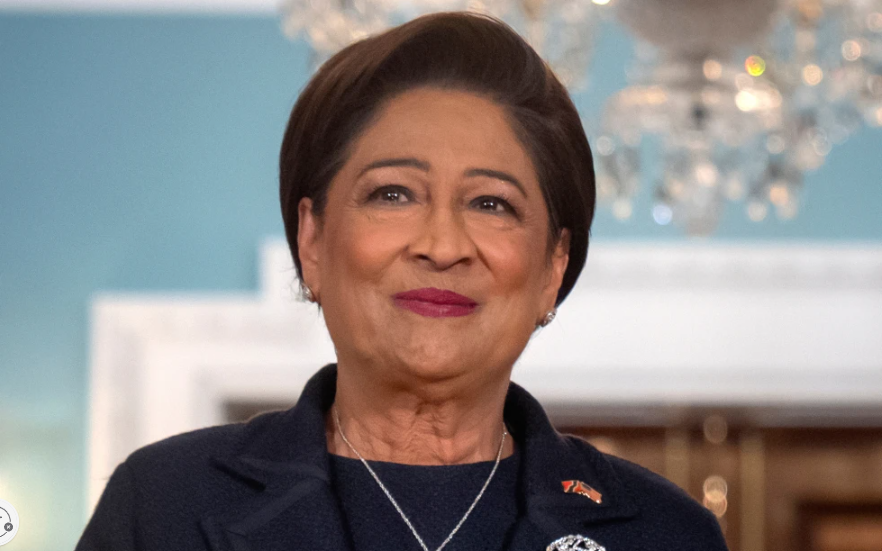
Diplomatic rifts within the 15-member Caribbean Community (CARICOM) have exploded into open conflict, as a long-simmering disagreement between Trinidad and Tobago and its regional neighbors over United States policy toward Venezuela and international drug trafficking erupted into a full verbal confrontation on Friday. At the center of the new clash is Trinidad Prime Minister Kamla Persad-Bissessar’s demand that CARICOM Secretary-General Carla Barnett leave her post when her five-year term expires this coming August.
Regional friction first flared late last year, when a majority of CARICOM member states openly condemned growing United States military activity in the South Caribbean. Tensions rose further as Washington deployed an atypically large American military contingent near Venezuela’s borders, as part of a 2025 operation aimed at capturing then-Venezuelan President Nicolás Maduro.
For years, CARICOM member states have collectively endorsed the vision of the Caribbean as an official “zone of peace,” a principle designed to keep major power rivalries out of the regional bloc. But since winning Trinidad’s general election one year ago, Persad-Bissessar has rejected that framing as nothing more than “zone of peace fakery.” She has openly aligned her administration with U.S. military actions in the region and thrown her full support behind the Trump administration’s broader campaign targeting transnational drug trafficking and organized crime.
The prime minister has waged a months-long public campaign to oust Barnett ahead of any potential reappointment vote, leaning on Trinidad’s outsized financial contribution to the bloc to back her demands. Trinidad covers roughly 22 percent of CARICOM’s total annual operating budget, a sum equal to around $20 million, a point Persad-Bissessar has repeatedly highlighted to regional leaders to press for Barnett’s removal.
Persad-Bissessar has made no secret of her deep frustration with the bloc’s current direction, stating publicly that she cannot understand why most regional leaders have aligned with Venezuela and Maduro instead of backing the U.S. position. In a statement released in late 2025, as the U.S. finalized preparations for its anti-Maduro military operation and regional governments raised alarms about the legality of fatal U.S. boat strikes in Caribbean waters, she doubled down: “Caricom has chosen to support the Maduro narco-government through the fake zone of peace narrative.”
Persad-Bissessar’s relentless pressure ultimately forced CARICOM leadership to convene an emergency closed-door meeting on Friday to address the question of Barnett’s reappointment, marking one of the deepest crises the regional trade bloc has faced in recent years.