Dawn broke over Kingston on an extraordinary Sunday, the air already thrumming with unspoken excitement for the climax of Jamaica’s 2026 carnival season: the iconic Road March. By 8 a.m., anticipation hung thick over the capital, and when the first waves of costumed revellers streamed out of the National Arena, the entire city softened into the irresistible, syncopated pulse of soca music.
Giant sound trucks roared to life, their DJs steering the flow of the procession through city streets, while elaborately dressed masqueraders stepped out in feathers, hand-sewn gems, and glittering sequins, all united by one goal: to fully embrace the tradition of ‘playing mas’ in the annual street celebration. What unfolded that day was far more than a parade— it was a moving reminder of the unbreakable bonds that outdistance even oceans and unforeseen circumstance.
Kingston quickly morphed into a rolling, vibrant canvas, awash in glowing neon hues, shimmering costume beads, and a sea of bodies moving as one to the rhythm. Local Yardmas organizers set an unapologetically high-energy tone from the first step, turning every block into an open-air party attended by hundreds of celebrants. But tucked into that joyful crowd was one quiet story that stopped passersby in their tracks.
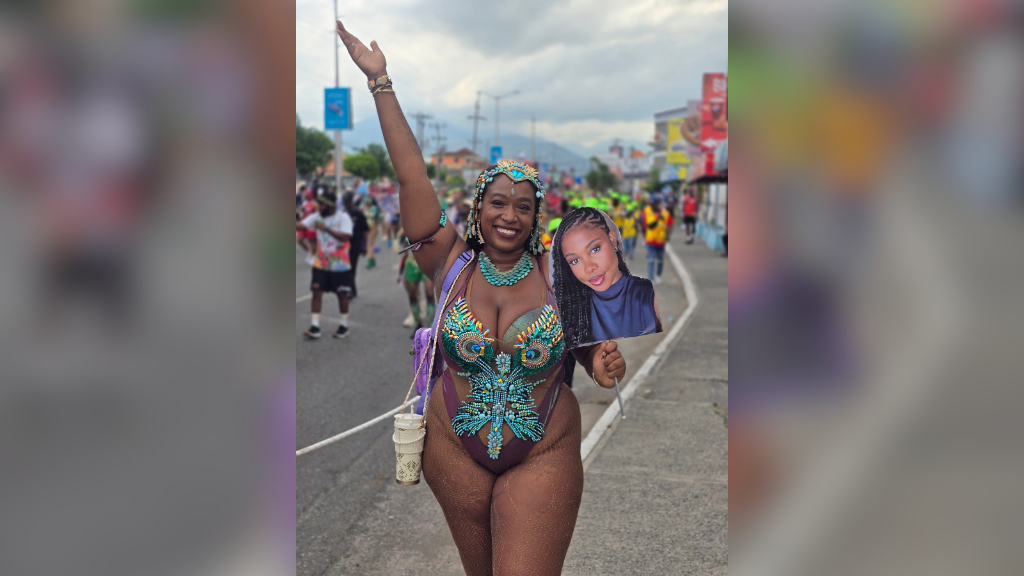
Kia-Simone Bell matched every beat, every blast of the horn, every call-and-response chant as she steadily made her way along the 10-mile procession route. What set her apart from the crowd wasn’t her costume, however—it was the small cardboard cutout she held close: a photo of her best friend, Melissa. The pair had planned every detail of their Road March for months: coordinating outfits, pre-planned meeting spots, and even a list of favorite tracks they planned to dance to as the sound trucks rolled past. But global events upended those plans entirely. Melissa, who now lives and works in Dubai, was stranded by travel disruptions tied to rising tensions linked to the Iran conflict, and couldn’t secure a flight home for carnival.
For many, dashed plans would have ended the story there. But for Kia, the absence of her best friend didn’t mean she couldn’t be part of the day. If Melissa couldn’t come to Road March, Kia decided, she would bring Melissa to Road March—turning empty space into shared presence. She carried the cutout along every step of the route, dancing every move for both of them. She lifted the image high above the crowd at multiple points, chanting “She’s still here” to the beat, and the gesture drew warm smiles from fellow strangers-turned-revellers all along the way.
In the middle of all the revelry and release that defines carnival, this small, intentional gesture cut through the noise to reveal the heart of the centuries-old celebration. Carnival has never been just about sequined costumes and infectious music—it has always been rooted in human connection. As the trucks blared and the crowd surged toward the finish line, Kia and Melissa—one present in body, one in spirit—became a living reminder of why millions of people around the world return to carnival year after year. We don’t just hit the road to escape the weight of daily life; we come to feel connection, to celebrate life in all its messy, beautiful fullness, even when that life brings distance, longing, and unforeseen sacrifice.