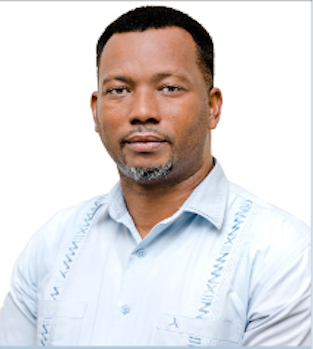
Grenada’s national governing body for soccer, the Grenada Football Association (GFA), has scheduled its upcoming presidential election for May 9, 2026. Three candidates will contest the leadership position: incumbent Marlon Glean, challenger Roger Duncan, a veteran banking professional, and third contender Leon Radix, an academic and long-time football administrator who currently serves as Course Director of the Marine and Wildlife Conservation Department at St George’s University’s School of Arts and Sciences.
Radix has already formally introduced his full proposed executive slate for the GFA, naming Allan James, Lincoln Elcock, Amanda Scott, Clinton Hamilton, Geverson David, and Denroy Lewis as the team that would join him in leadership should he secure victory at the polls. In outlining his credentials for the role, Radix emphasized his deep, multi-decade roots in football governance across all levels of the sport in Grenada. Beyond his current academic and administrative career, he has previously managed both football and cricket teams for St David’s, held leadership roles with the St David’s Football Club and the St David’s Football League, and advocated for stronger institutional structures and greater accountability in Grenadian football for years. “I’m an educator and administrator with over 20 years of experience in leadership and governance,” Radix noted. “In football, I’ve worked at the club and national level advocating for better structure and accountability. I bring systems thinking and proven leadership to football development.”
At the core of Radix’s campaign platform is a commitment to building a organized, inclusive, and sustainable football ecosystem across the island, replacing the current instability and inconsistency that he says has held the sport back. His vision calls for a clear, connected development pipeline that supports players from grassroots entry-level play all the way to elite national team competition, paired with robust institutional governance, competitive local leagues, and long-term stable financing. “Structure and sustainability must replace uncertainty and inconsistency,” he said.
If elected, Radix has laid out three clear priorities for his first 100 days in office to reset the GFA’s operations. First, his administration would launch full financial, technical, and administrative audits of the association to map existing gaps and challenges. Second, it would host widespread engagement sessions with football stakeholders across every region of Grenada to center community input in future planning. Third, it would roll out a standardized national football calendar and a technical development plan aligned with global FIFA and CONCACAF standards. “The priority is restoring order and building confidence in the system,” Radix explained.
To address longstanding divisions within Grenada’s football community, Radix proposes expanding inclusive decision-making through the creation of a new Football Advisory Council, which would reserve formal seats for representatives from clubs, players, referees, and corporate sponsors to ensure all groups have a voice in shaping the sport’s future. “Inclusion builds trust, and trust builds strong institutions,” he said.
Grassroots development is another central pillar of Radix’s agenda, with two key focus areas: growing investment in youth player development and expanding access and opportunity for women in football. He plans to upgrade youth academies, increase access to certified professional coaching, and build clear pathways that connect school football programs to club development systems. For women’s football, he pledged consistent sustained investment, organized formal leagues, and equal opportunity for advancement. “Development must be inclusive or it will fail,” he stressed.
Radix also committed to decentralizing football development to ensure talent in rural communities is not overlooked, saying he will establish regional zonal development hubs, expand national scouting networks, and provide greater support for local community-level competitions. “Talent is everywhere — opportunity must be too,” he noted.
To scale the GFA’s capacity and secure additional resources, Radix says he will prioritize expanding strategic partnerships with regional and international football governing bodies, the local private sector, and the Grenadian national government. “Partnerships are critical to scaling resources and expertise,” he explained.
For Grenada’s national teams, Radix argues that improved competitive performance will come from intentional structural reform, not luck. He plans to implement a standardized national talent identification system, reach out to engage Grenadian football talent living in the diaspora, and integrate modern coaching practices, sports science, and performance analytics into national team programming. “Performance is the outcome of good systems — not chance,” he said.
Radix also made full institutional transparency a non-negotiable part of his platform, promising to publish annual audited financial statements, enforce strict governance policies, and maintain open, consistent communication with all football stakeholders. “Transparency is not optional; it is the foundation of trust,” he said.
When asked about the most pressing challenges facing Grenadian football today, Radix acknowledged longstanding issues including limited funding gaps, inconsistent institutional systems, and insufficient infrastructure across much of the island. Even so, he expressed confidence that these problems can be resolved with intentional leadership and long-term planning. “But with proper leadership and planning, these are solvable problems,” he said.
Closing his campaign outline, Radix emphasized that Grenada’s football community holds tremendous untapped potential, and that with the right leadership, structural reform, and accountability, the sport can be transformed to create life-changing opportunities for young Grenadians and benefit the entire nation. “Football in Grenada has tremendous potential. With the right leadership, structure, and accountability, we can transform the game and create opportunities for our youth and our nation. I’m ready to lead that transformation.”
As candidates prepare for the vote, the 2026 GFA presidential election is expected to draw close attention from across Grenada’s football community, as stakeholders evaluate three competing visions for the future of the sport on the island.