Against a backdrop of escalating global geopolitical volatility and widespread market disruption, senior agricultural ministers and policy leaders from across the Americas have united to issue a urgent call for enhanced cross-regional collaboration. The goal of this coordinated push is to shore up long-unaddressed vulnerabilities in hemispheric agrifood systems, buffer against unexpected external shocks, and unlock untapped emerging development opportunities, according to an official press release from the Inter-American Institute for Cooperation on Agriculture (IICA), which convened the high-level virtual gathering.
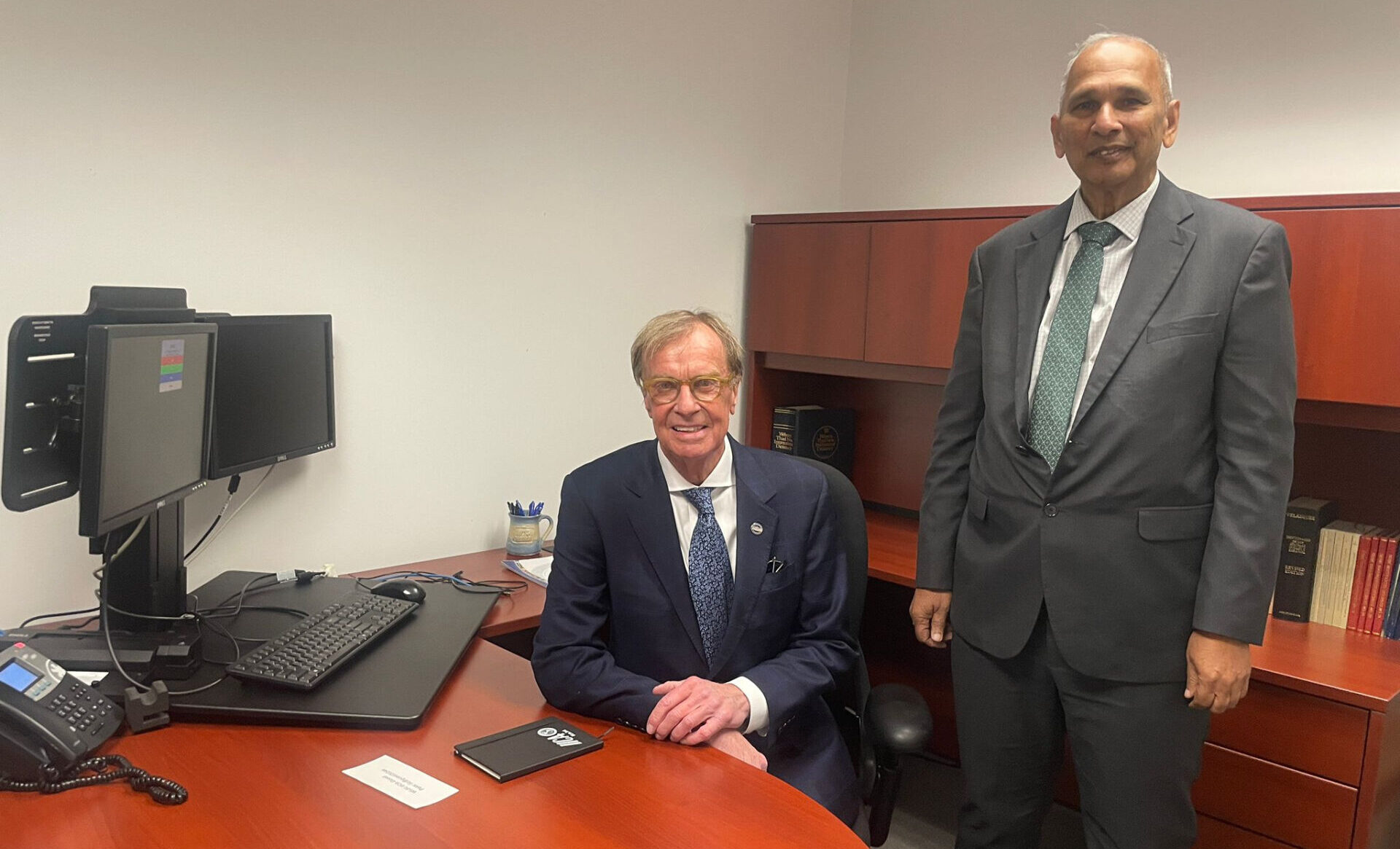
The summit, held during IICA Director General Muhammad Ibrahim’s official working visit to Washington, D.C., brought together a diverse cohort of stakeholders: national government agricultural delegations, U.S. federal officials, global multilateral funding bodies, private sector agricultural leaders, and policy research institutions. During his visit, Ibrahim has been actively engaging with stakeholders to co-design a shared regional agenda to strengthen hemispheric agricultural resilience.
Central to the meeting’s discussions was a growing consensus that the current threats to food security across the region stem from deep-seated structural weaknesses, not temporary, passing market disruptions. A core priority identified by attendees is cutting over-reliance on imported agricultural inputs, particularly nitrogen-based fertilizers, nearly 80% of which are sourced from the Middle East— a supply chain that has been thrown into severe uncertainty by ongoing regional geopolitical tensions. Participants agreed that the solution lies in expanding targeted regional investment in domestic production of organic fertilizers and bio-based agricultural inputs, paired with expanded cross-border technical cooperation to advance inclusive, sustainable agricultural development across the hemisphere.
Opening the summit, Kip Tom, Vice Chair of Rural Policy at the America First Policy Institute (AFPI), emphasized the outsized global role of the Western Hemisphere’s agricultural sector. “The Western Hemisphere is a leader in global agriculture and feeds billions of people around the world each day. Today, despite global uncertainty, we must serve as a model of strength and continental cooperation,” Tom stated. He also drew a clear connection between global food security and national stability, calling for deeper regional trade integration and market expansion, noting that IICA’s coordinating role “is more important today than ever before, so that the Americas may grow even stronger.”
Director General Ibrahim expanded on the urgency of addressing fertilizer dependence, noting that small-scale agricultural producers, who form the backbone of food production in many regional economies, bear the brunt of supply chain disruptions. “We must reduce our dependence on fertilizer imports through alternatives that enable us to have a robust production chain. The issue of nitrogen-based fertilizers is particularly critical, given that nearly 80% of them come from the Middle East. Today, small-scale producers are facing risks and uncertainty for this very reason,” he said. Ibrahim added that IICA is uniquely positioned to drive progress through targeted investment in technological innovation, including the development of climate-resilient, high-yield improved seed varieties tailored to regional growing conditions.
Agricultural leaders from across the hemispheric shared national perspectives and ongoing domestic efforts to build resilience, highlighting shared challenges and coordinated solutions. Zulfikar Mustapha, representing Guyana, noted that small Caribbean island nations face disproportionate exposure to global supply chain shocks tied to Middle Eastern tensions. He outlined Guyana’s ongoing initiative to build a regional fertilizer plant powered by domestic natural gas reserves to supply Caribbean nations, paired with major investments in digital smart agriculture technologies.
Viviana Ruiz, another participating leader, underscored the deep interconnectedness of modern energy, fertilizer, and food markets. “The production costs of strategic crops are leading to a decrease in the use of inputs. However, the situation also affords an opportunity to transition towards greater sustainability and low-carbon production. Now more than ever, the region must act in unison and adopt a collective commitment,” she said.
Mexican agricultural representative Santiago Ruy Sanchez de Orellana shared that Mexico currently imports 75% of its total fertilizer demand, and is moving rapidly to expand domestic production through state-owned energy giant PEMEX, while rolling out a national policy to support adoption of bioinputs. “Through the state-owned oil company PEMEX, we are expanding local fertilizer production. Mexico is also promoting a bioinputs policy,” he said, adding that “hemispheric cooperation makes the pursuit of food sovereignty viable while respecting each country’s priorities. Food sovereignty is not in opposition to trade and international cooperation; on the contrary, it needs it.”
Argentine representative Agustín Tejeda warned against the trend of restrictive protectionist trade measures in response to global uncertainty, arguing that inward-looking policies would only exacerbate regional vulnerabilities. “The response from countries in our region should not be further withdrawal, but rather greater cooperation, greater efficiency, more trade, and more transparent information,” he said.
Additional participants included delegates from leading global development institutions including the World Bank and the International Fund for Agricultural Development, alongside private sector agricultural leaders. According to the IICA press release, the group collectively “emphasized the responsibilities of the Americas in times of pressure on global food demand and expressed the need to protect small-scale producers,” who are most vulnerable to market volatility and input price shocks.