Mainstream coverage of the ongoing crisis in the Middle East often simplifies the chaos into a familiar, neat narrative: Israel, backed by the United States, is locked in a single open war against regional adversaries led by Iran and its allied armed factions. This framing creates a false sense of clarity, but the reality is far more complex than the superficial story many outlets present. What is often described as one unified conflict is actually a tangled convergence of multiple separate disputes, each with its own distinct objectives, overlapping interests, long-held historical grudges, and competing strategic agendas that interact and intensify one another.
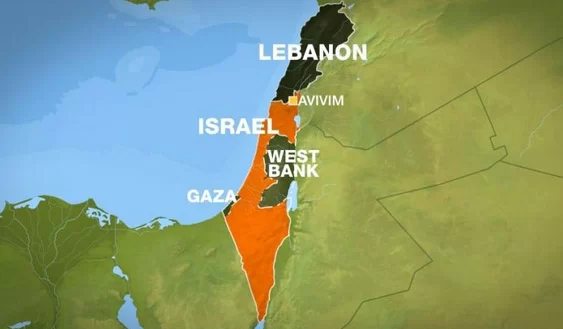
On the surface, the most visible fronts are clear: Israel fights Hamas in Gaza and exchanges fire with Hezbollah along its northern border with Lebanon. Daily headlines bring images of airstrikes, rocket barrages, widespread destruction, and Israeli officials framing the campaign as a necessary fight for national survival. But beneath this visible frontline fighting lies a deeper layer of geopolitical ambition and risk calculation that rarely makes front-page news.
For Israel, the conflict extends far beyond neutralizing immediate threats from Hamas and Hezbollah. The core strategic priority driving many of its military actions, particularly sustained airstrikes targeting Hezbollah assets in Lebanon, is curbing the expanding regional influence of Iran. From Israel’s strategic perspective, Iran’s growing power is not an abstract geopolitical concern—it is viewed as an existential threat to the Jewish state, established as a sovereign nation only in 1948. In Israeli policy circles, this is not framed as an offensive war of expansion, but a defensive struggle necessary to guarantee the country’s long-term survival.
Tensions along the Israel-Lebanon border have escalated dramatically since the outbreak of the Gaza war following Hamas’ October 7, 2023 attack on Israeli territory. Hezbollah, Iran’s most powerful regional proxy, has launched near-daily rocket and drone strikes on northern Israel, and Israel has responded with waves of airstrikes targeting Hezbollah military infrastructure across southern Lebanon. For Israel, Hezbollah represents one of the most pressing security threats in the region: the group maintains an enormous arsenal of projectiles and receives extensive funding, training, and political backing from Iran, Israel’s long-standing core adversary. By targeting Hezbollah weapons depots, launch sites, and command centers, Israeli military leaders aim to erode the group’s offensive capacity and deter future large-scale attacks.
The United States publicly presents itself as a fully committed ally standing shoulder-to-shoulder with Israel, but Washington’s strategic goals in the crisis diverge significantly from Jerusalem’s. Where Israel frames the conflict as an existential fight for its immediate security, the U.S. is primarily maneuvering to protect and extend its own regional influence and control. For American policymakers, this is not an existential war, but a carefully calibrated geopolitical file. Washington’s core priorities are maintaining a facade of regional stability, protecting its network of allied partners, and preserving decades of American geopolitical dominance in the Middle East. While the U.S. shares Israel’s goal of limiting Iran’s regional expansion, it has no interest in triggering a full-scale regional war that could draw American troops into direct combat. As a result, U.S. engagement is calculated, often restrained, and consistently focused on managing escalation rather than pursuing all-out conflict. The U.S.-Israel alliance does not equate to identical, aligned interests in every part of the crisis.
Iran, meanwhile, is not a direct belligerent in open fighting, but it is far from a passive bystander. Tehran avoids open, conventional war that would leave it vulnerable to direct American and Israeli retaliation, instead exercises influence through a web of regional proxies and allied armed groups, maintaining constant pressure on Israel and the U.S. without fully committing its own military forces to open conflict. Iran’s strategy of indirect confrontation is deliberately designed to operate outside the boundaries of traditional warfare, making it extremely difficult for its adversaries to counter fully. Flexible, persistent, and focused on long-term gains rather than quick battlefield victories, Iran is playing a long game that pays dividends even as its proxies bear the brunt of fighting.
A common and misleading misconception about the conflict frames the Israeli-Palestinian confrontation as an ancient, inevitable clash rooted in centuries of religious and ethnic tension. This narrative is convenient but deeply misleading. It frames the current violence as an unavoidable outcome of ancient hatreds, erasing the reality that today’s crisis is the direct product of modern political decisions and territorial disputes. While historical context plays a major role in shaping current tensions, it cannot fully explain or justify the current state of open conflict. What is clear is that every actor involved frames its own actions as a fight for survival, shaped by decades of accumulated grievance and fear.
The explosions, rubble, and civilian casualties that fill daily news coverage are only the visible symptom of this far larger, more complex struggle. They are the consequences of overlapping disputes, not the core drivers of the conflict itself. This is a multifaceted battle for influence, security, and regional power, where even formal allies hold competing objectives and adversaries often operate in the shadows rather than openly. The central question that matters most is not who is fighting, but what they are fighting for. Until that question is openly and honestly addressed, global audiences will continue to accept a simplified, misleading narrative that ignores the underlying dynamics shaping the crisis—dynamics that play out almost entirely out of public view. Perhaps the biggest problem is not that too little of the conflict is visible to the public, but that most audiences are content to accept the superficial story that is presented to them.