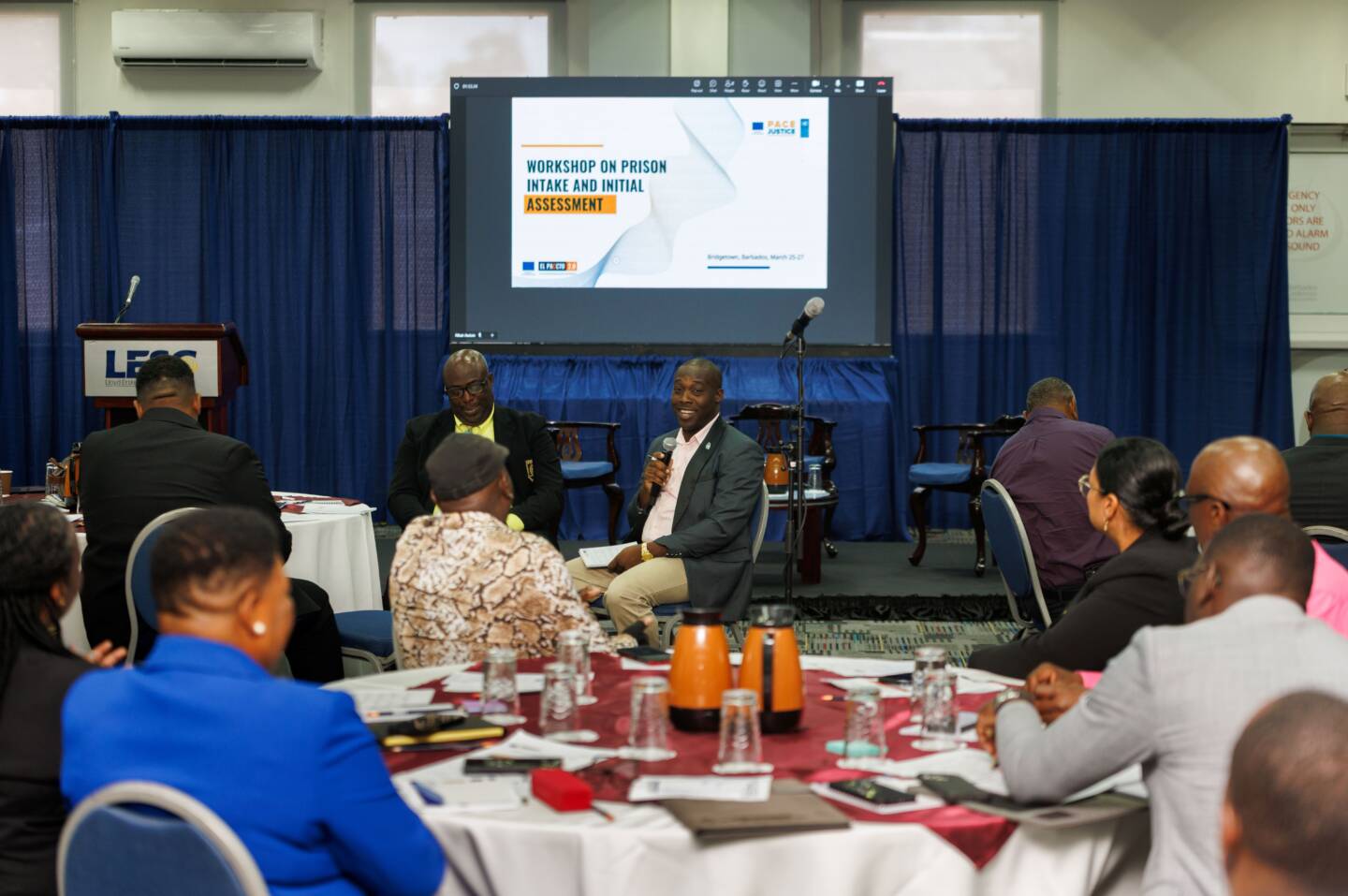
Thirteen Caribbean nations have united to advance correctional system reform, wrapping up a three-day intensive training workshop in Bridgetown, Barbados, focused on overhauling prison intake and assessment protocols to boost rehabilitation outcomes and reduce recidivism. Held from March 25 to 27 at the Lloyd Erskine Sandiford Centre, the workshop brought together prison and probation leaders from across the region, brought into being through a collaborative partnership between the United Nations Development Programme (UNDP) Partnership of the Caribbean and Europe on Justice (PACE Justice) initiative and EL PACCTO 2.0, the European Union’s flagship justice and security cooperation program.
Participants represented Antigua and Barbuda, Barbados, Belize, Dominica, Guyana, St Kitts and Nevis, St Lucia, Trinidad and Tobago, The Bahamas, Grenada, St Vincent and the Grenadines, Jamaica and Suriname, all gathering to address longstanding gaps in the first critical step of the custodial process: intake assessment. Experts leading the workshop emphasized that rigorous, well-structured intake procedures lay the foundation for effective correctional policy from an individual’s first day in custody. When implemented correctly, these processes allow authorities to map an individual’s unique risks and needs early, streamline administrative decision-making around detention or community-based alternatives, cut costly bureaucratic delays, and set the stage for targeted rehabilitation work that supports long-term reintegration. Functional intake systems also address two of the Caribbean’s most pressing correctional challenges: prison overcrowding and unnecessary pre-trial detention.
Vanessa Untiedt, PACE Justice Project Specialist with the UNDP, framed the work as a fundamental step toward breaking intergenerational cycles of crime. “A proper intake assessment process can significantly improve a prisoner’s experience within the facility and, ultimately, their reintegration into society. In short, it can help break the cycle of crime,” Untiedt said.
Angela Dixon, Director of the Barbados Probation Service and President of the Caribbean Association of Probation and Parole, centered the conversation on the underrecognized role of probation services in building a holistic, person-centered intake system. Dixon noted that probation officers bring unique, irreplaceable insight to the assessment process, thanks to their ongoing connections to offenders and communities. “Probation’s defining value is continuity of knowledge about the individual. No other service carries the same depth of pre-existing relationship, community intelligence, and risk history,” Dixon explained.
Luuk Bruijn, EL PACCTO 2.0’s Field Officer for the Caribbean, highlighted that cross-regional collaboration is key to building correctional systems that work for all Caribbean contexts. Bruijn explained that a shared regional framework does not erase local needs; rather, it creates a consistent foundation rooted in regional best practice that can be adapted to local contexts. “The development of a standard procedure for intake assessment in prisons allows for local adaptations to a regionally agreed framework, taking into account best practices and expertise from across the Caribbean, ultimately strengthening the overall management of penitentiary systems,” Bruijn said.
By the close of the three-day workshop, participants reached a landmark agreement: a unified regional framework for prison intake and assessment that preserves flexibility for country-specific implementation. The agreement marks a major milestone toward establishing more consistent, fair, and effective correctional practices across the entire Caribbean region.
Moving forward, the partnership will turn its attention to translating the high-level framework into actionable Standard Operating Procedures (SOPs) that frontline prison and probation staff can implement in daily work. Planners are also exploring development of a lightweight digital tool to streamline intake workflows, improve standardized record-keeping, and strengthen cross-agency information sharing. A core priority of the next phase will be deepening coordination between prison authorities and probation and parole services to ensure all decisions are rooted in robust, comprehensive evidence.
This workshop is part of the PACE Justice project’s ongoing mission to support fair, effective, human rights-aligned correctional systems across the Caribbean. The initiative operates on the core principle that safer, more humane prison systems are the building blocks of safer, more resilient communities across the region.