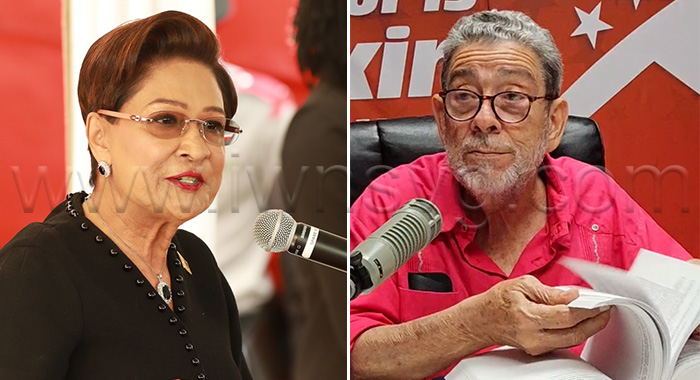
A deepening regional dispute over the re-appointment of CARICOM Secretary General Carla Barnett has emerged, with former St. Vincent and the Grenadines prime minister Ralph Gonsalves stepping forward Wednesday to push back against scathing criticisms from the government of Trinidad and Tobago. Trinidad and Tobago’s leadership has labelled the process that extended Barnett’s five-year term as “surreptitious and odious”, claiming it was deliberately shut out of the closed-door caucus vote held in Nevis during a February CARICOM summit hosted by St. Kitts and Nevis, and is demanding a full special meeting of the 15-member regional bloc to revisit the decision, even floating the possibility of holding a fresh election for the post.
Trinidad and Tobago Foreign Affairs Minister Sean Sobers has amplified his government’s objections, arguing that the country’s exclusion from the decision-making caucus was no accidental mistake. He noted that the leaders of Antigua and Barbuda and The Bahamas also departed the main summit early, and both nations had appointed designated representatives to stand in for their heads of government—yet none of these delegates, including Trinidad and Tobago’s representative, received an invitation to attend the caucus. According to Sobers, this deliberate exclusion violates Article 11.2 of the Revised Treaty of Chaguaramas, which explicitly allows any head of government to appoint a delegate to attend summit meetings on their behalf. He also added that three formal letters Trinidad and Tobago sent to regional leaders on the issue have been met with complete silence, a lack of response he calls deeply troubling.
Trinidad and Tobago Prime Minister Kamla Persad-Bissessar has doubled down on these criticisms, stating in a public Facebook statement that the flawed process poses long-term risks for her country, and that until the matter is resolved with full transparency, her government will give no ground to CARICOM or its secretariat.
But speaking on his Unity Labour Party’s local radio station, Gonsalves—now opposition leader in St. Vincent and the Grenadines, and one of the longest-serving heads of government in CARICOM’s history until he left office last November—dismissed Trinidad and Tobago’s claims as unfounded. As a signatory to the 2001 Revised Treaty of Chaguaramas who shepherded the agreement into domestic law during his premiership, Gonsalves broke down the bloc’s voting rules to back his argument that the re-appointment was completely legal.
He pushed back against the claim of deliberate exclusion, noting that CARICOM chairman and St. Kitts and Nevis Prime Minister Terrance Drew personally traveled to Port of Spain to meet with Persad-Bissessar ahead of the summit to resolve pre-meeting tensions, and both sides described those talks as very fruitful. Persad-Bissessar publicly confirmed she would attend the summit, Gonsalves said, which left regional leaders relieved. Gonsalves added that he has received verified information that both Persad-Bissessar and Sobers were formally invited to the Nevis caucus where the vote was held. He explained that closed-door caucuses for heads of government (and their designated delegates) are standard procedure for sensitive CARICOM business, contrary to Trinidad and Tobago’s claims of an unprecedented secret process.
On the subject of Trinidad and Tobago’s absence, Gonsalves revealed that Persad-Bissessar ultimately decided not to travel to Nevis for the caucus, and Sobers confirmed he could not attend in her place because he experiences seasickness—an explanation Gonsalves cast doubt on, noting the five-minute boat ride between St. Kitts and Nevis is a short, routine crossing. Gonsalves added that even if Sobers could not travel, Trinidad and Tobago failed to nominate an alternative representative who could attend the meeting. He also rejected Trinidad and Tobago’s claim that Antigua and Barbuda and The Bahamas were also wrongfully excluded, noting he has participated in multiple caucus meetings where the two nations’ foreign ministers served as accredited delegates for their governments, and there is no rule barring designated representatives from attending.
Breaking down the text of the treaty that governs CARICOM, Gonsalves explained that decisions of the Heads of Government Conference are binding when supported by an affirmative vote of members, and abstentions do not invalidate a decision as long as three-quarters of member states vote in favor. Omission from voting by a member state counts as an abstention under the treaty’s rules. Gonsalves confirmed that St. Kitts and Nevis Prime Minister Drew publicly stated Barnett secured the required majority for re-appointment, meeting all procedural requirements.
He also addressed Trinidad and Tobago’s reference to Article 24 of the treaty, which outlines the Secretary General’s appointment process, noting that the article does not override the conference’s supreme authority to take up the matter directly even if it has not been reviewed by the Community Council (CARICOM’s second-highest ministerial body). The treaty explicitly allows the Heads of Government Conference—CARICOM’s supreme decision-making body—to address any matter directly, he said.
Gonsalves also touched on an earlier disagreement between Persad-Bissessar and Barnett, noting that Persad-Bissessar had publicly criticized Barnett for failing to respond to a letter regarding a CARICOM Arrest Warrant case involving a Trinidadian citizen detained in Barbados. Gonsalves argued this was an internal matter between Trinidad and Tobago and Barbados that should have been raised with the CARICOM chairman, not the Secretary General, so Barnett was correct not to intervene.
Regional leaders are scheduled to hold a follow-up meeting on the dispute this Friday, according to information Gonsalves has received. He noted that even if the matter is reopened, if a majority of leaders back the original re-appointment, Barnett will retain her post. Responding to implicit threats from Persad-Bissessar that Trinidad and Tobago could withhold funding over the dispute, Gonsalves argued that Trinidad and Tobago is already the largest beneficiary of the Caribbean Single Market and Economy, and any move to withdraw from the bloc would backfire. Trinidadian businesses currently enjoy free establishment and preferential access to all CARICOM markets, he noted, and losing that access would make Trinidadian exports less competitive against goods from the United States, Puerto Rico, and the Dominican Republic, dragging down Trinidad and Tobago’s economy and driving up unemployment. Gonsalves said that if Persad-Bissessar disagrees with the process, the treaty allows her to either initiate withdrawal with a one-year notice or bring the matter to the Caribbean Court of Justice for a formal ruling.
Barnett, a Belizean-born economist, became CARICOM’s eighth Secretary General in August 2021 after being unanimously appointed by regional leaders, and her re-appointment would extend her tenure through 2031.