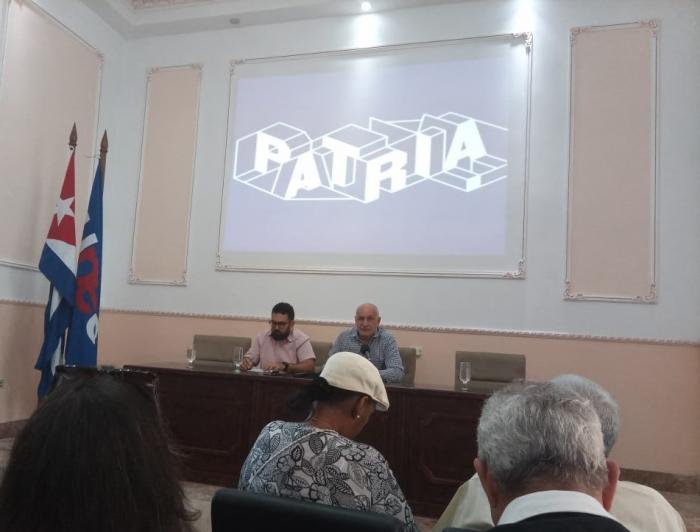
Cuba’s leading international communication gathering, the Patria International Colloquium, is gearing up to open its fifth iteration in 2026, bringing a slate of new updates and symbolic milestones to Havana. Rooted in the core mission of aligning Cuba’s public communication network with progressive, leftist frameworks adapted to 21st-century digital shifts, the event carries heavy symbolic weight this year, timed to coincide with two landmark national anniversaries: the centennial of Cuba’s iconic Commander-in-Chief, and the 65th anniversary of the victory at the Bay of Pigs, as well as the declaration of the socialist character of the Cuban Revolution.
Against a backdrop of sustained international media pressure targeting Cuba, the colloquium stands as a tangible demonstration of global solidarity with the island nation, event organizers confirmed. At an official press conference, Ricardo Ronquillo Bello, president of the Union of Cuban Journalists (UPEC), shared that even with an accelerated call for participation, global turnout has exceeded expectations, with roughly 150 international delegates already confirmed to attend. This strong response, he noted, is clear evidence of widespread global support for Cuba and the long-standing international prestige the colloquium has built since its launch.
This year’s edition introduces a restructured programming model that expands the event’s core mission beyond academic discussion, positioning it as a hub for practical professional preparation and skills training. Parallel to the main keynote panels and discussions, a series of hands-on workshops will be held, and a hybrid virtual component will be offered to extend access to communication professionals across every region of Cuba. Organizers emphasized they are prioritizing leveraging the expertise of high-profile attendees, including senior specialists, veteran journalists, leading communication theorists, and heads of major communication organizations from around the world.
Daniel González, a member of the colloquium’s organizing committee, added that the event will center cutting-edge shifts in the global communication sector, with artificial intelligence and its real-world applications for media and public communication set to be one of the central thematic focuses of the conference. The gathering will also feature a large-scale public exhibition hosted at Havana’s Línea y 18 fairgrounds, where domestic and international media outlets and communication-focused initiatives will display their latest technological and innovative advances to attendees.
A key milestone of this fifth edition will be the official inauguration of the permanent Patria Project headquarters, a facility designed to operate as a year-round hub for communication research, professional training, and preparatory work for future industry initiatives. Closing his remarks, Ronquillo Bello framed the colloquium as a modern stand against external media pressure, drawing a parallel to the historic Bay of Pigs victory: “Patria coincides with dates of great national symbolism. Let us say, then, that Patria is the communications-based Bay of Pigs of our time.”