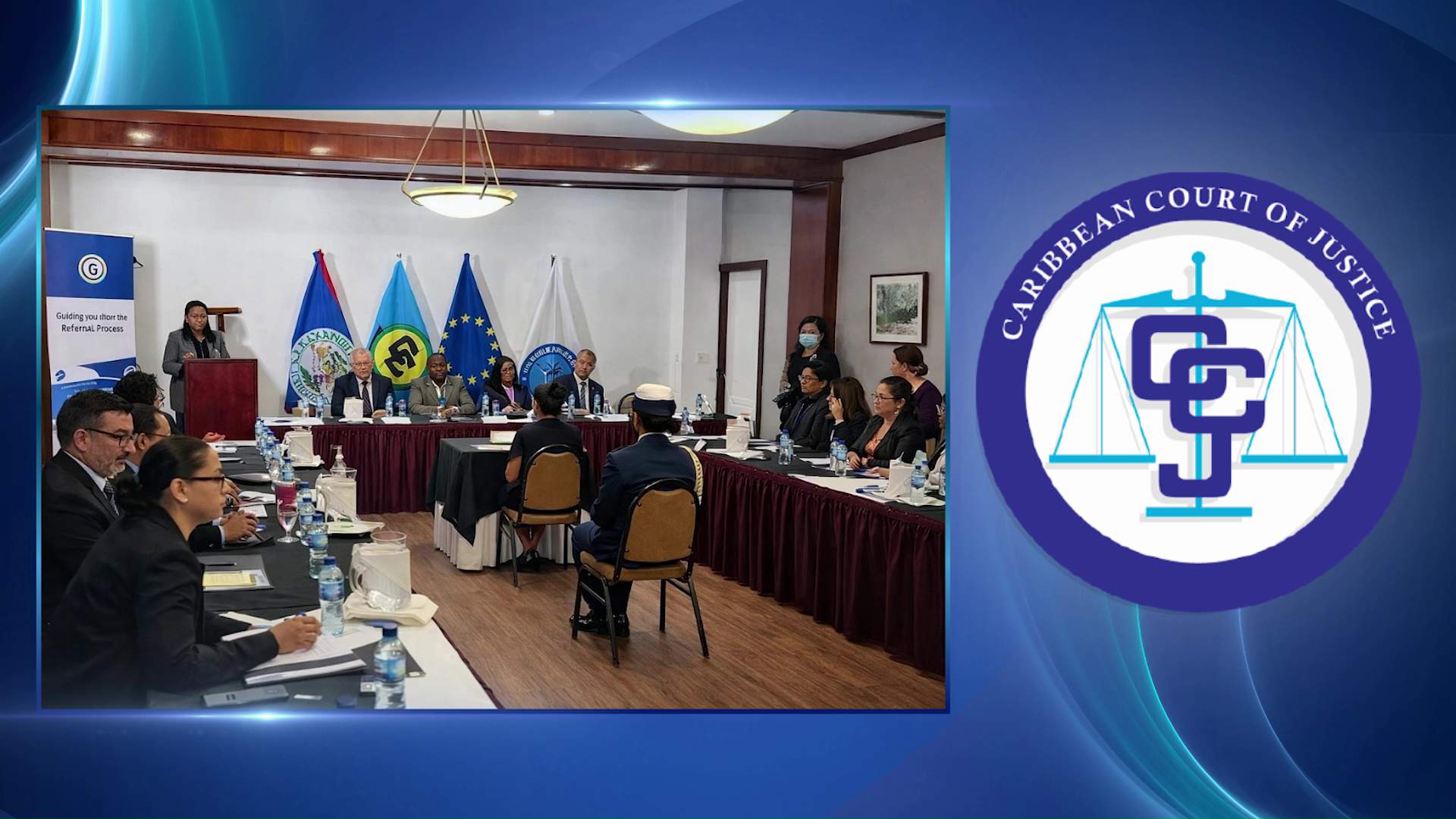
In a groundbreaking moment for Caribbean regional integration, the Caribbean Court of Justice (CCJ) is set to make history when it hears the first-ever direct referral of a legal question from a national court — a milestone that could redefine how regional law is interpreted and applied across all 15 member states of the Caribbean Community (CARICOM).
The historic case stems from a legal dispute initiated by Belizean businessman Anwar Barrow against Belize’s Financial Services Commission (FSC) and the Office of the Attorney General. At the heart of the dispute are three core issues: a mandatory requirement that company registration fees be paid exclusively in U.S. dollars rather than Belize’s domestic currency, the arbitrary application of fees to a business transaction Barrow was involved in, and discriminatory differential treatment of individuals accessing the Companies Registry based on their national origin within CARICOM. It is the final issue, which Barrow argues violates the non-discrimination provisions of the Revised Treaty of Chaguaramas, that has been referred to the CCJ for a binding ruling.
In an on-the-record interview about the litigation, Barrow emphasized that beyond his personal commercial interests, the case addresses a broader systemic concern about institutional compliance with the rule of law. “When the top institutions — government and statutory bodies — openly disregard the law, how can we expect ordinary citizens to follow it?” Barrow said. “I have encountered this flouting of regulations multiple times, and when I raised the issue to those in charge, they simply ignored it. This case is not just about my business; it’s about holding accountable the institutions that are supposed to uphold our legal framework.”
For the CCJ, this referral represents an unprecedented exercise of its original jurisdiction, a power granted to the court to rule on CARICOM treaty issues that had never before been activated via direct national court referral. Legal analysts across the region note that the court’s final ruling has the potential to set a binding precedent that strengthens enforcement of regional trade and business rules across all CARICOM member states, closing long-documented gaps in how treaty rights are implemented at the national level.
Barrow framed the case as a potential turning point for regional governance, arguing that a clear ruling from the CCJ would give real enforceable weight to the Revised Treaty of Chaguaramas, creating a more consistent and predictable legal environment for cross-border business activity throughout the Caribbean. He also noted that his action is part of a growing movement of Belizean citizens pushing for greater accountability and adherence to the rule of law, joining other advocates like Jerry Enriquez, who has led work on constitutional and redistricting reform in the country.
“For too long, enforcement of the regional treaty has been far less robust than Caribbean leaders and communities have wanted,” Barrow explained. “This is the first time a national court has referred a matter like this directly to the CCJ, and I hope it opens the door to more open discussion and resolution of regional legal issues in the public interest.”
When contacted for comment on the case, officials from the Belize Financial Services Commission declined to make any public statement, noting that the matter is currently active before the courts. News outlets will continue to provide updates as the CCJ progresses with the historic hearing and issues its final ruling.