In a dispute over regional policy milestones, the Jamaican government has publicly pushed back against St Kitts and Nevis’ recent claim to be the first Caribbean country to formally enshrine legal recognition for the Rastafarian faith, asserting that Jamaica has embedded protections for the religion in its constitutional and parliamentary frameworks for more than a decade.
The debate emerged after St Kitts and Nevis Prime Minister Dr. Terrance Drew announced his administration’s historic legislative move to grant official legal status to Rastafari earlier this month. Speaking on the floor of St Kitts and Nevis’ parliament, Drew emphasized that Rastafarianism is deeply woven into the cultural fabric of the federation, noting that most residents have personal connections to members of the Rastafarian community. “When you look around St Kitts and Nevis, everybody knows somebody who is a Rasta. My mother is a Rasta, and I can bet everybody in here almost has some family member, if not close, distant, who is Rastafarian in their family,” Drew said. He added that the new step guarantees the Rastafarian community equal access to all the rights and protections outlined in the country’s constitution, matching those afforded to followers of every other faith.
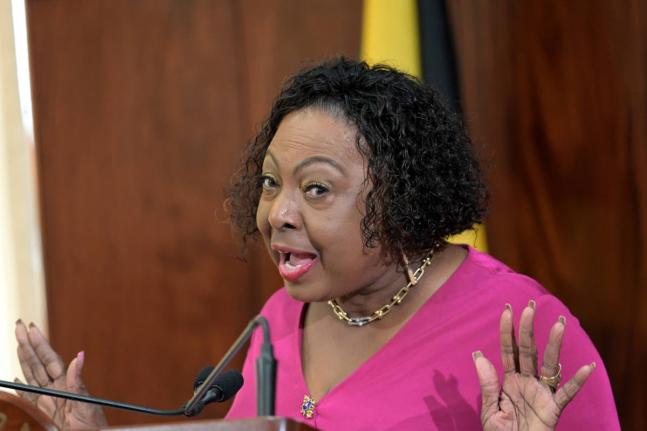
Jamaica’s Culture Minister Olivia Grange pushed back on the “first-in-the-region” claim during an interview with *The Gleaner*, held on the sidelines of memorial events marking the 63rd anniversary of the 1963 Coral Gardens Incident – a defining historical moment marked by widespread state persecution of Rastafarians in Jamaica. Grange stressed that Jamaica has long held Rastafari as a legitimate religion under its existing legal structure.
“Jamaica, in our Charter of Fundamental Rights and Freedoms, we recognise all religions, and we have always identified Rastafari as a religion,” Grange stated. Enacted in 2011, Jamaica’s Charter of Fundamental Rights and Freedoms explicitly protects freedom of conscience, religion, and worship for all faiths. While the document does not name specific religions individually, Section 13(3)(b) guarantees equal legal protection to every religious tradition practiced within the country’s borders, including Rastafari, Christianity, Islam, and Judaism.
Beyond the broad constitutional protections, Jamaica has also put in place targeted legal accommodations unique to Rastafarian practice. 2015 amendments to the country’s Dangerous Drugs Act carved out a legal exception allowing Rastafarians to use cannabis – commonly referred to as ganja – for religious and sacramental purposes, a core ritual for many followers of the faith.
Grange also pointed to parliamentary and administrative recognition of Rastafarian institutions as further proof of the religion’s longstanding legal status in Jamaica. Multiple Rastafarian church organizations have received formal registration through private members’ parliamentary motions, she explained, while key community groups have been incorporated as official benevolent societies, granting them all the legal benefits and standing of any other registered non-profit or religious organization. A prominent example is the Rastafari Coral Gardens Benevolent Society, founded by survivors of the 1963 Coral Gardens crackdown as a hub for community organizing and advocacy. Today, the organization stands as a symbol of the Rastafarian community’s resilience in the face of historical injustice.
Jamaica is home to all the major branches of global Rastafarianism, including the Nyabinghi Order, a tradition known for its ceremonial drumming and historic emphasis on African repatriation; the Bobo Ashanti, founded by Prince Emmanuel Charles Edwards and distinguished by its intentional communal living; the Twelve Tribes of Israel; and the Church of Haile Selassie I.
While Grange emphasized Jamaica’s longstanding leadership in Rastafari recognition and advancing reparatory justice for the community, she welcomed the step taken by St Kitts and Nevis. “I am happy to see what St Kitts has done, … [but] Jamaica has led the way in these areas,” she said.
The public discussion comes as Jamaica continues ongoing work to address historical injustices against the Rastafarian community, including formal apologies and restitution efforts tied to the 1963 Coral Gardens Incident, where scores of Rastafarians were detained, brutalized, and displaced in a state-led crackdown.