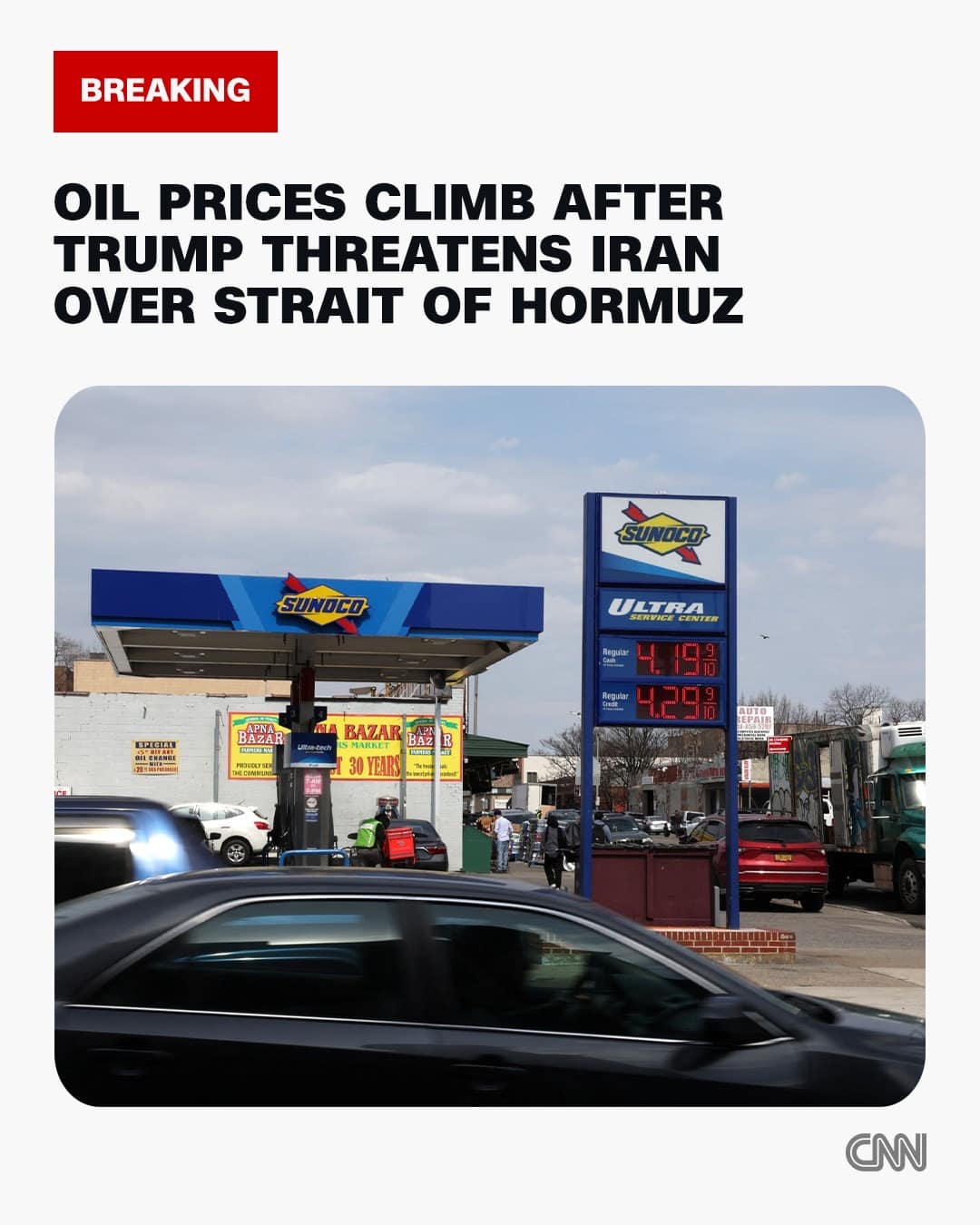
Tensions flared in the Middle East over the weekend as former President Donald Trump’s aggressive verbal threat against Iranian energy infrastructure triggered a sharp upward swing in global crude oil prices, amplifying existing market uncertainty and driving down stock futures. In an inflammatory post shared to his Truth Social platform Sunday morning, Trump issued an extreme ultimatum to Iranian authorities, warning that if the Strait of Hormuz—one of the world’s most critical chokepoints for global energy trade—remains closed, Iran will face devastating targeted attacks on its key power plants and bridge infrastructure. “Tuesday will be Power Plant Day, and Bridge Day, all wrapped up in one, in Iran. There will be nothing like it!!! Open the Fuckin’ Strait, you crazy bastards, or you’ll be living in Hell – JUST WATCH!” the post read.
In an immediate response to the threat, a senior Iranian government official reiterated Sunday that the country will not reopen the strategic waterway until it receives full compensation for damages it sustained from previous conflicts. This latest exchange marks the second time Trump has issued a public ultimatum to Iran over the strait: an earlier deadline set on March 21 was extended to April 6, with no resolution reached by that date. The hardline stance also marks a notable shift from Trump’s claims just one week prior, when he asserted the United States had no critical reliance on the Strait of Hormuz for energy supplies.
Diplomatic efforts to de-escalate the situation were already underway Sunday, with Oman’s foreign ministry confirming that Omani officials had convened talks with Iranian representatives to negotiate the resumption of unimpeded commercial shipping access through the waterway. On the same day, major oil-producing nations of the OPEC+ alliance held a virtual emergency meeting to address growing risks of attacks on global energy infrastructure. In an official statement released after the gathering, the bloc emphasized that repairing disruptions to global oil supply and restoring stable market demand is an extraordinarily costly process that requires extended timelines to complete. The meeting came just weeks after OPEC+ agreed to implement a modest daily production increase of 206,000 barrels starting in May, a move intended to cool rising prices.
The sudden disruption to potential energy flows through the Strait of Hormuz—through which roughly 20% of the world’s daily oil shipments pass—has already pushed retail fuel prices in the United States to their highest level since 2022. Data from motoring group AAA released Sunday shows the national average price for a gallon of regular gasoline climbed to $4.11, representing an almost 38% increase since the outbreak of the latest regional conflict that triggered the strait closure.
Beyond energy markets, the escalating geopolitical tensions rippled through global equity futures on Sunday, following a long weekend closure for U.S. markets. Dow Jones Industrial Average futures dropped 0.69%, equal to a 324-point decline, while S&P 500 futures fell 0.76% and Nasdaq 100 futures retreated 0.91%, signaling widespread investor risk aversion amid the growing uncertainty.