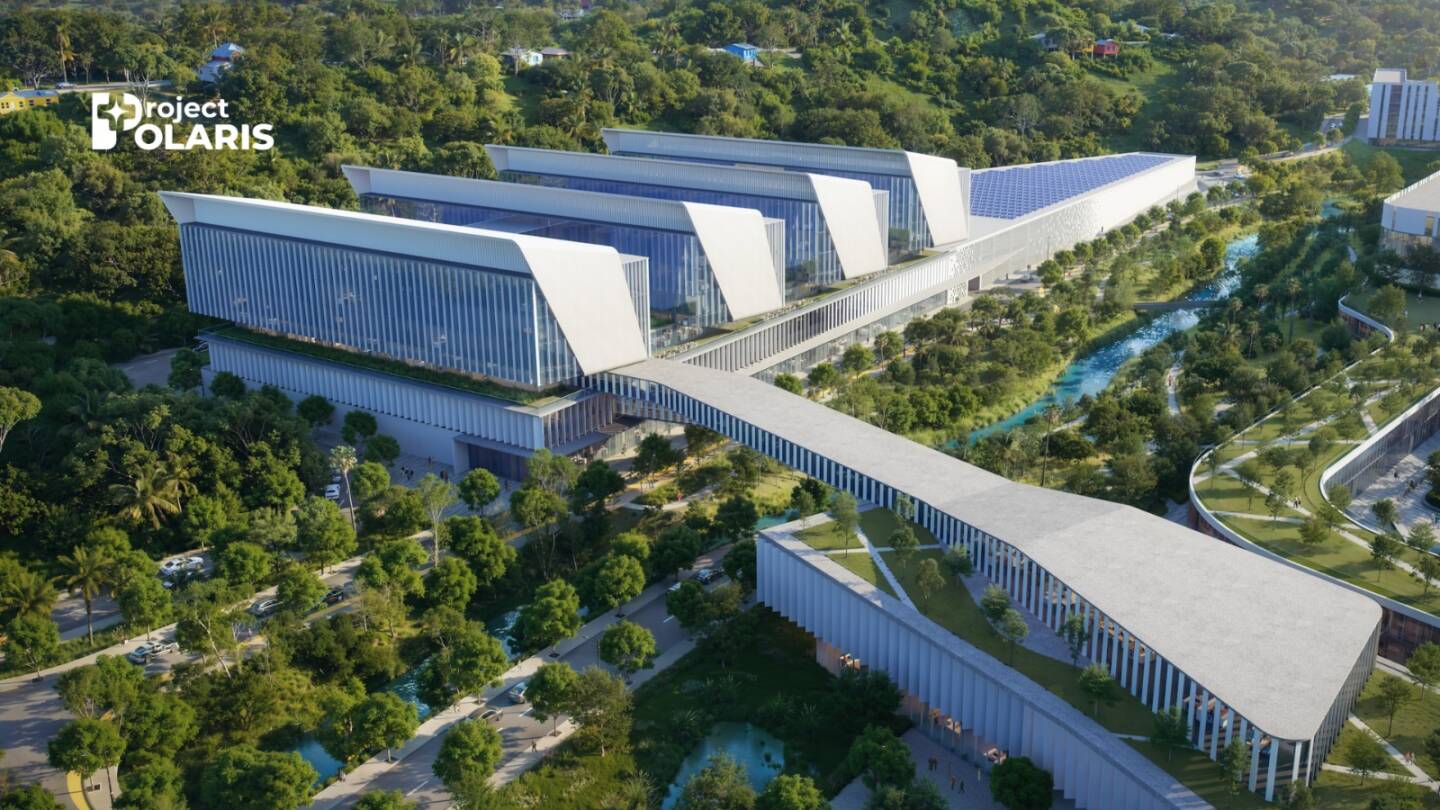
On a historic plot of land that has carried centuries of Grenadian narrative—from Indigenous Amerindian settlement through colonial slave and sugarcane plantations—Prime Minister Dickon Mitchell has officially launched the groundbreaking ceremony for Project Polaris, the nation’s ambitious new state-of-the-art Grenada General Hospital. Far more than a construction milestone, the event marked a defining step forward for the island nation’s long-term national development plan, Vision 75, which aims to transform Grenada into a resilient, inclusive, innovation-driven economy by its 75th independence anniversary in 2050.
For more than a century, Grenada’s existing General Hospital, originally built as a colonial infirmary by French rulers, has stood as a quiet witness to the nation’s tumultuous history. It survived the 1850 Great Fire of St. George’s, weathered devastating hurricanes Janet and Ivan, and endured through Grenada’s political revolution. Over generations, successive governments have patched and expanded the aging facility: adding new wings, expanding overcrowded wards, repainting walls, and repairing leaky roofs. But officials have long acknowledged that retrofitting a 19th-century structure to meet 21st-century clinical standards is no longer feasible. For years, Grenadian healthcare workers have delivered life-saving care against steep odds, working within severe space constraints while the public has waited patiently for systemic change. Today, that change finally begins, Mitchell emphasized.
The path to this groundbreaking ceremony was the result of deliberate, accelerated action by Mitchell’s administration, which took office in 2022. Built on the non-negotiable principle that all Grenadians deserve access to world-class healthcare without leaving their home country, the project moved from concept to land acquisition in just 12 months, with the 2023 purchase of the strategic plot from the Neckles family. Mitchell highlighted the family’s stewardship of the land for a full decade, from 2013 onward, when they chose to hold the entire parcel intact rather than subdivide and sell it for private development, recognizing its long-term strategic value to the nation.
Mitchell acknowledged that the road ahead still holds significant hurdles, from financial constraints to logistical challenges, and that skeptics have questioned the project’s feasibility. But he reaffirmed that the government’s commitment to delivering tangible progress for the Grenadian people remains unwavering. Years of rigorous feasibility studies, environmental impact assessments, and intensive negotiations have laid a strong foundation for the project, which is designed not just as a new hospital building, but as a sustainable, integrated ecosystem of care. Today’s ceremony moves the project from planning to active construction, turning a decades-long policy discussion into tangible progress.
Project Polaris stands as the cornerstone of Vision 75, the government’s national development roadmap. “You cannot have a wealthy nation without a healthy nation,” Mitchell noted, framing public health as the bedrock of all national prosperity. A productive economy depends on a healthy workforce, and a thriving society cannot exist without a modern, accessible healthcare system that meets the needs of all citizens. Echoing the transformative impact of two of Grenada’s most iconic national infrastructure projects—the Maurice Bishop International Airport completed in 1984 and St. George’s University founded in 1977—Project Polaris is set to reshape the nation’s trajectory. During construction, the project will create hundreds of local jobs, and once completed in 2029, it will support thousands of high-skilled clinical and support roles, strengthening Grenada’s human capital for decades to come.
The new hospital facility is the core infrastructure, or “hardware,” of a broader public healthcare transformation that includes complementary policy and system reforms, labeled the initiative’s “software.” Key reforms include transitioning hospitals to a semi-autonomous management structure to speed up procurement, improve operational efficiency, and boost maintenance standards; laying the regulatory and financial groundwork for a national universal health insurance scheme that will eliminate the cruel choice for Grenadians between life-saving care and losing their life savings; revitalizing local community health centers and village medical outposts to expand preventative primary care, reducing the burden of advanced illness on the acute care hospital; and implementing a system-wide quality improvement program at the existing General Hospital to boost patient experience and clinical outcomes immediately, while construction on the new facility progresses.
Beyond improving domestic care, Project Polaris will position Grenada as a regional leader in healthcare excellence among the Organisation of Eastern Caribbean States (OECS), turning the Spice Isle into a global health tourism destination and a regional hub for specialized clinical care. To mark the occasion, the government of Grenada signed a new Letter of Intent with CAF, the Development Bank of Latin America and the Caribbean, outlining a framework for expanded collaboration to strengthen the nation’s health sector, advance digital health integration, and develop sustainable, high-impact initiatives that improve health outcomes for all Grenadians. Mitchell extended an open invitation to local private sector stakeholders, the Grenadian diaspora, and international partners to join the project, framing the initiative as proof that small island developing states can lead regional progress when they commit to bold ambition. “Grenada is no longer a passenger in the story of Caribbean development; it is a pilot,” he said.
To underscore the shared responsibility of building a healthier nation, every member of the Grenadian Cabinet has pledged to donate one month of their annual salary to the project each year until its completion in 2029. Mitchell extended a call to all Grenadians at home and abroad to join the effort, whether through public advocacy, personal commitment to healthy lifestyles, or direct partnership. Beyond bricks and mortar, he framed the project as a shift in national mindset: health is not just a service to access when illness strikes, but a collective priority to protect every day.
In closing, Mitchell extended gratitude to the cross-government team that brought the project to this milestone, international development and financing partners, and the Neckles family for their stewardship of the land. He also recognized long-standing institutional partner St. George’s University, whose expertise in medical education will make the new hospital a hub for clinical training as well as patient care. “May God bless this project, and may God bless our beautiful nation,” he said.