On Tuesday, the Mia Mottley-led administration of Barbados enacted historic housing legislation that is poised to help thousands of low-income and working-class residents become first-time property owners, a step leaders frame as a radical intervention to break the crippling cycle of intergenerational poverty across the island nation.
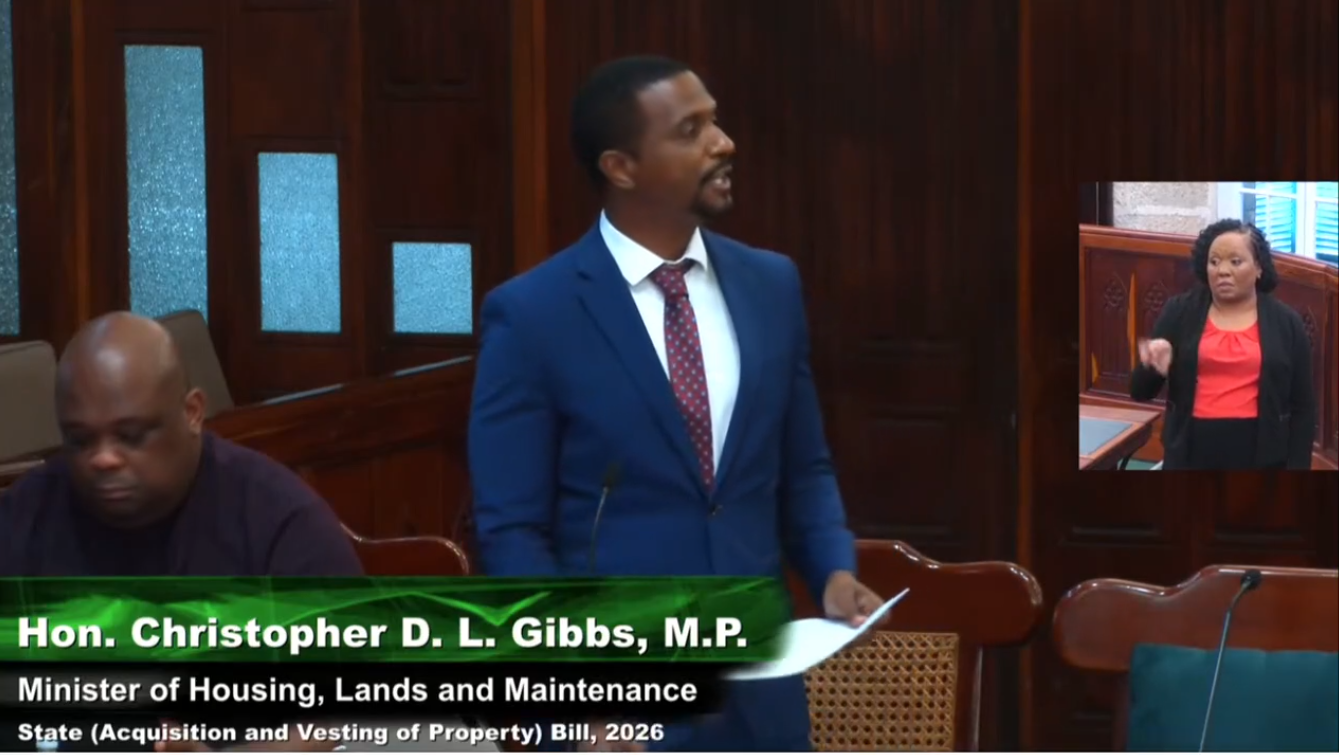
Titled the State Acquisition and Vesting of Property Bill, the new law cuts through decades of bureaucratic gridlock to fast-track ownership transfers for thousands of long-term tenants occupying units managed by Barbados’ National Housing Corporation (NHC). Speaking during parliamentary debate in the House of Assembly, Minister of Housing Chris Gibbs positioned the bill as an overdue act of justice for residents who have met their financial obligations to the state over decades of tenancy.
Gibbs recalled that a 2013 law already set out a framework to transfer ownership of terrace housing units to eligible tenants, but the process has been glacial at best. Over the past 11 years, only 500 of the nearly 4,000 qualifying properties have been successfully transferred. The backlog stems from exorbitant legal fees and administrative bottlenecks that require case-by-case approval, a process that can take years to complete. “This bill changes that decisively,” Gibbs stated. “It leverages constitutional authority to transfer ownership directly, eliminate administrative roadblocks, and deliver the property title that residents have already earned. The state takes formal possession of the land and immediately vests it in qualifying tenants. No endless delays, no stacks of complicated paperwork.”
The housing minister stressed the legislation is not a political giveaway or patronage favor, but the fulfillment of a clear commitment to residents who meet two core eligibility requirements: 20 years of continuous occupancy, and a proven track record of consistent, on-time rent payments. A central pillar of the parliamentary debate centered on reframing housing from mere shelter to a buildable financial asset that can lift households across generations. Gibbs highlighted the systemic disadvantage faced by NHC tenants: even after decades of maintaining and paying for their homes, they held no legal title, leaving them unable to use the property as collateral for loans to start businesses, fund education, or cover medical costs, and unable to pass the asset down to their children after death. “A house without a title is just shelter. A house with a title is power,” Gibbs told the assembly. “Power to build, power to borrow, power to pass on security to the next generation. We are putting that power directly into the hands of the Barbadian people. This is not just a housing policy – this is a generational wealth-building strategy.”
The bill also resolves longstanding uncertainty for families of deceased NHC tenants who were left in legal limbo, with no clear path to claim the home their family member occupied for decades. By regularizing ownership rights, the legislation enables seamless transfer of property to heirs, giving families clear title and access to mortgage lending that was previously out of reach.
Aligning with a core policy priority of Prime Minister Mia Mottley, Gibbs argued that the long-standing culture of permanent public sector tenancy is unsustainable for both the state and individual residents. He described long-term rental payments as “dead money” that never build equity for the tenant, and signaled that this ownership transfer is the first step in a broader government shift toward expanding rent-to-own programs and innovative social mortgage products designed to narrow the gap between stagnant low wages and soaring property costs across Barbados. “This government is committed to helping Barbadians build equity, and we are rethinking how we spend public funds to deliver more meaningful value for people,” Gibbs noted. “We will pursue bold new partnerships to expand access to home ownership across the country.”
The rollout of the program will be implemented in staggered phases to ensure smooth administration. The first phase covers approximately 200 qualifying units in communities including Deacons Farm and Haynesville, followed by a second phase that will add more than 600 additional units. Over time, the program will reach nearly 3,900 eligible properties across 27 NHC housing estates. To address public concerns about long-term community upkeep, Gibbs emphasized that new ownership comes with clear responsibilities. The legislation establishes a detailed covenant regime that requires properties to remain in residential use, mandates maintenance of community standards, and protects shared public access to core utilities.
Closing debate ahead of the bill’s second reading, Gibbs framed the policy as a moral imperative for the Barbadian government. “After decades of waiting, the wait is over,” he said. “We are turning tenants into owners, we are turning housing into assets, and we are turning our communities into engines of intergenerational stability and national pride.”