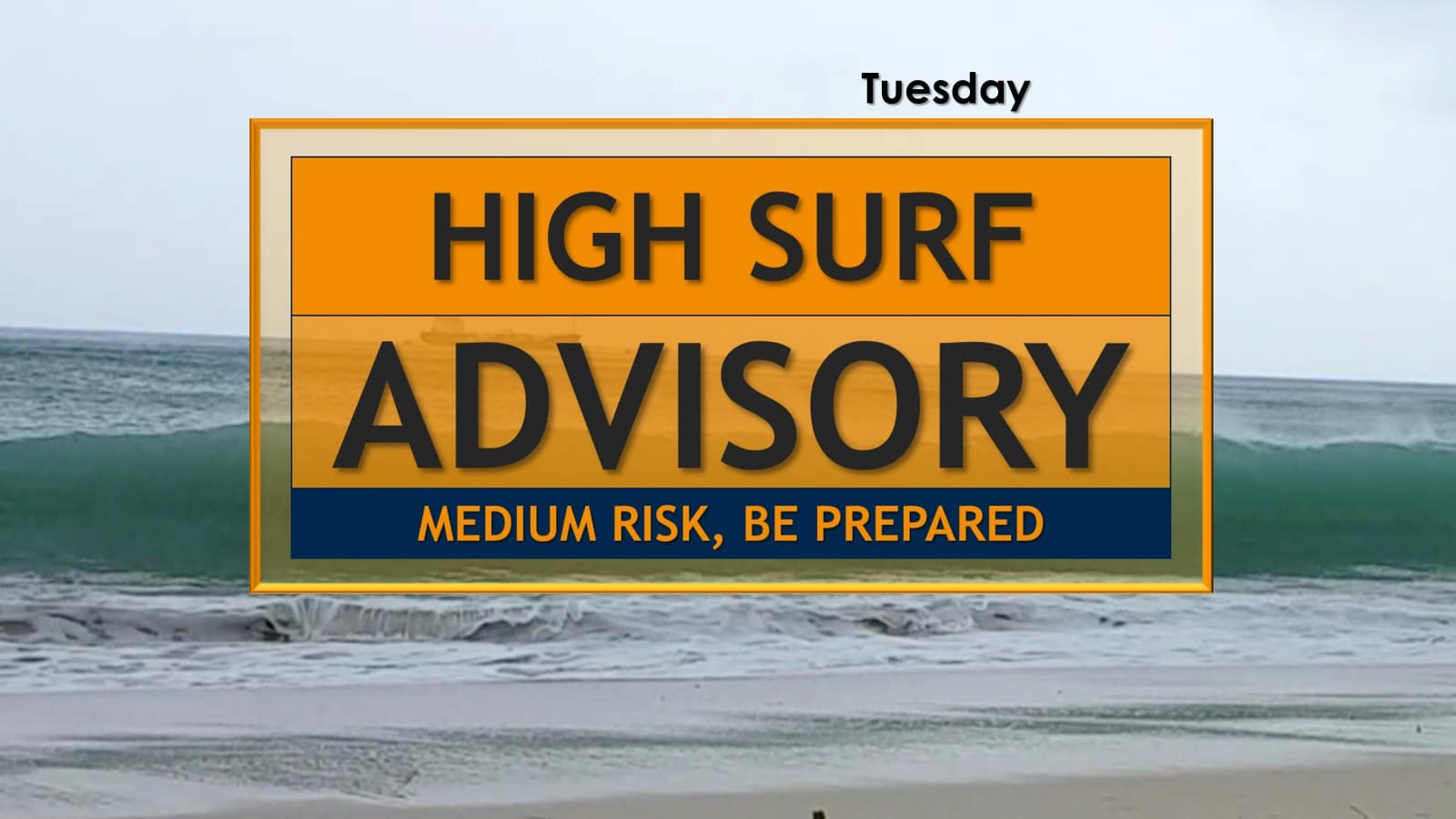
The Antigua and Barbuda Meteorological Service has issued a significant high surf advisory effective Tuesday morning through Sunday, warning of hazardous marine conditions across multiple Eastern Caribbean territories. Antigua will experience the initial impact beginning Tuesday morning, with Montserrat, St. Kitts, and Nevis facing deteriorating conditions by Tuesday afternoon.
Meteorological analysis indicates moderate long-period swells originating from northern directions will generate dangerous surf conditions along predominantly north-facing coastlines. These swells are characterized by significant wave heights ranging from 1.5 to 2.4 meters (5-8 feet), with localized areas potentially experiencing waves nearing 3.0 meters (10 feet). The exceptional swell period of 10-13 seconds suggests powerful, organized wave energy approaching coastal areas.
The primary concern involves life-threatening surf conditions and powerful rip currents, particularly affecting reefs and exposed northern coastlines with shallow, moderately sloping nearshore bathymetry. Breaking waves are forecast to exceed 2 meters (6 feet), with certain areas experiencing surf heights potentially double the swell height due to complex wave transformation processes near shore.
Coastal flooding presents an additional hazard, as high tides combined with onshore wind and swell action may result in localized beach erosion and seawater inundation of low-lying coastal infrastructure. The meteorological service has indicated potential escalation to high surf warnings for the most severely affected regions.
The advisory emphasizes substantial risks to life, property, and infrastructure. Potential impacts include: drowning hazards from powerful currents capable of overwhelming even experienced swimmers; injuries to coastal recreational users; significant beach erosion; damage to coastal roads; disruption to marine-based businesses and recreation; financial losses; and ecological damage to coral reef systems.
Safety authorities recommend extreme caution for beachgoers, advising bathing only at lifeguard-protected beaches or sheltered southern coastlines. Those frequenting rocky coastal areas should exercise particular vigilance. The advisory provides specific guidance for rip current survival: remain calm and float rather than swimming against the current; swim parallel to shore if possible; and signal for assistance if unable to reach safety.