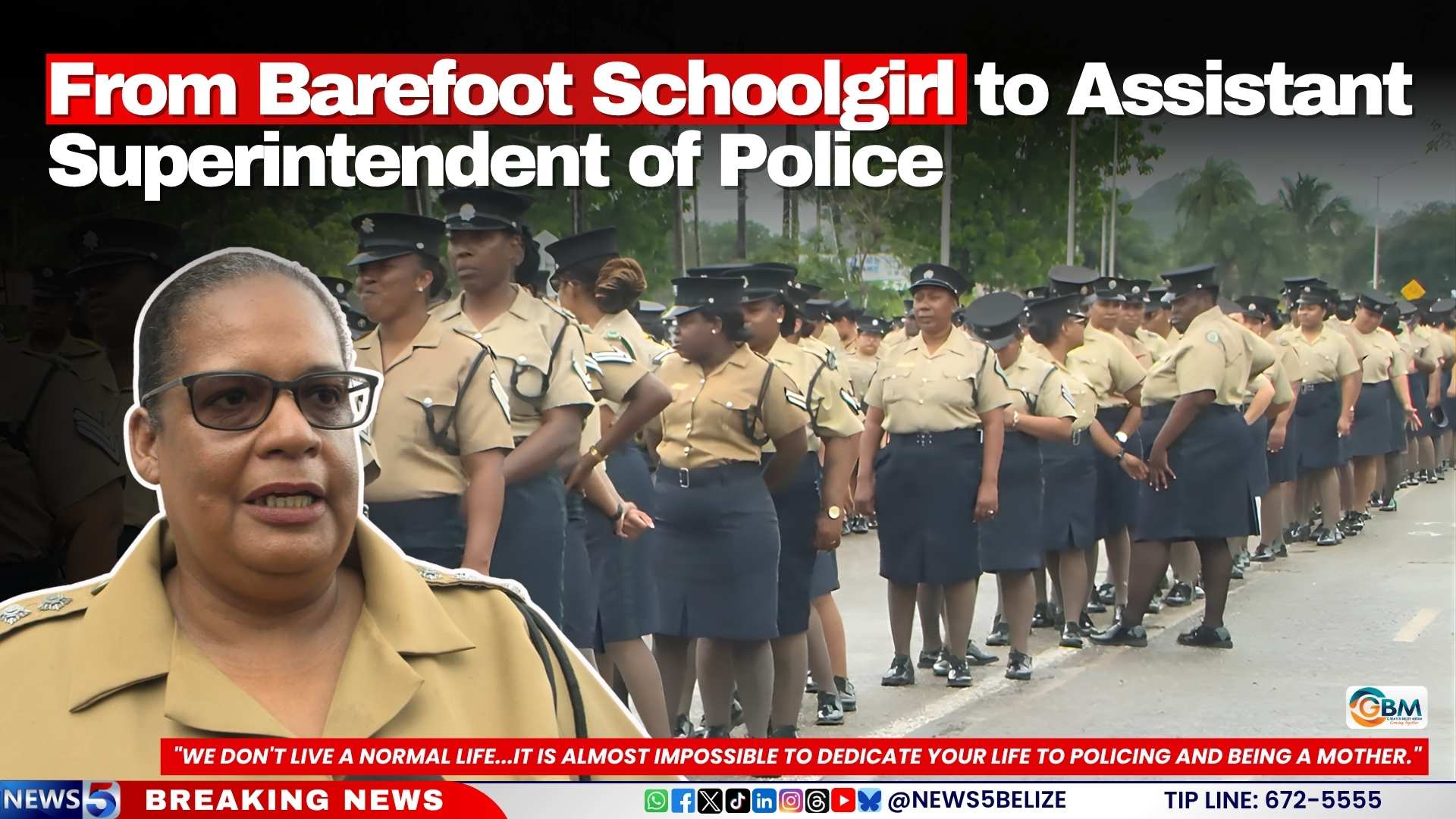
As Women’s Month draws to a close in 2026, Belize is spotlighting an extraordinary story of grit and survival that defies every early-life obstacle stacked against a small-town girl who grew up to become one of the country’s leading law enforcement officers. Hortence Hernandez, now Assistant Superintendent and Press Officer for the Belize Police Department, has opened up about her decades-long journey from a poverty-stricken, abuse-plagued childhood to leading uniformed service, sharing unflinching insights into the unique barriers women in policing still face today.
Hernandez’s earliest years were rooted in Crooked Tree Village, a remote rural community where she grew up with almost no material resources to her name. Unlike many children her age, she often walked to classes barefoot, frequently missed lessons to stay home caring for her younger siblings, and sometimes went entire school days without even a basic exercise book to complete assignments. “We were literally dirt poor,” she recalled in her candid interview. “Many days I go to school barefooted. I could remember I often don’t even have an exercise book to write in.”
Her childhood was defined not just by poverty, but by chronic instability and abuse. She bounced between two households: a violent home with her mother and stepfather, and her grandparents’ home, which offered safety but remained crippled by financial hardship. One searing memory from her early school years still stands out: while sitting on her home steps laughing as neighbors gathered to play in the yard, her stepfather pressed a lit cigarette into her back before kicking her down the concrete steps. Now, as a survivor of both childhood physical and sexual abuse, she says she understands firsthand the isolating pain that keeps many victims from speaking out.
These traumatic early experiences, paired with a childhood instinct to play “police” instead of leaning into traditional gendered play, set the course for her future career during a defining encounter at age 18. That day, she witnessed a severely injured woman stumble across a nearby field, her clothing nearly burned away, screaming that her partner had doused her and set her on fire. “From that day,” she said, “if ever I become a police officer, it is definitely at the Family Violence Unit I wanted to work.”
When Hernandez finally left Crooked Tree Village, the opportunity to join the police force came almost by accident: a friend alerted her to the upcoming recruitment exam just 24 hours before it was scheduled. Even after passing the exam and earning a spot in training, the challenges had only just begun. Unable to afford required training gear, she made the desperate choice to pawn her mother’s wedding ring to cover costs. The only training shoes she could afford were too small, leaving her feet raw and bleeding every single day through months of drills. When she appealed for leniency, a female sergeant refused to grant her any accommodation. “It tested my faith, and I wanted to leave, but nonetheless, I prayed to God and said, ‘This is where I wanted to be.’ So I stuck it out,” she shared.
That relentless perseverance would become a throughline in every part of her life, including her role as a parent. Over nearly 26 years, she raised five daughters almost entirely on her own, sacrificing countless birthdays, school events, and report card ceremonies to meet the demands of her shift work. She recalled a time when a school principal publicly shamed her for missing a parent event, completely unaware of the constant balancing act that working mothers in law enforcement are forced to navigate. “It is almost impossible to dedicate your life to policing and be a mother,” she said. “We don’t live a normal life.”
Hernandez has also been open about ongoing challenges she has faced within the police department itself, pointing to a surprising source of tension for women in uniform. “Women are our own greatest enemies,” she argued. “At every point that a woman can get to bring down another woman, they will do that.” She recalled a particularly hurtful moment when fellow female officers openly celebrated when she was passed over for a promotion to sergeant.
Despite every barrier, Hernandez never stopped prioritizing education alongside her rising career. She earned degrees in paralegal studies and public sector management, followed by a master’s degree in management, and only made her final student loan payment this past December. “Every step of what I do is God,” she said. For all her professional accomplishments, she calls her five daughters her proudest achievement; one has even followed in her footsteps and joined the Belize Police Department.
When asked what advice she would give to young women considering a career in policing, she was unflinchingly honest. “I will never encourage a woman to become a police officer,” she said. “However, if you want to become one, do it because it is a calling, not a salary…You cannot be a police officer and give it 100% and be a mother and a wife and give it 100%.”
As Women’s Month wraps up, Hernandez summed up what the uniform means to her in one word: resilience. “It means that you must always go above and beyond to protect and serve. Being a woman does not mean sitting behind a desk. It means that we will compete with men because we are capable of doing just as men are doing and even better,” she said. Hernandez will mark 26 years of service with the Belize Police this coming June, after joining the force on June 18, 2000.