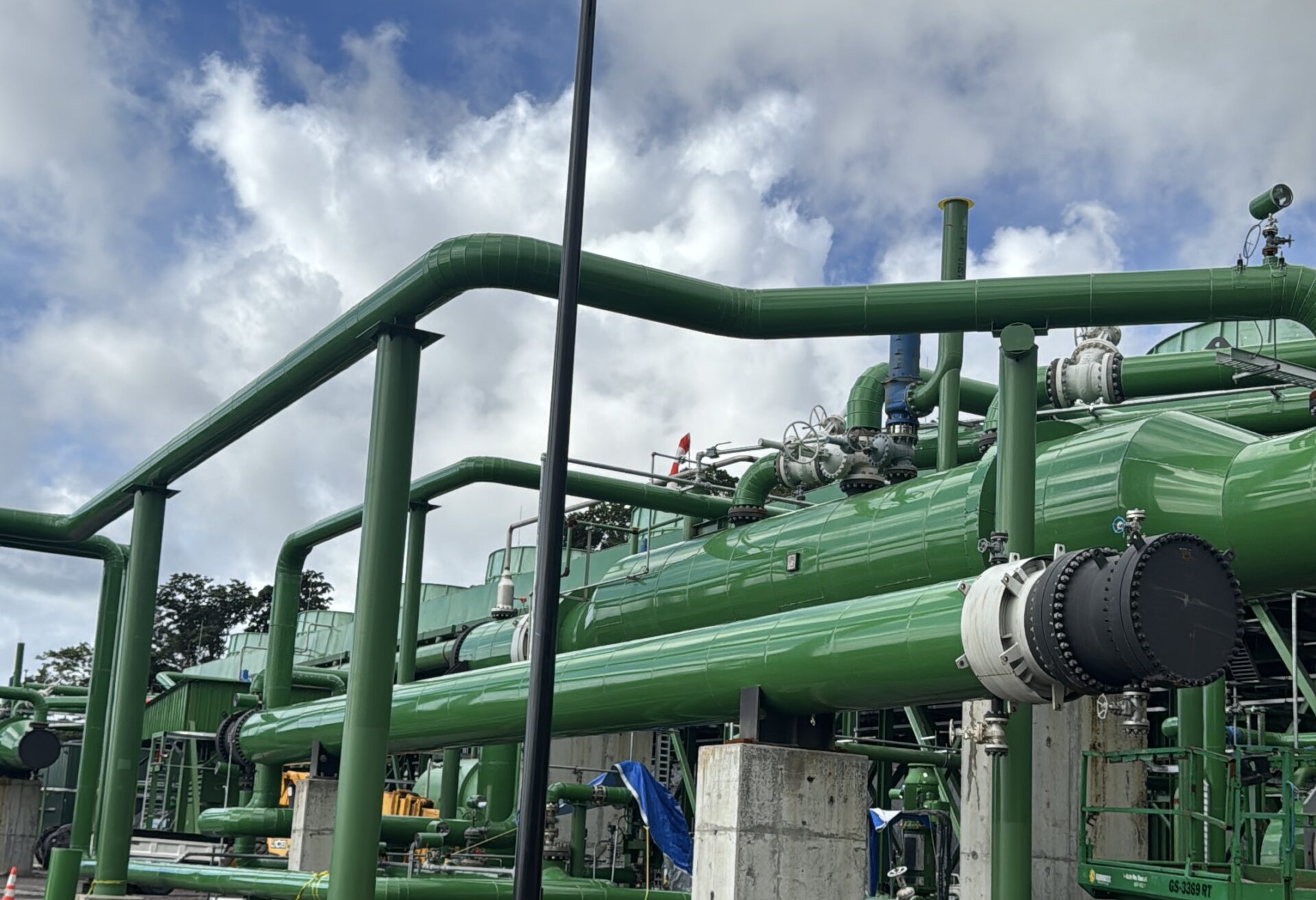
After years of anticipation and months of rigorous preparation, Dominica’s groundbreaking geothermal energy project has hit a critical developmental milestone: the facility has officially started exporting power to the country’s national electricity grid, as confirmed by Dominica Electricity Services Limited (DOMLEC) amid ongoing commissioning work.
In an official update released to the public on March 30, 2026, DOMLEC shared that all core infrastructure of the new 33kV transmission network – including substation equipment at the Fond Colé and Laudat sites, plus the underground transmission line connecting the two locations – has passed all performance tests and been successfully energized. Initial testing of the plant’s geothermal generators began back in early March, when the first test loads were connected to DOMLEC’s existing national grid using a pre-established network segment.
Moving forward, the utility company confirmed, power generated from the geothermal plant will flow through the newly completed transmission system as part of the final round of integrated testing. That said, DOMLEC has issued a public notice that energy production will not run on a continuous basis during this pre-commissioning phase. Local customers may face occasional unplanned power outages as engineering teams complete final safety and functionality checks on all newly installed infrastructure. The organization extended its gratitude to the Dominican public for their patience through the final stages of construction and testing, emphasizing that this meticulous work is critical to ensuring geothermal energy can be integrated into the national grid safely and reliably long-term.
DOMLEC’s update follows an announcement from Dominican Prime Minister Roosevelt Skerrit, who confirmed at a recent press conference that the Laudat-based geothermal plant remains on schedule for formal commissioning by the end of March 2026. Skerrit noted that the facility has already undergone several weeks of phased testing, and is currently fully operational across all core systems. Early performance data from testing has exceeded expectations, he added, and the government is eager for Dominican citizens to begin reaping the full benefits of this major national infrastructure investment.
Worth a total of US$34.8 million, the 10-megawatt Laudat plant holds major regional significance: it will be the second operational geothermal facility across the Organisation of Eastern Caribbean States (OECS), and the first utility-scale geothermal plant within the Caribbean Community (CARICOM). According to the Dominica Geothermal Development Company, the project leverages Dominica’s abundant volcanic geological resources to generate clean, baseload power. Once fully operational, it is projected to supply consistent electricity to roughly 23,000 households across the island, while cutting the country’s dependence on costly, carbon-intensive imported fossil fuels dramatically.
The formal launch of the Laudat plant also marks one of the first tangible deliverables under the OECS Decade of Action for Sustainable Energy Development, an initiative launched earlier in 2026 via the Basseterre Declaration. The regional framework sets an ambitious target of achieving at least 30% renewable electricity generation across all OECS member states by 2035. Dominica is one of five OECS members taking part in the GEOBUILD Programme, a regional geothermal expansion initiative backed by the Caribbean Development Bank that aims to unlock geothermal potential across the Eastern Caribbean.
As the project enters its final stretch before full commercial operation, DOMLEC reaffirmed its commitment to providing regular public updates on progress, and to delivering a more resilient, low-carbon, and sustainable national energy system for all of Dominica.