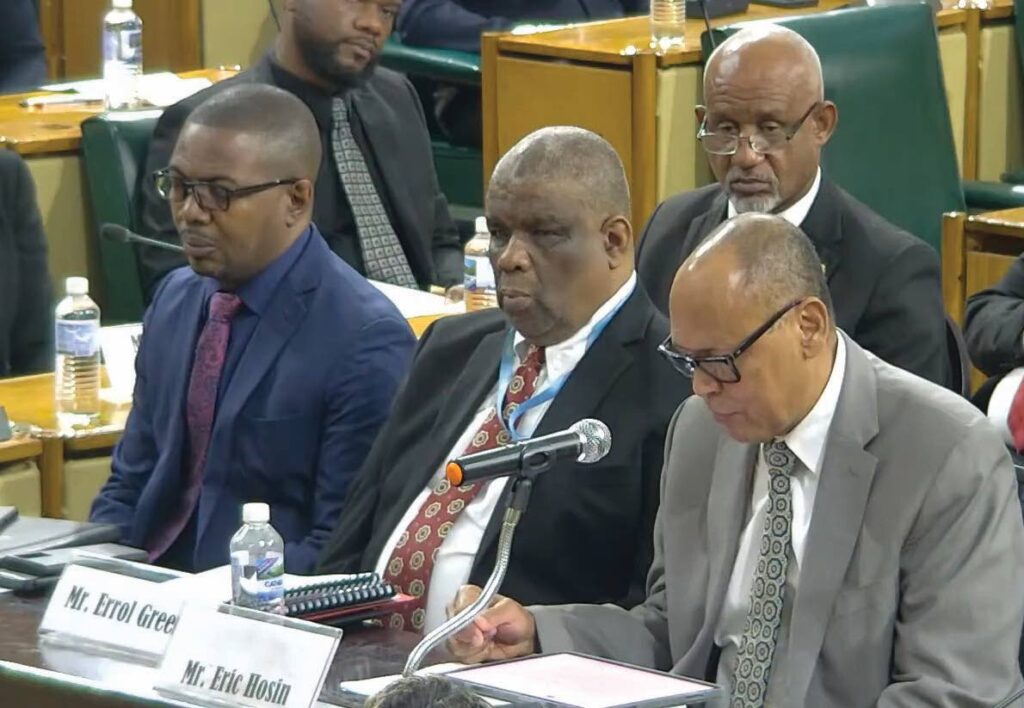
During a tense Tuesday sitting of Jamaica’s Parliamentary Public Accounts Committee (PAC), explosive testimony from senior staff at the University Hospital of the West Indies (UHWI) laid bare a years-long pattern of systemic oversight failure that has left public funds exposed to widespread misuse. The hearing, launched to probe damning findings from the Auditor General’s Department (AGD) of widespread procurement rule-breaking at the public facility, revealed that repeated red flags raised by the hospital’s own internal audit team were consistently sidelined by the UHWI board, and the body tasked with vetting public contracts was regularly cut out of the approval process entirely.
The scandal first came to a head when the AGD released a report documenting widespread procurement violations that could have cost Jamaican taxpayers hundreds of millions of dollars in losses. In response, the hospital’s previous chief executive officer, Fitzgerald Mitchell, was placed on administrative leave, and Eric Hosin was appointed acting CEO to lead the institution through the investigation. Hosin appeared alongside the UHWI leadership team before the PAC to answer questions about the AGD’s findings.
During questioning from PAC chair Julian Robinson, Dwight McLeish, UHWI’s chief audit executive, delivered the hearing’s most shocking revelation: his team had identified all of the major procurement breaches documented in the AGD’s report long before the national audit, and formally flagged the issues to the UHWI board for action—only for senior leadership to take no corrective steps. “Yes, Sir, they were captured by the department and reported to the board, but the board did not take any action,” McLeish confirmed directly to the committee.
Multiple PAC members expressed profound alarm at the admission. Committee member Juliet Cuthbert-Flynn called the news of ignored internal warnings deeply unsettling, noting that the failure to act on pre-identified risks created the perfect conditions for sustained misuse of public funds.
When questioned about the role of the UHWI procurement committee, Hosin admitted that the oversight body was routinely bypassed for major contract awards. The committee, which is supposed to meet every two weeks (and more often for urgent business) to review and approve contracts before awards are finalized, did not even receive many of the largest contracts for review, Hosin confirmed. As a result, dozens of awards were never included in committee meeting minutes, because they were never brought to the body for a vote.
Pressed by PAC member Heatha Miller-Bennett on how the committee could approve contracts that never crossed its desk, Hosin clarified that in many cases, no approval was ever sought or granted. “There are things highlighted by the auditor general and by our internal audit where, in fact, items that were processed did not go through the proper procedure, which included the procurement committee having received it, reviewed it, and made a decision on it,” Hosin said. When asked directly if the procurement committee was intentionally circumvented, Hosin acknowledged: “In some cases.”
Further details of the systemic failures laid out in the AGD audit painted an even clearer picture of unregulated spending. PAC member Kerensia Morrison, who summarized the audit’s key findings, noted that of 111 contracts reviewed, complete documentation was missing for 51. Many contracts were approved directly by the former CEO without any documented evaluation or procurement committee review. In multiple instances, procurement processes were launched only after goods or services had already been delivered, with retrospective bidding used to retroactively justify completed work. Some contracts were intentionally split into smaller packages to fall below mandatory procurement oversight thresholds, and 64 percent of all hospital procurement activity relied on direct, no-bid contracting, a practice that eliminates competitive pricing and transparency.
Morrison described the cumulative situation as “a cocktail of inefficiency,” warning that the complete lack of oversight created open opportunities for fraud and misuse of public funds. Robinson called the status quo completely unacceptable, noting that the Jamaican government spends billions of dollars annually at UHWI with no meaningful checks on spending. “It sounds like a runaway train where somebody, just on a frolic on their own, can spend taxpayers’ money like it’s the wild, wild west. It can’t be so,” Robinson told permanent secretary in the Ministry of Health and Wellness Errol Greene during the hearing.
When Hosin noted that 29 of the 51 missing contract files had been recovered, that the hospital had issued orders to end the problematic practices, and that recovery efforts for the remaining files are ongoing, Morrison pushed back, noting that his answers failed to address accountability for the breaches. Morrison asked what disciplinary actions had been taken against staff involved in the violations, who was found to be complicit, and what the head of procurement had stated about the ongoing rule-breaking.
In response, Hosin confirmed that the UHWI board has convened an independent inquiry led by Ambassador Kathryn Phipps to investigate the AGD’s findings, identify staff that may be liable for the breaches, and recommend disciplinary or legal action. Hosin added that external law enforcement and oversight bodies are also conducting parallel investigations: Jamaica’s Constabulary Force, Customs Department, and Integrity Commission are all probing the cases to identify any potential illegal activity and pursue appropriate action.
To prevent future violations, Hosin said the hospital has already completed mandatory compliance training for all relevant staff, implemented new oversight systems, and issued formal cease-and-desist letters to staff involved in the problematic practices. The PAC hearing continues as lawmakers work to hold accountable those responsible for the breaches and shore up oversight of public funds at the nation’s leading public hospital.