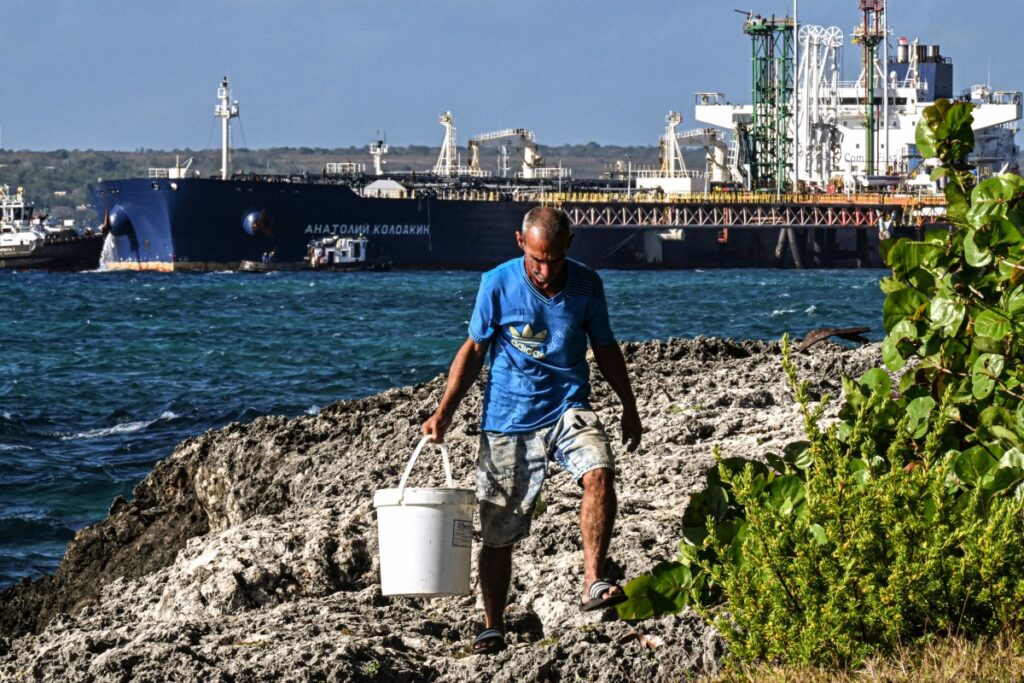
MANTANZAS, Cuba — In a development that has brought fleeting hope to a nation grappling with a deepening energy crisis, a Russian crude oil tanker subject to United States sanctions docked at Cuba’s Matanzas port on Tuesday, marking the first delivery of oil to the island in nearly four months. This shipment was only made possible after the Trump administration granted a temporary humanitarian exception to its strict fuel blockade targeting Havana.
Named the *Anatoly Kolodkin*, the vessel completed a three-week voyage from Russian oil fields to unload 730,000 barrels of crude at the port, located roughly 60 miles east of Havana, arriving shortly after sunrise. The delivery comes at a moment when Cuba has been pushed to the edge of a full-scale energy and humanitarian breakdown, following the collapse of its longstanding oil supply partnership with Venezuela earlier this year after US-backed opposition forces ousted Venezuelan leader Nicolas Maduro. After Maduro’s removal, the Trump administration issued stark threats to impose punitive tariffs on any country that continued to ship crude to Cuba, cutting off nearly all of the island’s regular supply.
For ordinary Cubans who have endured months of rolling nationwide blackouts, strict fuel rationing, and crippled public transportation, the arrival of the tanker is a welcome if fragile bright spot. Yoanna Rivero, a 49-year-old pharmacy worker who was exercising near the Matanzas waterfront, called the delivery a much-needed boost amid the country’s ongoing struggles. Felipe Serrano, a 76-year-old security guard who waited near the port to watch the ship dock, emphasized that the energy supplies are nothing short of critical for the island’s daily function, saying “the country is paralyzed” without consistent access to fuel.
But energy and economic experts warn that this single shipment will not resolve the deep, structural issues driving Cuba’s ongoing crisis. Cuban-American economist Ricardo Torres, based at American University in Washington, explained that while the delivery will provide short-term breathing room for the Cuban government and population, it falls far short of closing the massive energy deficit the island faces. Torres added that Cuba’s persistent power shortages are rooted in systemic, structural weaknesses rather than a temporary, one-time gap in supply, meaning even this large shipment will not fix the underlying problem.
Cuba’s Energy and Mining Minister Vicente de la O Levy publicly thanked Moscow for the delivery in a post on X, noting that the shipment arrives at a time of unprecedentedly complex energy challenges for the island. The Russian embassy in Havana responded to the post, reaffirming Russia’s longstanding solidarity with Cuba, calling it “a duty to help our Cuban brothers under these difficult circumstances.”
The exemption for this shipment marks a rare break in the Trump administration’s hardline policy toward communist-ruled Cuba. President Trump, who has openly mused about “taking” control of the island, told reporters Sunday that he did not oppose shipments of oil from Russia or other nations to Cuba, arguing that “Cubans have to survive.” White House Press Secretary Karoline Leavitt clarified that the decision does not represent a broader shift in US sanctions policy, noting that “we allowed this ship to reach Cuba in order to meet the humanitarian needs of the Cuban people. These decisions are being made on a case-by-case basis.” The Kremlin also confirmed that the two governments had discussed the shipment in advance of the tanker’s departure.
According to analysts from Washington’s nonpartisan Cuba Study Group, the US’s temporary energy restriction is a deliberate negotiating tactic. Executive Director Ricardo Herrero explained that the strategy of limiting oil supplies is designed to push Havana to make meaningful political concessions during ongoing bilateral talks, which Cuban President Miguel Diaz-Canel confirmed took place between US and Cuban officials in March. “The aim is to drive the system to the brink, but not to trigger a full societal or humanitarian collapse,” Herrero said, adding that the approach is consistent with Washington’s posture of controlling the pace and scope of diplomatic engagement: “It’s all consistent with the idea that the US holds all the cards, and they’ll decide when to hold, when to fold and when to go all in.”
Even before this shipment, the Cuban public had already grown increasingly frustrated by months of widespread shortages. Since the start of 2024, the island has suffered seven nationwide blackouts, including two major outages in March alone. Fuel prices have skyrocketed, and persistent shortages of basic goods including food and medicine have sparked rare public protests across the country.
Energy sector expert Jorge Pinon, a Cuba specialist at the University of Texas at Austin, noted that Cuba’s most urgent need right now is not crude oil, but refined diesel fuel, which powers backup generators for the national grid and keeps public and private transportation running across the island. It will take roughly a month to refine the newly delivered crude into usable diesel, and Pinon estimates the resulting fuel will only cover Cuba’s demand for roughly two weeks. Herrero added that the shipment is best categorized as a one-time humanitarian donation from Russia, and there is little evidence that Moscow is willing to commit to long-term subsidies to prop up Cuba’s struggling economy. “This is not going to help the economy recover,” he said. “This is just humanitarian aid.”