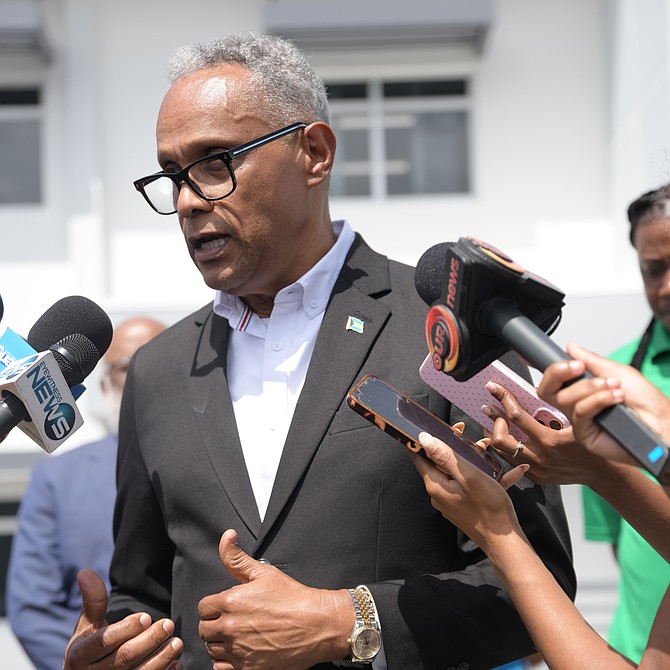
The Bahamas Ministry of Health and Wellness has announced a strategic initiative to enhance emergency medical response capabilities across its larger Family Islands. This development comes in direct response to recent incidents that exposed critical challenges in ambulance service coverage, particularly in regions with significant geographical distances.
Health and Wellness Minister Dr. Michael Darville revealed plans to deploy at least two ambulances to major islands including Exuma, where current emergency response infrastructure has proven inadequate. The expansion specifically targets the Georgetown area, where vast distances have historically compromised the effectiveness of single-ambulance coverage.
This policy shift follows the tragic death of 29-year-old Deno Rolle on Exuma, whose family reported he waited nearly an hour for emergency medical transport after a hit-and-run incident. The circumstances surrounding his death have raised serious questions about response time adequacy in remote island communities.
Minister Darville acknowledged existing ambulance services while emphasizing the logistical challenges posed by large island territories. “We are now working the logistics on how to have at least two ambulances on our larger islands,” he stated, assuring residents that current single-ambulance operations would be expanded to dual-vehicle coverage.
The deployment coincides with the graduation of a new cohort of Emergency Medical Technicians from the Public Hospitals Authority Academy, with most specialists designated for Family Island assignments. This personnel expansion complements ambulance acquisitions funded through the Inter-American Development Bank.
Current emergency medical infrastructure already includes operational ambulances on Bimini, Cat Island, and San Salvador, with further deployments contingent on available trained staff. Minister Darville emphasized the importance of practical resource utilization, noting that vehicles must be accompanied by qualified personnel to ensure productive operation rather than remaining idle.
The ministry maintains that service expansion must balance operational costs with sustainability, considering the significant expenses associated with personnel training and equipment maintenance. Officials are implementing comprehensive maintenance programs and ensuring medical staff familiarity with updated emergency response systems to guarantee effective ground transportation services across the island chain.