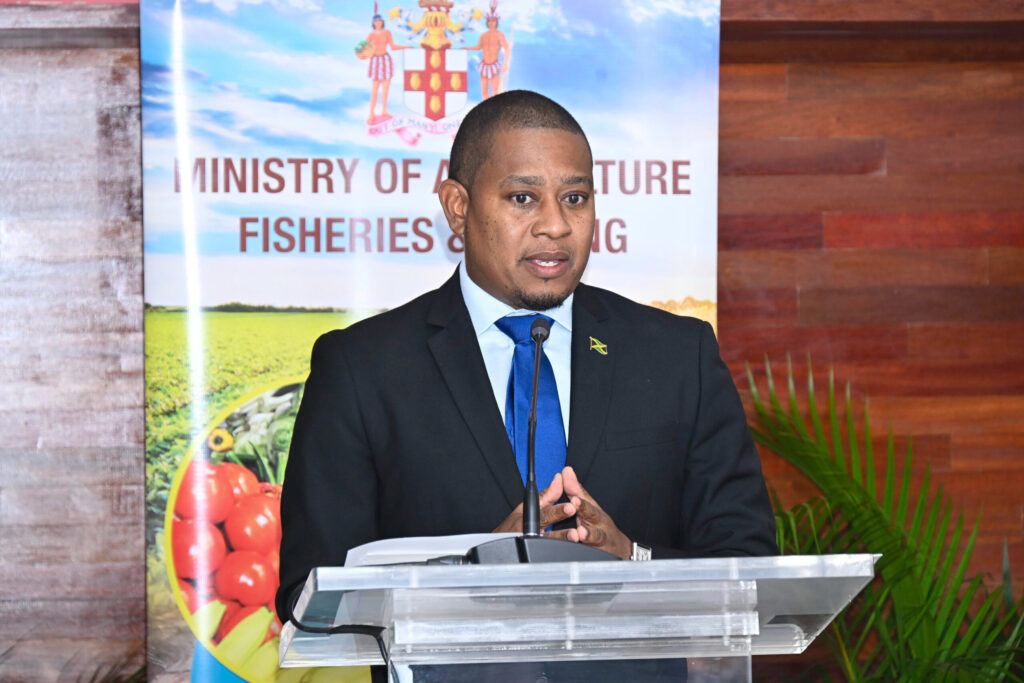
The Jamaican government has initiated a groundbreaking climate resilience program designed to provide direct, practical support to the nation’s agricultural sector. Agriculture Minister Floyd Green announced the ADAPT Jamaica programme, which will deliver advanced training, climate-smart tools, and improved financing access to approximately 700,000 beneficiaries, with particular emphasis on women, youth, and smallholder farmers.
Funded by a substantial $50 million approval from the Green Climate Fund, this comprehensive initiative will concentrate on six central parishes that collectively account for roughly 70% of domestic food production. These regions have historically suffered from repeated exposure to drought, severe storms, land degradation, and limited access to irrigation and financial services.
Minister Green articulated a fundamental shift in approach during a press conference at the Office of the Prime Minister, stating that resilience can no longer merely involve post-disaster recovery. Instead, the programme represents a strategic opportunity to address deeper structural weaknesses within Jamaica’s agricultural framework.
The programme’s four-pillar strategy includes: implementing climate-resilient agricultural practices and reducing food loss (currently estimated at 30-40% of production); strengthening climate information services; enhancing policy and institutional frameworks; and developing investment-ready financing solutions.
Geographic focus areas—Clarendon, Trelawny, Manchester, St Ann, St Catherine, and St Elizabeth—were selected based on historical losses associated with recent hurricanes, including Melissa (October 2023) and Beryl (July 2024).
The implementation will emphasize practical, visible, and scalable solutions at the farm level. This includes developing model farms and farm clusters that demonstrate climate-resilient technologies in real-time, such as solar-powered irrigation systems, storm-resistant reinforced greenhouses, and efficient water management systems including drip irrigation.
A critical component involves improving the flow of weather and crop information to farmers through a dedicated climate information system, enabling better decision-making amid increasingly unpredictable weather patterns.
Financing accessibility receives particular attention, with portions of funds being routed through the Development Bank of Jamaica to ensure smallholder farmers can access capital for agricultural investments.
The programme incorporates targeted inclusion strategies to ensure equitable access for traditionally underserved groups, including women and youth. Additional components are specifically tailored to address damage from Hurricane Melissa, including cash transfers, cash-for-work initiatives, and development of major irrigation systems.
While implementation will unfold over several years—with baseline data collection in year one, active implementation in years two through four, and monitoring and evaluation thereafter—Jamaica Social Investment Fund Managing Director Omar Sweeney indicated farmers could begin seeing benefits during the initial year. The programme builds upon groundwork established through the Rural Economic Development Initiative (REDI).
The initiative represents one of Jamaica’s most significant climate-focused agricultural investments to date, involving collaboration with the Food and Agriculture Organization of the United Nations, JSIF, the Ministry of Agriculture, Fisheries and Mining, and the Development Bank of Jamaica.