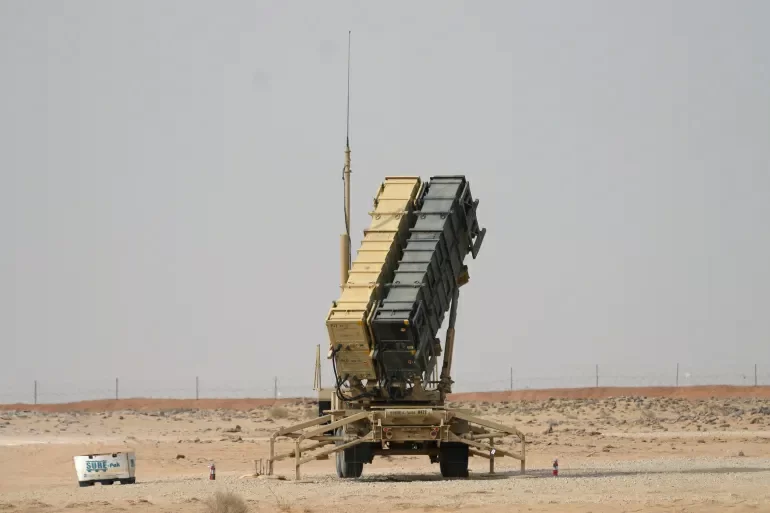
In a significant escalation of the ongoing US-Israel military campaign against Iran, Tehran has demonstrated formidable asymmetric warfare capabilities by successfully targeting critical American air defense assets across the Middle East. According to multiple defense sources, Iranian forces have damaged or destroyed radar systems, THAAD missile defenses, and Reaper drones at US bases in Saudi Arabia, UAE, Bahrain, Jordan, and Kuwait throughout February and March.
The most devastating strike occurred Friday at Prince Sultan Air Base in Saudi Arabia, approximately 96 kilometers southeast of Riyadh. Iranian rockets and drones reportedly damaged multiple KC-135 aerial refueling tankers and an E-3 Sentry AWACS (Airborne Warning and Control System) aircraft. Air & Space Forces Magazine confirmed the attack left at least 15 American personnel wounded, with five in serious condition, though neither US military officials nor Saudi authorities have formally commented.
Satellite imagery published by Iran’s Press TV appears to show extensive damage to aircraft at the base following the attacks. If verified, this represents the second assault on the facility within a week, following a March 13 incident that damaged five KC-135s according to Wall Street Journal sources.
Military experts emphasize the strategic significance of targeting the E-3 Sentry, a modified Boeing 707/320 aircraft that serves as the US Air Force’s primary airborne battle management system. Retired Colonel John Venable told WSJ the attack “harms the US ability to see what’s happening in the Gulf and maintain situational awareness.” Heather Penney, former F-16 pilot and research director at Mitchell Institute for Aerospace Studies, noted the loss “is incredibly problematic given how crucial these battle managers are for everything from de-escalating airspace conflicts to targeting and delivering lethal effects.”
The AWECS platform, operational since 1977, provides surveillance across all altitudes and weather conditions with a radar range exceeding 375 kilometers. With only 16 E-3s in service, the US had deployed six to bases in Europe and the Middle East during the current conflict.
Beyond aerial attacks, Iran has effectively blockaded the Strait of Hormuz—transit point for 20% of global oil shipments—driving crude prices above $100 per barrel, a 40% increase since hostilities began. The Pentagon is reportedly preparing a $200 billion supplemental budget request to replace damaged systems amid concerns about dwindling missile inventories.
Casualty estimates indicate at least 13 US military fatalities and approximately 200 wounded since the conflict began one month ago. Iranian health authorities report at least 1,900 killed and over 18,000 wounded nationally.