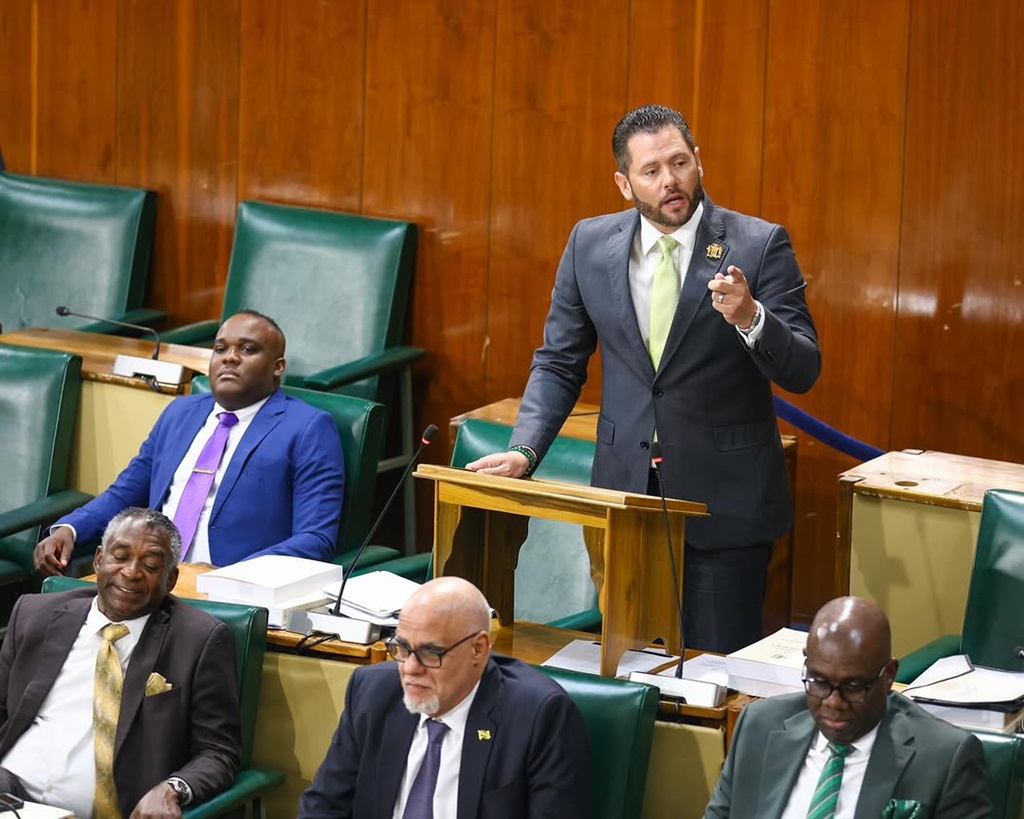
In a landmark address to the Senate, Government Senator Christian Tavares-Finson revealed that Jamaica has achieved its lowest homicide rate in 31 years, crediting the Holness administration’s strategic security policies for a dramatic 43% reduction in murders. The announcement came during the marathon debate on the Appropriations Bill, which concluded late Friday evening.
Senator Tavares-Finson presented compelling statistics showing murders dropped from 1,147 in 2024 to 673 in 2025—the first time Jamaica’s murder toll has fallen below 700 in three decades. The momentum continues into 2025 with a further 29.4% reduction in murders recorded between January 1 and March 14 compared to the same period last year.
The senator attributed this success to “sustained, intelligence-led security operations reinforced by deliberate legislative reform” and the systematic strengthening of Jamaica’s national security institutions. He emphasized that these results represent a “decisive break from the past” rather than incremental progress.
In a sharp political critique, Tavares-Finson accused the Opposition People’s National Party (PNP) of obstructing government efforts against crime rather than partnering in the initiative. “Our memories are not short,” he stated, recalling that the PNP had demanded a crime plan while simultaneously voting against the administration’s anti-crime measures.
The government’s strategy has relied on strategic emergency measures that created operational space for security forces to build capacity while containing threats. Tavares-Finson highlighted investments in “superior intelligence, stronger communications, enhanced mobility, and advanced tactical capability” while insisting these capabilities operate “within the rule of law, with respect for human rights.
Looking forward, the administration announced a major J$5 billion investment to establish the Camp Wareika Forward Operating Base across 100 acres—characterized not as mere infrastructure but as a “strategic investment in territorial dominance” for the Liguanea Plains region. This signals a transition from reactive crisis management to persistent strategic readiness against emerging threats.