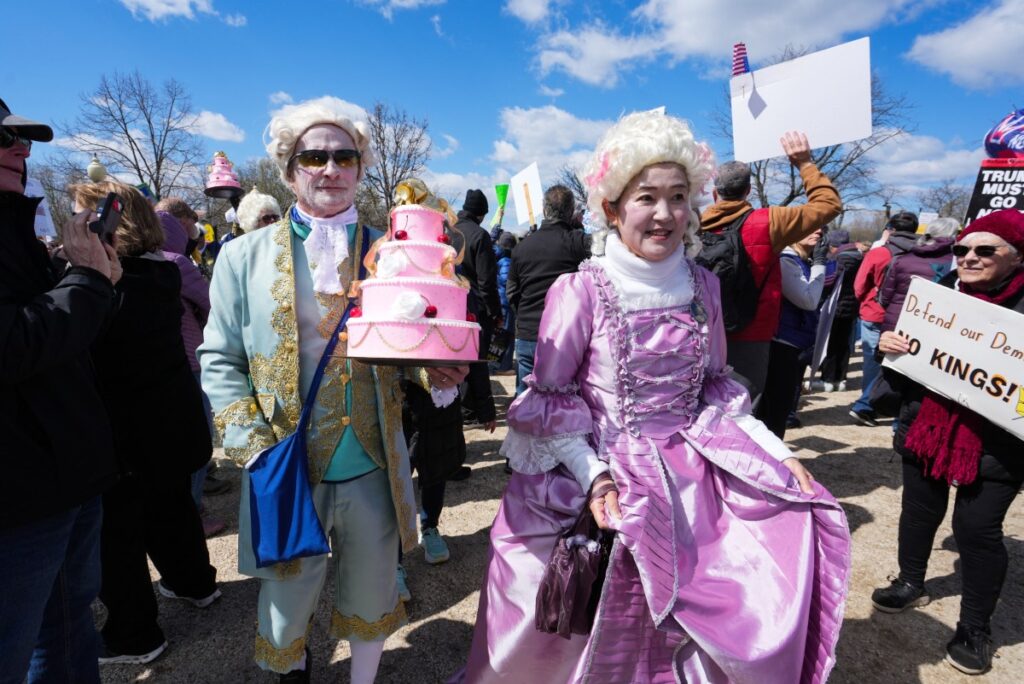
MINNEAPOLIS (AFP) — Millions of demonstrators mobilized across the United States and international cities on Saturday in the third major wave of “No Kings” protests, expressing profound opposition to President Donald Trump’s governance style and recent foreign policy decisions. The movement, which has evolved into the most visible resistance force since Trump’s second term began in January 2025, now directs its outrage toward the administration’s joint military campaign with Israel against Iran, characterized by ambiguous objectives and fluctuating timelines.
The protests transcended U.S. borders with coordinated demonstrations in European capitals including Amsterdam, Madrid, and Rome. Domestic rallies manifested from Atlanta to Washington, where participants braved sub-freezing temperatures in Michigan and marched across Potomac River bridges bearing signs declaring “Trump Must Go Now!” and “Fight Fascism.” One Atlanta protester’s placard captured the movement’s central anxiety: “We Are Losing Our Democracy.”
Organizers reported planning over 3,000 events nationwide, including in remote locations like Kotzebue, Alaska, above the Arctic Circle. Minnesota emerged as a symbolic epicenter months after becoming the focal point of national debates surrounding Trump’s immigration policies. The state witnessed legendary musician Bruce Springsteen performing his protest ballad “Streets of Minneapolis” in St. Paul, commemorating two citizens killed during January immigration protests.
The movement has demonstrated substantial growth since its inception on Trump’s 79th birthday in June 2025, when several million Americans protested during the president’s military parade. October’s demonstrations drew approximately seven million participants according to organizers, who aimed to exceed those numbers amid Trump’s sub-40% approval ratings and impending midterm elections.
Naveed Shah of Common Defense, a veterans association aligned with the movement, articulated the protesters’ concerns: “This administration has dragged us deeper into war while citizens face militarized forces domestically. Families are torn apart and immigrant communities targeted—all in service of one man ruling like a king.” Critics cite Trump’s governance through executive decrees, weaponization of the Justice Department, climate change denial, dismantling of diversity initiatives, and abandonment of non-interventionist foreign policy as key grievances.
Notably, organizers indicate that approximately two-thirds of Saturday’s protesters reside outside major urban centers—a significant increase from previous demonstrations suggesting the movement’s expanding geographical diversity.