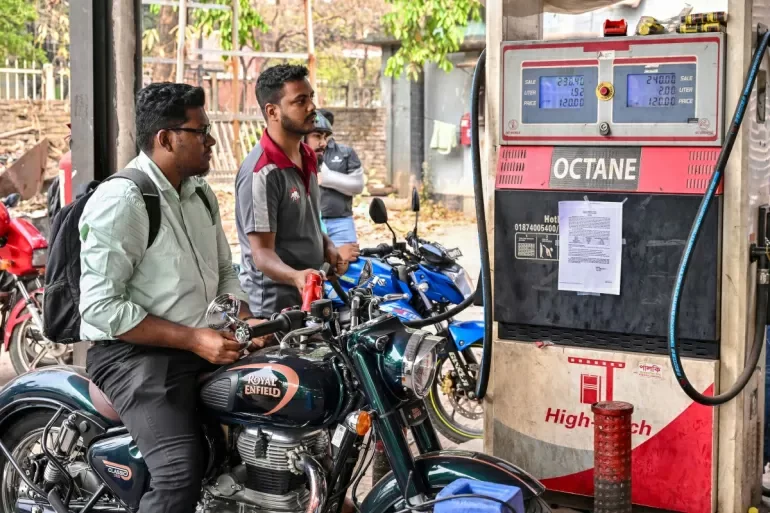
The escalating military conflict between the United States, Israel, and Iran has triggered a global energy crisis that disproportionately impacts the world’s most vulnerable economies across Asia, Africa, and the Middle East. As supply disruptions from the Strait of Hormuz closure and attacks on Gulf energy facilities drive oil prices upward, developing nations with high import dependency and limited fiscal capacity face unprecedented economic challenges.
Pakistan exemplifies the crisis, importing approximately 80% of its energy from the Gulf region while battling persistent economic instability. With fuel reserves projected to deplete within weeks, authorities have implemented emergency measures including school closures, a four-day government workweek, and drastic reductions in official travel allowances. Prime Minister Shehbaz Sharif has temporarily absorbed price increases ahead of Eid al-Fitr celebrations, though economists warn this reprieve may be short-lived.
Neighboring Bangladesh, which imports 95% of its oil, has already exhausted fuel supplies in several districts despite implementing rationing systems. Similarly, Sri Lanka—still recovering from its 2019 economic collapse—has declared weekly holidays and introduced mandatory fuel passes for vehicle owners as reserves dwindle dangerously low.
In Egypt, among the Middle East’s most indebted economies, the government has ordered commercial establishments to close early and reduced public lighting. Officials announced 15-22% price hikes for gasoline, diesel, and cooking gas in March, with President Abdel Fattah el-Sisi acknowledging public hardship while insisting these measures prevent “more serious and dangerous consequences.”
The crisis compounds existing vulnerabilities through currency depreciation against the US dollar, with currencies like Indonesia’s rupiah and the Philippine peso hitting near-record lows even before the conflict. This depreciation makes oil imports substantially more expensive, creating what economist Yeah Kim Leng describes as “a powerful combination of inflation, currency pressure, and budgetary pressure” for nations already struggling with debt and high import dependency.
According to the Washington-based Centre for Global Development, Pakistan, Bangladesh, Sri Lanka, Jordan, Senegal, Egypt, Angola, Ethiopia, and Zambia face the highest risk due to their fuel import reliance, debt levels, and foreign exchange reserve ratios.
The human impact remains severe across less developed economies, where households spend significantly larger portions of income on fuel and food. Governments possess limited capacity to provide safety nets, creating conditions ripe for social unrest when subsidy programs become unsustainable amid depleted budgetary reserves.
As analyst Khalid Waleed notes from Islamabad, rising diesel costs—the backbone of freight and agricultural economies—will soon translate to higher food prices. With Pakistan’s wheat harvest commencing in April, equipment running on diesel will operate at peak costs, potentially driving food inflation to levels that households cannot absorb.