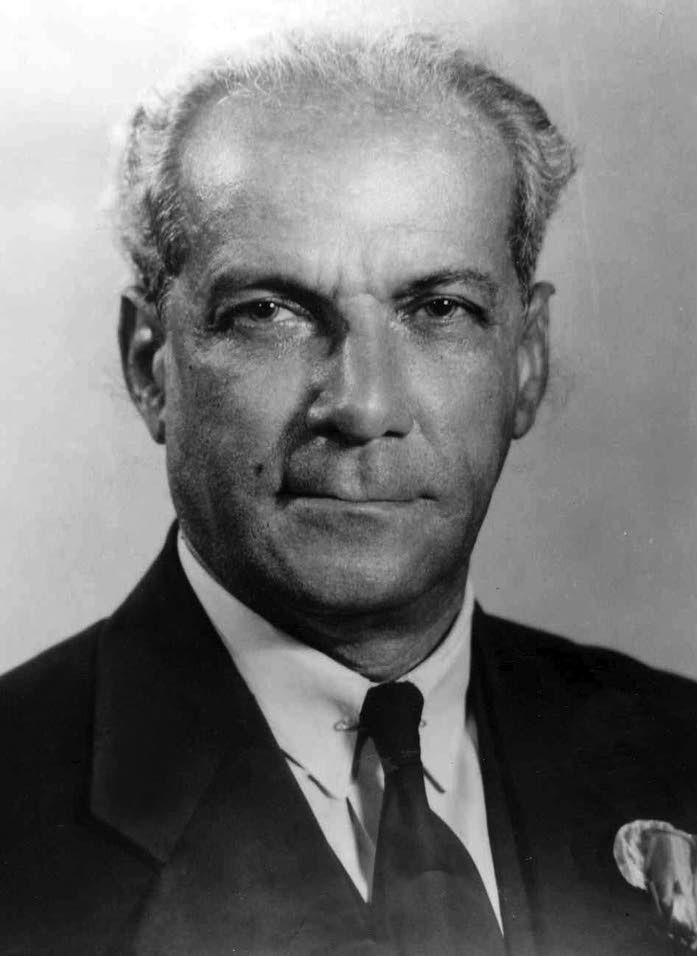
Long before his ascent to political prominence and designation as a National Hero, Norman Washington Manley established an extraordinary athletic legacy at Jamaica College that would foreshadow his future leadership. In 1911, the young scholar-athlete delivered a performance for the ages at the ISSA Boys’ Athletics Championship, single-handedly securing his school’s first national title by winning five individual events.
The athletic landscape preceding Manley’s dominance saw Wolmer’s Boys’ claim the inaugural 1910 championship with 35 points, while Jamaica College trailed with 30.4 points. Even in defeat, Manley demonstrated exceptional versatility, accumulating 11 points through silver medals in the Class One 100 yards, 440 yards, and long jump, complemented by a gold in the 880 yards open.
His 1911 campaign remains one of the most spectacular in championship history. Manley generated 17 of Jamaica College’s 33 total points through victories in the 100, 200, 440, 880, and 120 hurdle open events, while adding a second-place finish in the long jump. This heroic effort dethroned defending champions Wolmer’s Boys’ (28.5 points) and surpassed St. George’s College (22.5 points).
The following year witnessed even greater achievements as Manley captured six gold medals—Class One 100, 220, 440, long jump, plus 120 hurdles and high jump open events—propelling Jamaica College to back-to-back championships with 33 points, 18 of which came from his unparalleled performance.
Historical circumstances prevented international acclaim when World War I interrupted athletic pursuits. Manley, alongside his brother Douglas (the 1910 100m champion), JM Hall, and LB Young, answered the call to serve the British Empire, forfeiting potential Olympic glory in 1916.
Beyond the track, Manley’s multidimensional excellence shone through his academic and leadership roles. School records document his simultaneous service as monitor, football captain, sports team captain, cricket vice-captain, rifle club secretary, and Rhodes Scholarship candidate—all while maintaining distinguished academic performance with exceptional mathematical prowess.
His athletic determination translated seamlessly into professional and political endeavors. After studying law as a Rhodes Scholar at Oxford University, Manley emerged as a distinguished barrister and labour leader. He founded the People’s National Party in 1938, became Jamaica’s first and only premier in 1959, and spearheaded the independence movement that culminated in sovereignty in 1962.
Though his bid to become independent Jamaica’s first prime minister proved unsuccessful, Manley’s legacy endured beyond his passing in September 1969. The following month, he received Jamaica’s highest honor—designation as a National Hero—cementing his status as an enduring symbol of excellence whose athletic achievements continue to inspire generations of Jamaican athletes, including contemporary stars like Elijah Smeikle and Deandre Gayle at Jamaica College.