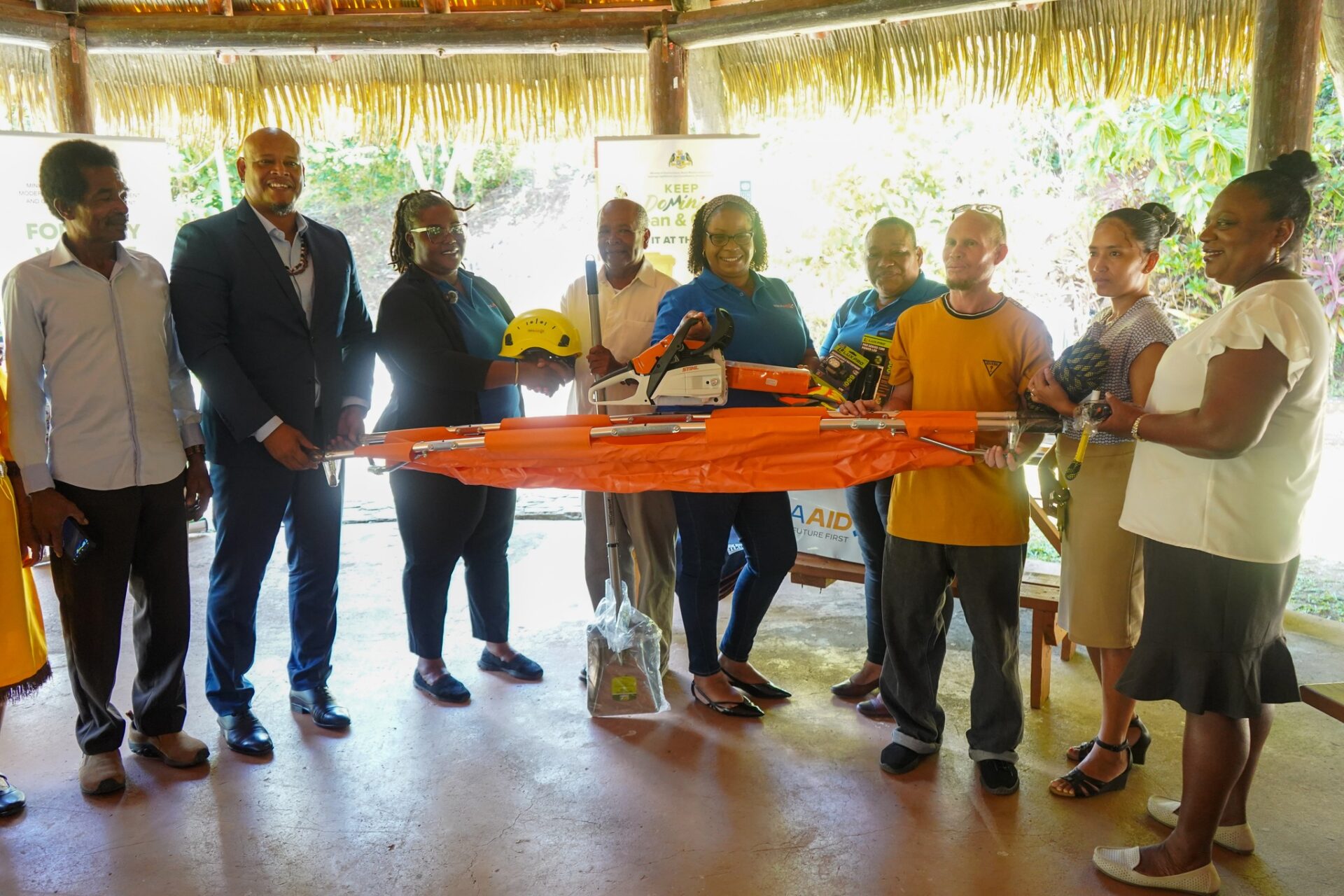
In a significant boost to disaster preparedness, the Kalinago Territory has received critical emergency management equipment through a collaborative initiative between IsraAID and the United Nations Development Programme (UNDP). The handover to the Kalinago Disaster Committee marks a concrete step toward enhancing community resilience in the indigenous territory.
During the ceremonial transfer, Parliamentary Representative for Salybia Constituency Cozier Frederick commended the partnership as both valuable and enduring. “I want to celebrate this collaboration. I want to cement it as something that we will continue to do,” Frederick stated, acknowledging the strategic importance of sustained cooperation in disaster readiness.
Frederick utilized the platform to highlight the historically overlooked contributions of the Kalinago people to national development and resilience building. He reflected on the foundational role of indigenous warriors in creating the bedrock of contemporary society, emphasizing that discussions about national resilience and empowerment must include Kalinago perspectives.
Connecting local preparedness to global challenges, Frederick noted: “In our own time, we are still fighting a serious battle… countries are in crisis.” He advocated for drawing upon cultural strength as a source of resilience, asserting that “when we look within ourselves and extract the Kalinago spirit, we can fight this thing.” This conviction is rooted in historical perseverance through wars, genocide, and diseases, providing a template for confronting modern challenges through consolidated efforts.
The newly provided equipment represents a practical advancement in community readiness. Frederick described the handover as fundamentally important, recognizing both the work ahead and the partnerships required while acknowledging the legacy upon which current efforts build.
UNDP project analyst Sawana Fabien detailed the comprehensive nature of the initiative, explaining that months of preparatory work preceded the equipment transfer. This included close coordination with the Forestry Division, site evaluations, watershed assessments, and procurement of materials to support plant propagation and nursery development.
Fabien characterized the equipment provision as “part of that proprietary investment” designed to enable structured and sustainable scaling of propagation and planting activities. The effort falls within a broader forest watershed management framework aimed at reinforcing forest systems and policy development.
Tangible outcomes expected from the project include implemented forest management policies for the Kalinago territory, established watershed and forest management committees, and support for committee-based livelihoods connected to reforestation efforts. Notably, the reforestration approach incorporates cash crops alongside native species, ensuring both ecological and community benefits.
This initiative represents a holistic approach to disaster resilience that integrates environmental management, cultural heritage, and sustainable development within the Kalinago Territory.