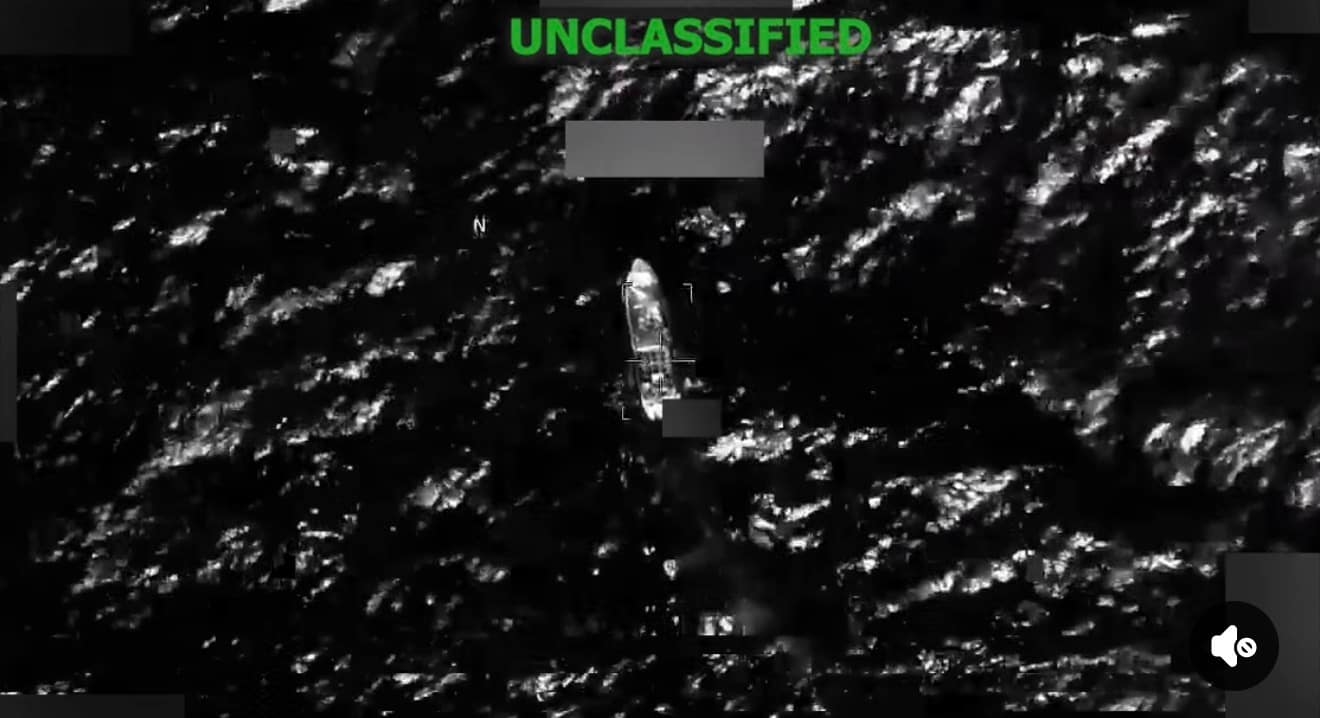
In a significant escalation of its counter-narcotics campaign, U.S. forces under Joint Task Force Operation Southern Spear conducted a targeted strike on a vessel in the Caribbean Sea, resulting in four fatalities. U.S. Southern Command (SOUTHCOM) officially confirmed the operation on Wednesday, alleging the boat was transporting illicit narcotics and was operated by entities it designated as terrorist organizations, though no specific group was identified.
This incident marks the third such engagement in March alone, raising the operation’s cumulative toll to 160 individuals killed across 47 separate strikes on suspected drug-smuggling crafts. According to data compiled by USNI News, this figure includes ten individuals who were initially reported as survivors but are now presumed deceased following unsuccessful search and rescue attempts. A previous strike on March 20th in the Eastern Pacific had left three survivors, though their current status remains unclear as the U.S. Coast Guard has not provided further updates.
The military action coincides with a major interdiction success. In a coordinated effort, the U.S. Coast Guard and the Ecuadorian Navy seized 592 kilograms of cocaine on Tuesday in international waters off the coast of Ecuador, a seizure announced by SOUTHCOM on the social media platform X.
This sustained counter-narcotics effort unfolds against a backdrop of shifting U.S. naval deployment priorities. The number of American warships in the SOUTHCOM area of responsibility has diminished as strategic focus pivots towards Iran. The guided-missile cruiser USS Gettysburg (CG-64) recently concluded its independent deployment, returning to Norfolk on Monday. Current U.S. naval presence in the region consists of the Iwo Jima Amphibious Ready Group, the cruiser USS Lake Erie (CG-70), and the destroyer USS Stockdale (DDG-106). It remains uncertain whether a replacement vessel will be dispatched to fill the capability gap left by the Gettysburg’s departure.