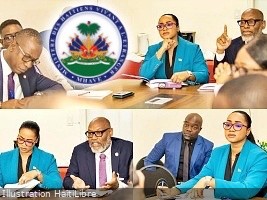
In a landmark move toward democratic inclusion, Haiti’s government has initiated a comprehensive strategy to formally incorporate its diaspora population into the nation’s electoral framework. On March 23, 2026, Minister J.E. Kathia Verdier of the Ministry for Haitians Living Abroad (MHAVE) convened a high-level assembly at the Provisional Electoral Council (CEP) headquarters, gathering representatives from key state institutions including the National Identification Office (ONI).
This groundbreaking meeting, conducted under Prime Minister Fils Aimé’s vision for a more representative democracy, marks a significant shift in Haiti’s political landscape. The government is establishing a structured process to examine, guide, and implement mechanisms for broader diaspora participation while maintaining compliance with institutional requirements and national circumstances.
Technical discussions centered on critical aspects including legal frameworks, organizational prerequisites, and essential technical conditions necessary for evolving Haiti’s electoral system. This methodological approach emphasizes gradual development through consultation, institutional accountability, and the pursuit of context-appropriate solutions.
Minister Verdier characterized this initiative as a pivotal political advancement in modernizing state infrastructure and strengthening democratic legitimacy. She highlighted the growing acknowledgment of the diaspora’s strategic importance in shaping national policy directions, while emphasizing the need for rigorous, systematic, and inclusive implementation methodologies.
The Prime Minister’s office reaffirmed its dedication to advancing this democratic expansion with transparency and public service ethos, ensuring alignment with institutional equilibrium and national development priorities.