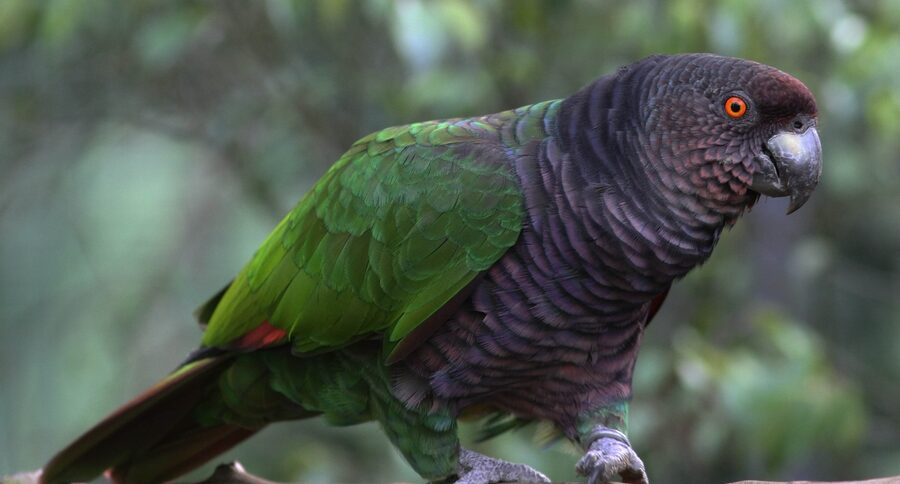
A groundbreaking conservation partnership has been formally initiated to address the critical endangerment of Dominica’s national bird, the Imperial Amazon parrot (Amazona imperialis). The ambitious program, designated “Sisserou Conservation with Civil Society (SCCS),” represents a strategic coalition between the Dominican environmental organization EcoBalance Inc. and the regional non-governmental entity Caribaea Initiative.
Financial and logistical support for the endeavor is being provided by the Critical Ecosystem Partnership Fund (CEPF), with operational coordination handled by Dominica’s governmental Forestry, Wildlife, and Parks Division. This multi-stakeholder approach aims to confront the complex challenges that have persistently threatened the Sisserou’s survival, despite previous conservation measures.
The iconic parrot, which exists nowhere else on Earth beyond Dominica’s mountainous rainforests, confronts an existential triad of threats: accelerating climate change impacts, progressive habitat fragmentation, and occasional conflicts with agricultural operations. The SCCS project framework incorporates several integrated methodologies to counter these pressures.
Strategic components include enhancing scientific research capabilities, mobilizing civil society volunteers for monitoring operations, and executing nationwide public awareness campaigns. A particularly innovative element involves establishing formal partnerships with agricultural communities, educational institutions, and civic organizations to embed conservation practices within social and economic activities.
Program architects have outlined specific implementation activities including specialized training workshops, community engagement initiatives, and institutional collaboration protocols. These efforts are strategically designed to culminate in the development of a sustainable, long-term conservation strategy that ensures persistent protection measures for this Caribbean avian emblem.
Caribaea Initiative representatives emphasized that the project’s core innovation lies in its integrative approach, fundamentally strengthening cooperation between conservation experts, civil society, and local communities to secure the species’ future.