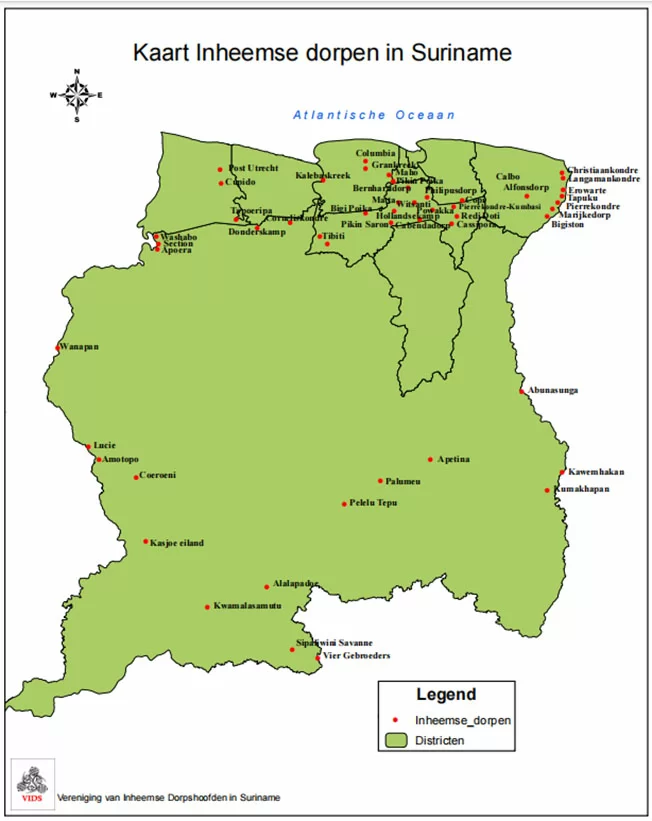
On World Water Day, the Association of Indigenous Village Chiefs in Suriname (VIDS) has issued an urgent appeal addressing the severe water infrastructure deficits plaguing indigenous communities throughout the country. Despite international development agendas—including the Sustainable Development Goals (SDGs)—promising to ‘leave no one behind,’ indigenous and tribal populations in Suriname continue to experience systemic neglect regarding access to clean drinking water, sanitation, and reliable infrastructure.
Recent analyses confirm that numerous interior communities remain dependent on rainwater, creeks, or rivers due to a near-total absence of basic water systems. Village leaders from multiple regions reported alarming conditions:
In Marowijne, villages such as Langamankondre and Christiaankondre face acute water shortages, requiring emergency shipments from Paramaribo to supply schoolchildren. These communities also lack consistent electricity, relying on outdated generators despite proximity to urban centers. Similarly, in Alfonsdorp, a water source managed by the Surinamese Water Company exists but fails to provide 24/7 supply, forcing residents to rely on irregular and often contaminated water from neighboring villages.
In Para, growing settlements like Wit Santi struggle with water accessibility, with households compelled to carry water long distances or collect rainfall. High connection fees further exacerbate inequities. Meanwhile, in Hollandse Kamp, taps have run dry for four years, and trucked-in water frequently fails to meet SDG 6 safety standards.
Water quality remains another critical concern. In Donderskamp, recently rehabilitated water installations still produce dark, undrinkable water, compelling residents to seek alternative—and often unsafe—sources. In western regions such as Apoera, Section, and Washabo, arbitrary flat fees and alleged payment arrears—sometimes exceeding SRD 10,000—have sparked outrage, especially as meter installation costs remain unaffordable for most families.
Southern Suriname suffers near-total absence of water infrastructure, with communities depending on river and creek water increasingly contaminated by mining pollutants, erosion, and climate-induced droughts and floods.
Water pollution poses a severe threat to traditional sources. Rivers once considered safe, like the Marowijne, are now tainted by mercury and chemicals from gold mining—activities often licensed without adequate protection for indigenous territories.
Women and girls bear the heaviest burden, as water collection and management traditionally fall to them. Water scarcity heightens their workload, curbing educational and economic opportunities and compounding discrimination based on gender, ethnicity, and socioeconomic status.
VIDS emphasizes that these issues stem from structural marginalization, insufficient inclusion in policy processes, and the lack of full legal recognition of indigenous collective rights. Although indigenous organizations are occasionally invited to policy dialogues, their input rarely influences outcomes.
The association urges the government and relevant agencies to:
– Invest urgently in sustainable interior water infrastructure;
– Ensure fair and affordable water pricing;
– Strictly regulate mining-related water pollution;
– Involve indigenous communities in decision-making through Free, Prior, and Informed Consent (FPIC);
– Center gender equality in water policy.
Without structural solutions and genuine community participation, VIDS warns, the SDG pledge to ‘leave no one behind’ will remain an empty promise for Suriname’s indigenous peoples.