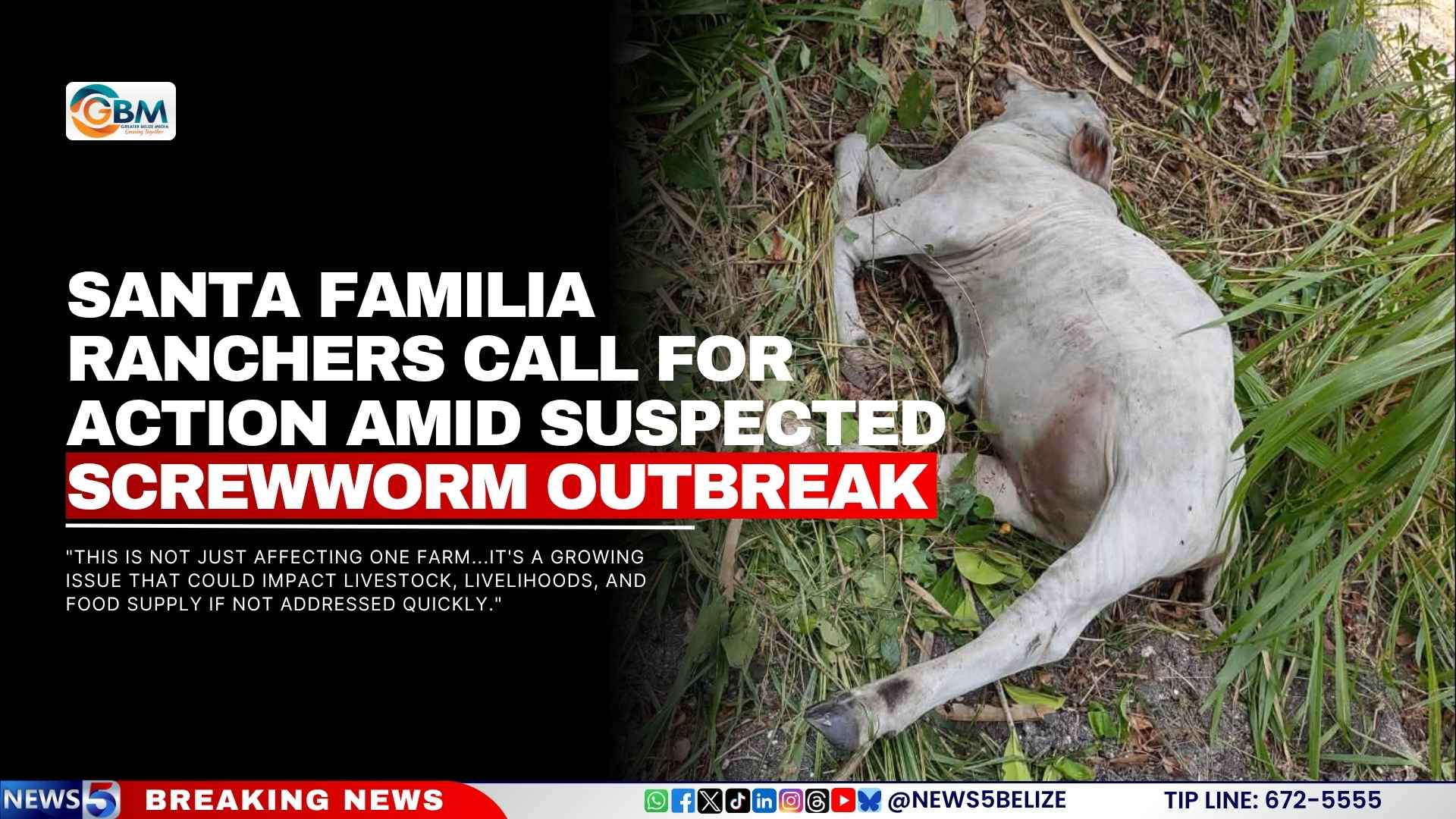
Cattle ranchers in Belize’s Santa Familia region are issuing urgent appeals for government intervention as a suspected screwworm epidemic threatens both animal welfare and agricultural stability. Local agriculturalists report escalating livestock fatalities, with one established farmer confirming the loss of five cattle—including three calves and two mature cows—despite implementing preliminary treatment measures on infected animals.
The situation, initially observed as sporadic incidents nearly ten months ago, has rapidly evolved into a multi-farm crisis across the district. Farmers indicate that the Belize Agricultural Health Authority (BAHA) has conducted preliminary farm inspections and implemented cattle tagging procedures. However, producers assert these measures lack the coordinated strategy necessary to contain the worsening outbreak.
Screwworm parasites (Cochliomyia hominivorax) represent a historically devastating biosecurity threat capable of rapidly infesting open wounds in livestock. Without prompt and systematic intervention, the parasitic infestation proves fatal in most cases and demonstrates rapid transmission capabilities within herds.
“This transcends individual farm operations,” emphasized one affected rancher who requested anonymity. “We’re confronting a potential agricultural emergency that jeopardizes food security, rural livelihoods, and the regional meat supply chain. The current response fails to match the outbreak’s severity.”
Agricultural stakeholders are demanding enhanced public awareness campaigns, accelerated diagnostic confirmation, and implementation of large-scale containment protocols to prevent further dissemination of the parasitic infestation throughout Belize’s livestock sector.