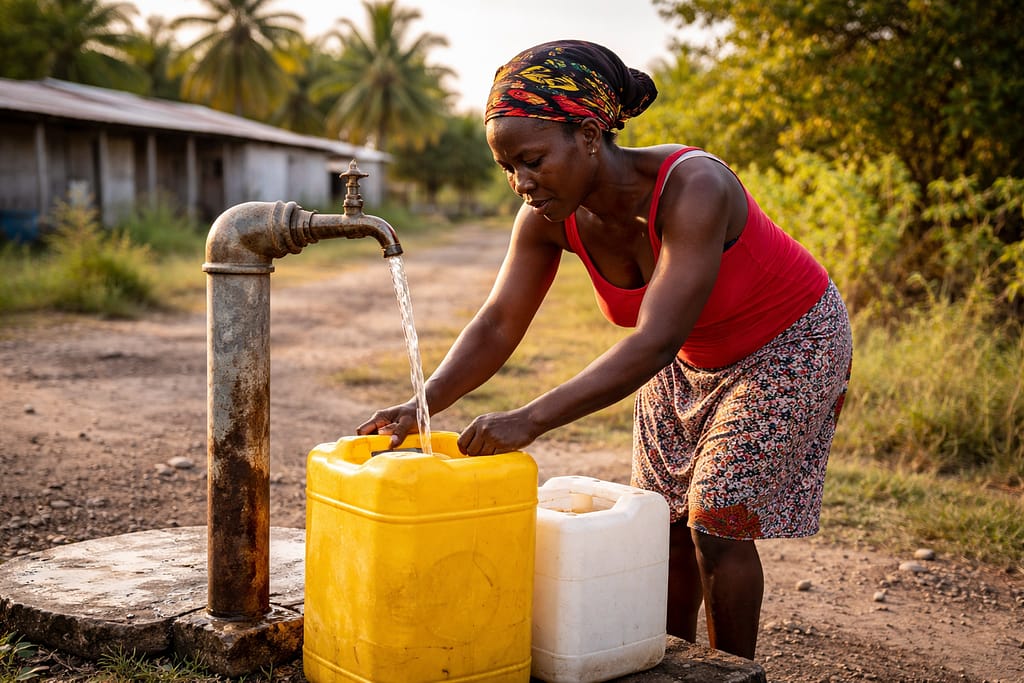
A profound global water disparity continues to disproportionately burden women and girls worldwide, revealing systemic gender inequalities embedded in water access and management. Current statistics indicate that over one billion women lack safely managed drinking water services, forcing them into a daily struggle that consumes 250 million hours collectively—more than triple the time spent by men and boys on water collection in 53 documented countries.
The correlation between water access, gender equality, and sustainable development has gained renewed attention through World Water Day 2026, observed annually on March 22. This year’s theme, “Water and Gender,” shifts focus beyond conservation to highlight how water scarcity intensifies gender inequality. The campaign emphasizes water’s critical role in advancing gender equality and empowering women, who traditionally bear responsibility for household water management, family health, and food production.
Despite their central role in water-related activities, women remain significantly underrepresented in water governance, technical planning, and decision-making spheres. The World Bank reports that merely 20% of utility employees are female, reflecting persistent industry biases that view women’s employment as unproductive. This gender gap in water sector employment represents both a social injustice and a wasted opportunity for industry innovation.
The United Nations and World Health Organization underscore the devastating consequences of water inequality, linking unsafe water, sanitation, and hygiene to approximately 1,000 daily deaths of children under five. These alarming figures demonstrate the urgent need for transformative approaches that address water access as both a human rights issue and a gender equality imperative.
Solving the global water crisis requires equitable female representation across all levels of water leadership and a gender-responsive approach to policy development. Utility companies, trade unions, governments, and educational institutions must collaborate to close data gaps and create inclusive water governance systems. As climate change intensifies water scarcity, ensuring women’s participation in water decisions becomes increasingly critical for developing effective, sustainable solutions that benefit entire communities.
World Water Day 2026 serves as a powerful reminder that water security and gender equality are inextricably linked—where water flows responsibly, equality genuinely grows.