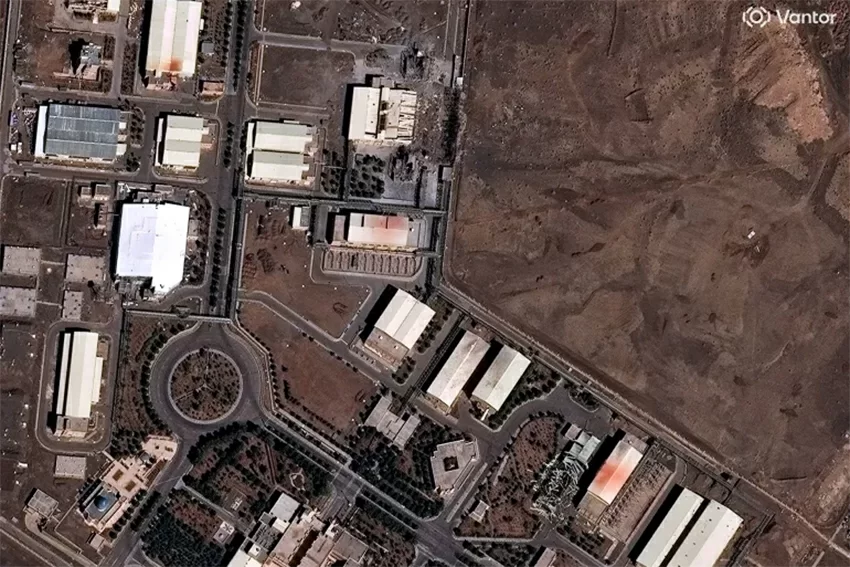
The Middle East faces unprecedented turmoil as military confrontations between Iran, Israel, and the United States intensify, targeting critical infrastructure and threatening global energy security. Recent developments include a suspected Israeli-American strike on Iran’s Natanz nuclear enrichment facility, though Israel has denied involvement. International Atomic Energy Agency officials have confirmed no radioactive leakage from the site, while Russia condemned the attack as a “blatant violation of international law.
Simultaneous Israeli airstrikes hit Beirut areas associated with Hezbollah and multiple Iranian cities including Tehran, Karaj, and Isfahan. Iranian media reported three civilian fatalities in a residential building strike in Ramsar, prompting widespread sheltering across Israel in response to air raid alerts.
Iran retaliated by launching ballistic missiles toward the joint US-UK military base on Diego Garcia Island in the Indian Ocean, approximately 3,800 kilometers away. The missiles missed their target, and the UK Defense Ministry noted the attack occurred before authorization was granted for using British bases for American operations against Iranian targets.
President Donald Trump signaled a potential reduction in US military engagement, stating via social media that America is “very close to achieving our objectives” and considering scaling back Middle Eastern operations. He urged other nations to assume responsibility for securing the Strait of Hormuz—a critical passage for approximately 20% of global oil and gas exports—emphasizing that the US should not bear this burden alone.
The conflict has already claimed over 2,000 lives since hostilities began on February 28, with energy infrastructure attacks driving a 50% surge in oil prices and triggering worldwide inflation. European gas prices jumped 35% this week due to damaged facilities, prompting EU calls for reduced consumption and energy demand management.
Diplomatic channels show slight openings, with Iran indicating willingness to permit Japanese vessels—which handle nearly 90% of Japan’s oil imports—safe passage through the Strait of Hormuz. Meanwhile, Germany and France insist violence must cease before further steps can be taken, even as the US, Japan, Canada, and European allies pledge to secure the vital waterway.
National positions remain firm: Israel vows to continue targeting Iranian military capabilities, Iran’s leadership emphasizes national unity and resilience, Russia advocates political solutions, and the EU focuses on stabilizing energy markets through coordinated action.