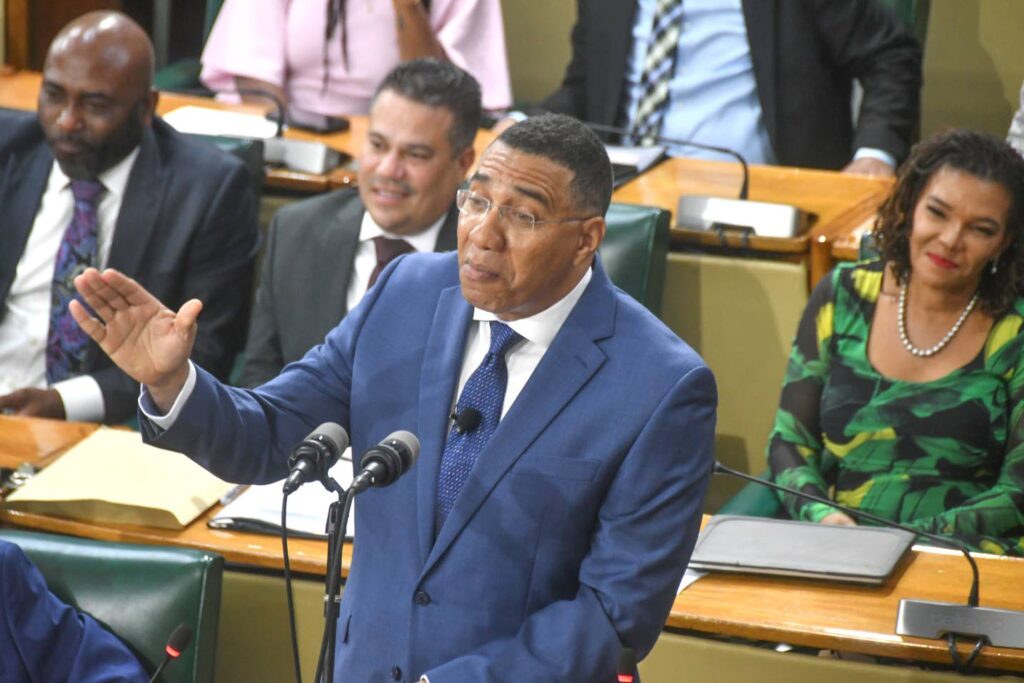
Jamaica’s ambitious public sector wage reform has achieved its primary objective of elevating government worker compensation, yet Prime Minister Andrew Holness now confronts an unforeseen fiscal challenge that threatens the nation’s economic equilibrium. During his pivotal address in the 2026/27 Budget Debate, Holness revealed that the comprehensive compensation overhaul has dramatically altered Jamaica’s financial landscape, compelling a strategic pivot toward productivity-anchored earnings.
The three-year reform initiative successfully rectified historical pay disparities between public and private sectors that had hampered talent acquisition and retention. The restructuring established transparent, simplified compensation frameworks across government entities. However, this achievement carries substantial fiscal consequences: the national wage bill has surged by approximately 3.7% of GDP, now consuming 13.8% of economic output compared to the previous 9% target. More strikingly, nearly half of every tax dollar (49 cents) now funds public sector compensation, up from 36 cents pre-reform.
Holness emphasized that these figures represent more than statistical changes—they signify a structural transformation constraining governmental capacity to invest in critical infrastructure, healthcare, and development initiatives. This fiscal pressure intensifies amid ongoing hurricane recovery efforts, creating dual demands on limited national resources.
The Prime Minister articulated a fundamental policy shift, declaring that future wage negotiations must transcend traditional inflation-indexed adjustments. Instead, compensation increases must correlate directly with measurable productivity gains and GDP growth. Holness warned that disconnecting wages from economic performance would inevitably trigger inflationary cycles, eroding purchasing power and undermining intended living standard improvements.
This transition toward productivity-linked compensation acknowledges potential contention, particularly as workers navigate persistent cost-of-living challenges. Nevertheless, Holness positioned this approach as essential to preserving Jamaica’s hard-won macroeconomic stability—a stability that proved crucial during Hurricane Melissa’s devastation in October 2025. The administration seeks collaborative engagement with trade unions to develop sustainable wage frameworks aligned with fiscal realities, emphasizing that long-term income growth ultimately depends on strengthening nationwide productivity rather than merely managing compensation expenditures.