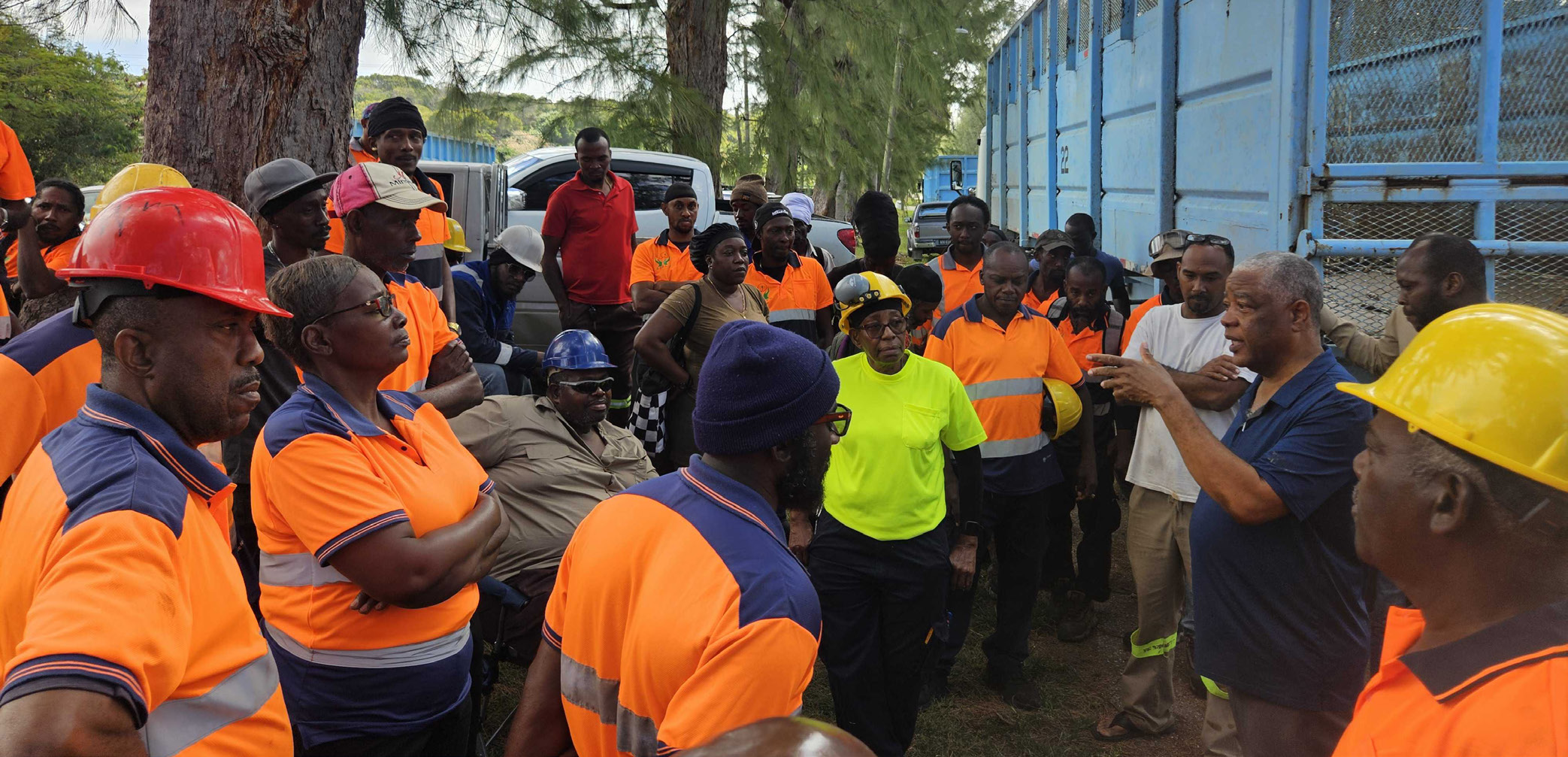
A profound crisis of ownership and governance has plunged Barbados’s sugar industry into turmoil, culminating in a worker strike at the Portvale processing facility. Employees of the Barbados Energy and Sugar Company Inc. (BESCO) are protesting chronic mismanagement and the collapse of a government-backed initiative that promised them partial ownership of the sector.
The core grievance stems from debilitating uncertainty regarding their actual employer. Veteran sugar boiler Cedric Eastmond, with 26 years of service, articulated the workers’ frustration, stating they lack a clear entity to address their grievances. “We need clarity that there’s a company called BESCO, that we have somebody that we can go to,” Eastmond emphasized, highlighting the absence of visible corporate leadership beyond local factory management.
This operational ambiguity compounds the disappointment from the sudden termination of a landmark restructuring plan. Announced in January 2024 by then-Agriculture Minister Indar Weir, the model proposed a revolutionary ownership structure: Co-op Energy (55%), workers (20%), and the government (25%). The initiative, designed to replace the defunct Barbados Agricultural Management Company, established BESCO for milling and The Agricultural Business Company Ltd for agriculture. However, the government’s memorandum of understanding with Co-op Energy was abruptly terminated on August 18, 2025, shattering hopes for worker participation and leaving the industry’s future in limbo.
Beyond ownership disputes, Eastmond detailed deep-seated operational failures. He cited rampant “favoritism,” “discrimination, and victimization” by unprofessional management, alongside a glaring lack of training programs and career development opportunities. Critical infrastructure shortcomings exacerbate losses; the factory frequently receives more cane than it can process, leading to spoilage and reduced purity in storage. Furthermore, congested storage bonds for processed sugar have forced complete production halts, as was the case last year when grinding stopped for two days because there was nowhere to store the output.
Eastmond calls for urgent intervention, including expert technical consultants, a rigorous maintenance program, and a functional marketing system to ensure the viability of an industry that produces “the product that goes straight to the table.” The strike at Portvale is not merely about wages but represents a fundamental demand for transparency, professional governance, and a sustainable future for a historic Barbadian industry.