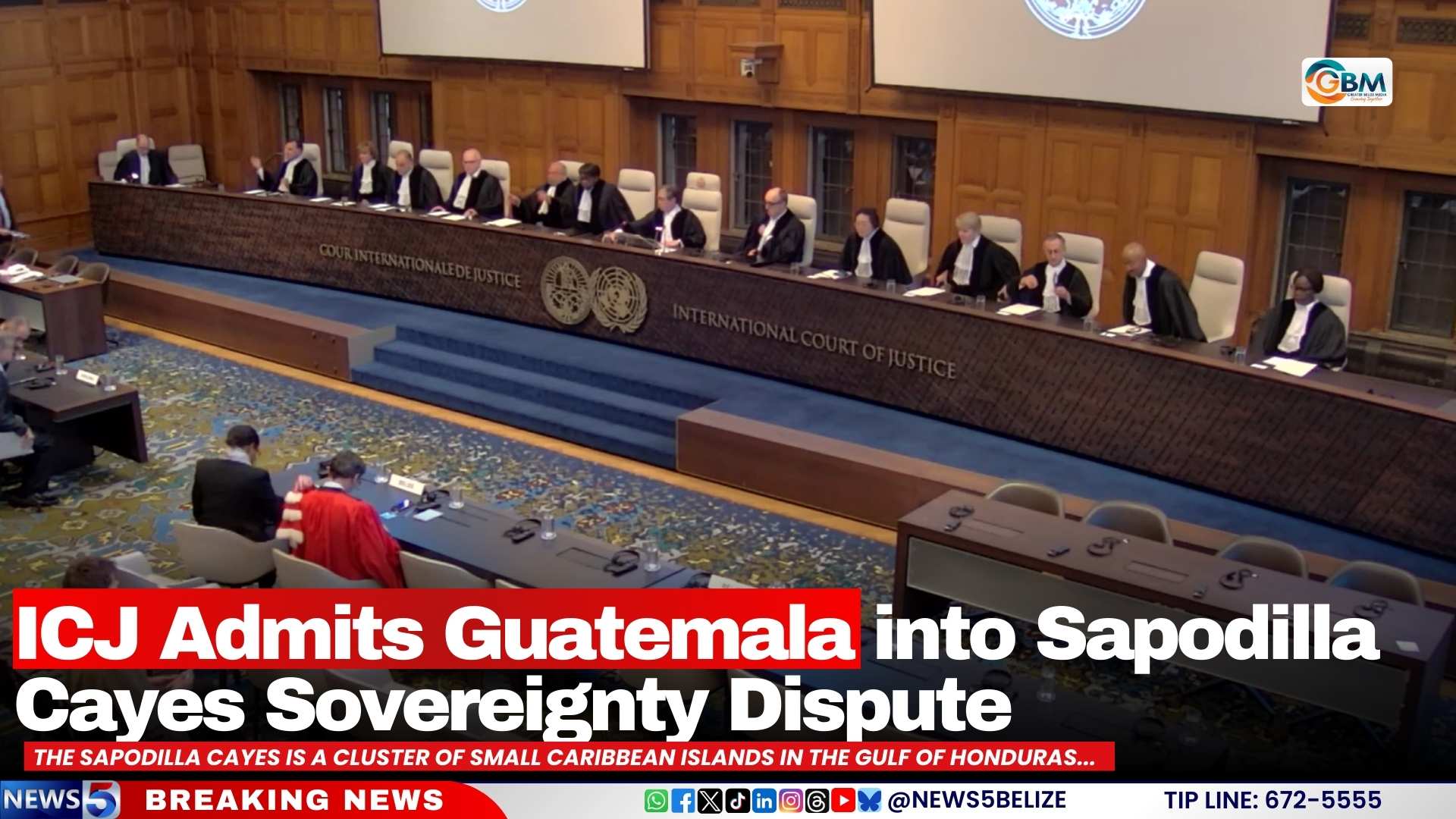
In a landmark procedural ruling with significant geopolitical implications, the International Court of Justice (ICJ) has unanimously granted Guatemala intervenor status in the ongoing territorial dispute between Belize and Honduras over the strategic Sapodilla Cayes archipelago. The March 19, 2026 decision transforms what was previously a bilateral confrontation into a triangular legal battle concerning sovereignty over these contested Caribbean islands.
The ruling, delivered at the Peace Palace in The Hague, does not address the fundamental question of territorial ownership but substantially alters the procedural landscape of the case. Guatemala will now participate as a non-party intervener specifically to safeguard its legal interests and formally present the nature and scope of its competing sovereignty claim to the judicial panel.
The Sapodilla Cayes—a cluster of predominantly uninhabited coral islands situated at the convergence point of Belizean, Guatemalan, and Honduran maritime boundaries in the Gulf of Honduras—possess strategic and legal importance vastly disproportionate to their physical size. While administratively controlled by Belize since its independence, all three nations assert historical claims rooted in colonial succession narratives.
Belize grounds its sovereignty argument on continuous peaceful administration inherited from British colonial authority, supplemented by allegations of Honduran acquiescence. Honduras, referring to the territory as Cayos Zapotillos, bases its claim on succession from Spanish colonial title and assertions of continuous administrative control. Guatemala’s parallel claim similarly derives from alleged succession to Spanish sovereignty, currently being litigated in a separate ICJ case against Belize encompassing broader territorial and maritime disputes.
Guatemala’s December 2023 intervention application, filed under Article 62 of the ICJ Statute, sought limited participation to ensure the Belize-Honduras proceedings wouldn’t prejudicially affect its separate legal battle with Belize. While Belize raised no objections, Honduras vehemently opposed Guatemala’s intervention, arguing it failed to demonstrate precise legal interests, constituted procedural redundancy, and represented an abuse of court mechanisms.
The ICJ comprehensively rejected Honduras’s objections, determining Guatemala satisfied all four requisite conditions under Article 62 of the Statute and Article 81 of the Rules of Court. The court characterized Guatemala’s claim as a “real and concrete” legal interest rather than merely political or strategic, noting that any sovereignty determination would inevitably impact Guatemala’s parallel litigation against Belize.