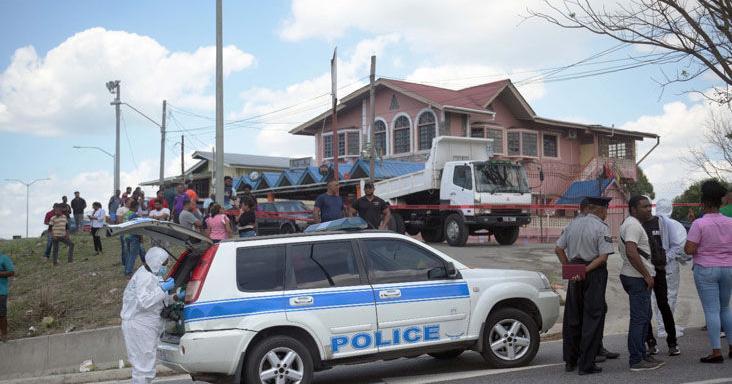
In a brazen midday execution that has raised serious questions about crime prevention effectiveness, 39-year-old contractor Shandon Arjoon was fatally shot multiple times near a construction site in South Oropouche on Tuesday. The father of one was developing land for commercial and private use along the Oropouche Main Road when a masked assailant approached and opened fire with a handgun around 11:20 a.m.
According to eyewitness accounts, the shooter wearing a ski mask fled the scene immediately after the attack, entering a waiting vehicle that sped away from the crime location near the St. Mary’s Interchange. Bystanders reported hearing between three to five gunshots, with one witness describing how they had just exchanged greetings with Arjoon moments before the shooting erupted.
The murder has taken on broader significance as it occurred despite Trinidad and Tobago currently operating under a state of emergency. Clint Arjoon, the victim’s uncle and president of the Fyzabad Chamber of Commerce, openly questioned the effectiveness of these emergency measures, noting that the killer managed to operate in a busy area adjacent to a major highway without apprehension.
Investigations reveal that Arjoon had previously reported multiple death threats to the La Brea Police Station related to a property dispute in Vessigny. Family members expressed frustration with law enforcement’s response, stating that despite formal complaints, inadequate protection was provided. The victim’s distraught father, Keith Arjoon, offered minimal commentary to media, simply characterizing the country’s crime situation as “bad” while expressing skepticism about the likelihood of his son’s killer being apprehended.
This incident has sparked renewed concerns about Trinidad’s ongoing crime epidemic, with the national murder toll reaching 75 by Tuesday evening—slightly below last year’s tally of 83 at the same date. Economic implications were also highlighted, with business leaders noting that persistent criminal activity continues to drive migration and negatively impact the nation’s economic stability.