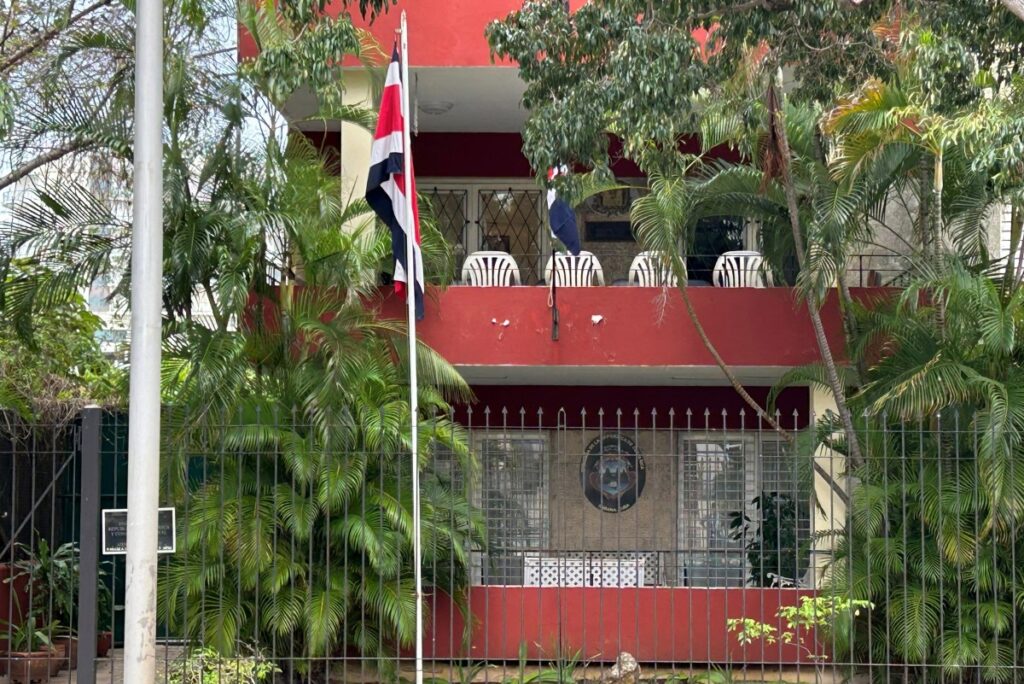
In a dramatic diplomatic rupture, Costa Rica has shuttered its embassy in Havana and ordered Cuban diplomats to depart from San José. The Central American nation’s conservative government announced the decision Wednesday, citing grave concerns over human rights violations in Cuba.
President Rodrigo Chaves framed the action as part of a broader regional initiative, stating, ‘We must cleanse communists from the hemisphere.’ This alignment with U.S. foreign policy objectives underscores Costa Rica’s strategic partnership with the Trump administration, which has intensified pressure on Cuba through economic sanctions and regime change threats.
Foreign Minister Arnoldo Andre Tinoco elaborated on the rationale behind the diplomatic break, pointing to the ‘sustained deterioration of human rights conditions in Cuba’ and increased ‘repressive measures targeting citizens, activists, and dissident voices.’ The ministry’s directive requires all Cuban diplomatic staff to exit Costa Rican territory, though consular officials will retain their positions to handle citizen services.
This move places Costa Rica alongside Ecuador, another U.S. ally that recently expelled Cuban Ambassador Basilio Gutiérrez on March 4th. Ecuadorian authorities accused Gutiérrez of meddling in domestic politics and participating in ‘violent activities.’ The coordinated actions suggest a developing pattern of diplomatic isolation against Cuba within Latin America, potentially signaling a new phase of regional geopolitical realignment influenced by Washington’s anti-communist stance.