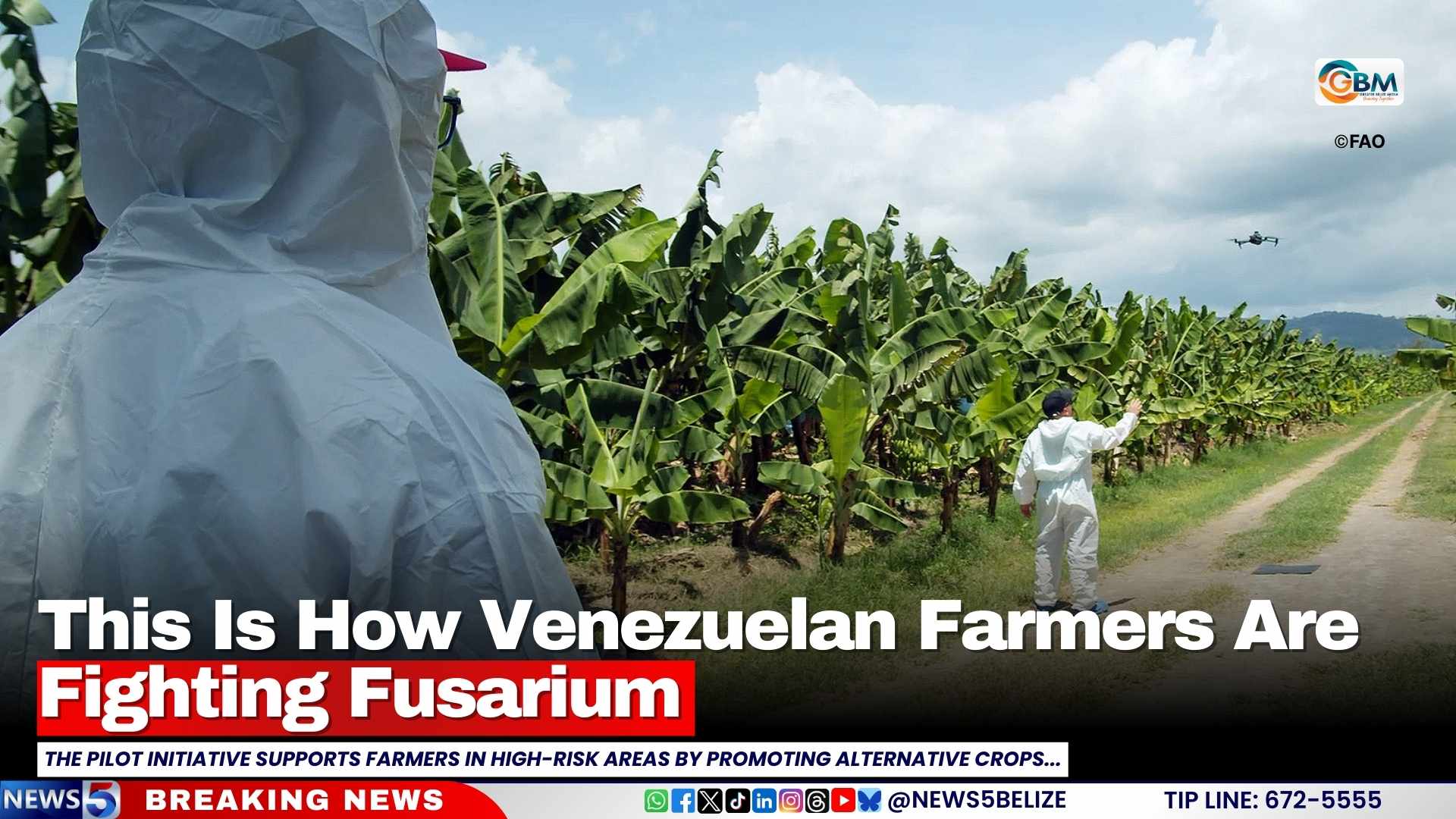
Venezuelan agricultural communities have embarked on an extraordinary transformation in response to one of the most severe phytosanitary emergencies in recent history. The confirmation of Fusarium Tropical Race 4 (TR4) by Venezuela’s National Institute of Integral Agricultural Health (INSAI) in 2023 triggered a nationwide agricultural recalibration across key producing states including Aragua, Carabobo and Cojedes.
This soil-borne pathogen, capable of persisting for over two decades, effectively decimated banana and plantain plantations that had sustained local economies for generations. In the Renacer community of Aragua, where farmers had cultivated 20 hectares of banana crops since 2018, the fungal invasion resulted in complete agricultural collapse within months.
Farmer Lesbia Margarita García recounted the emotional devastation: ‘Witnessing our lifelong work deteriorate before our eyes was heartbreaking. We faced the painful necessity of removing entire groves of banana trees that represented years of dedication.’
The crisis prompted an unprecedented collaborative response between national authorities and international organizations. The Food and Agriculture Organization of the United Nations (FAO) implemented emergency intervention measures, supplying alternative crop seeds, advanced agricultural tools, biosecurity equipment and comprehensive technical training.
Through the innovative INSAI-FAO partnership program, affected producers have successfully transitioned to cultivating corn, cassava, beans, chili peppers and pumpkin. This agricultural diversification strategy incorporates sophisticated crop rotation techniques and organic fertilization methods to restore soil vitality and create sustainable income streams.
‘Our corn harvests have demonstrated remarkable success, benefiting entire communities and proving the resilience of these lands,’ García noted with renewed optimism.
The initiative represents a comprehensive national effort involving continuous farmer education, public awareness campaigns, and enhanced institutional coordination. Technologically, the program has deployed multispectral drones and advanced laboratory equipment to establish early detection systems and strengthen phytosanitary monitoring capabilities.
Internationally, Venezuela’s experience has contributed to global knowledge sharing through FAO’s World Banana Forum and the Global Network on TR4, establishing new protocols for addressing agricultural emergencies in tropical regions worldwide.