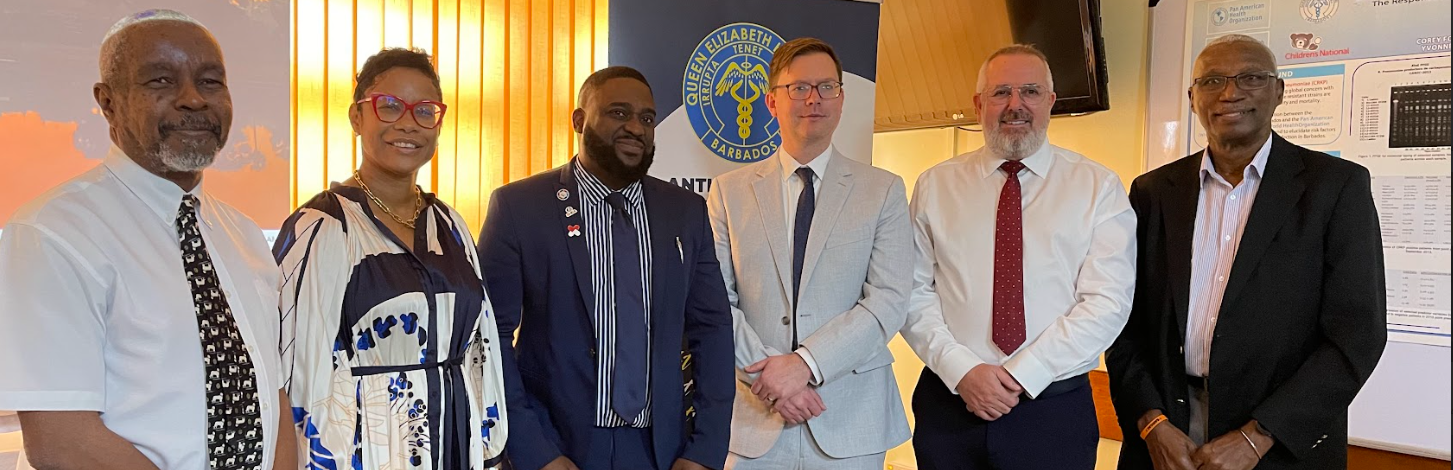
Barbados is intensifying its frontline campaign against the escalating threat of antimicrobial resistance (AMR) through a strategic international partnership. The Queen Elizabeth Hospital (QEH) has launched an intensive training initiative, welcoming Canadian infectious diseases pharmacist Mark McIntyre to bolster the nation’s defenses against drug-resistant pathogens. This collaborative effort underscores a growing global health crisis that renders standard medications ineffective against evolving bacteria, viruses, and fungi.
During a welcoming ceremony, QEH’s infectious disease specialist, Dr. Corey Forde, presented alarming data from the Global Health Research Group on Antimicrobial Resistance. The research forecasts a potential 39 million global fatalities between 2025 and 2050 if immediate action is not taken. The World Health Organisation’s 2019 figures, which attributed 1.27 million deaths directly to AMR and linked 4.95 million more to its effects, highlight the urgency of this health emergency. Dr. Forde emphasized that low- and middle-income nations with strained healthcare systems face the greatest risk.
Barbados has emerged as an unexpected leader in the international arena against AMR. The nation partnered with Malta to table a political declaration on the issue at the 79th United Nations General Assembly, with Prime Minister Mia Mottley championing the cause through concrete actions rather than mere rhetoric. This diplomatic effort is supported by substantial domestic investment, including a $3 million government allocation for advanced microbiology equipment that enables faster pathogen identification and accelerated treatment initiation at QEH.
Through Pan American Health Organization (PAHO) support, Barbados has enhanced its capacity as a regional center of excellence, extending technical assistance to Eastern Caribbean states. The hospital’s staff has received specialized training in molecular technology and whole genome sequencing, significantly strengthening surveillance capabilities for emerging infections. A landmark development in this comprehensive strategy is the creation of Barbados’ first antimicrobial stewardship pharmacist position, held by Deonne Jacobs, to oversee more prudent antibiotic usage.
QEH Chief Executive Officer Neil Clark characterized AMR as “one of the most serious health challenges facing the world today,” noting its potential to undermine modern medical treatments and jeopardize health systems and economies globally. The current two-week engagement provides a crucial opportunity for medical practitioners to evaluate practices, identify deficiencies, and reinforce stewardship protocols to preserve effective medications for future generations.
Newly appointed Minister of Health Senator Lisa Cummins, who is conducting a listening tour across the health system, committed to continuing the previous administration’s efforts. Her priorities include establishing a dedicated AMR center in partnership with the Best-dos Santos Lab and deepening regional and international collaborations.
The campaign extends beyond clinical settings with planned public lectures and community engagement events. Dr. Forde encouraged public attendance at an expert-led session at the Daphne Joseph-Hackett Theatre on Saturday, emphasizing that simple preventive measures—including regular handwashing, avoiding antibiotic misuse for viral illnesses like flu, and completing prescribed antibiotic courses—can significantly curb resistance development.