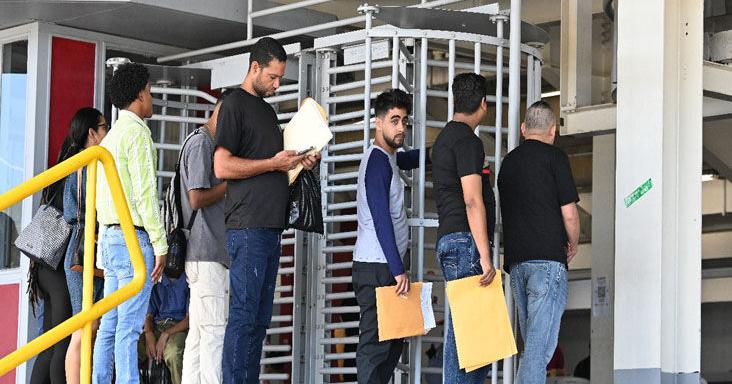
A significant legal and humanitarian challenge is unfolding in Trinidad and Tobago as registered migrants, primarily from Venezuela, face systemic barriers to obtaining driver’s licenses. This has resulted in widespread driving without proper documentation, despite the severe legal consequences. Police statistics from the Crime and Problem Analysis Branch (CAPA) reveal that between 2024 and early March 2026, 124 migrants were formally charged for this offense, with men constituting 96% of the cases. Venezuelan nationals accounted for the vast majority (93), followed by Jamaicans (15) and Guyanese (4).
The personal toll of this policy was illustrated by a 50-year-old Venezuelan plumber who was incarcerated for 16 days in 2022. Despite this, he continues to drive out of economic necessity. Interviewed via WhatsApp, he explained that his daily earnings of less than $100 at a local hospital were insufficient, especially after transportation costs. To supplement his income, he purchased a vehicle and began working as a private-hire taxi driver at night, where fares were significantly higher. His presentation of an international driver’s license during his arrest was dismissed by authorities, leaving him confused and compelled to continue breaking the law to support his family locally and send remittances to Venezuela.
Another migrant, identified only as Emilio, echoed this sentiment. A driver with over 20 years of experience in Venezuela, he stated that his work requires island-wide travel, making driving essential. He expressed fear of eventual arrest, citing ‘exorbitant’ fines and the risk of imprisonment, and alleged that some police officers exploit the situation by demanding bribes.
The issue extends beyond economics to encompass safety, particularly for women. Angie Ramnarine of the La Romaine Migrant Support Community reported that inaccessible public transport and fears of predation are key drivers behind illegal migrant driving. She shared harrowing accounts of harassment and violence, including the 2020 case of an 18-year-old Venezuelan vendor who was raped, stabbed, and left for dead after entering a taxi. These safety concerns have spurred some migrant men to drive specifically to protect female family members, leading to the emergence of an informal, Venezuelan-exclusive transportation network.