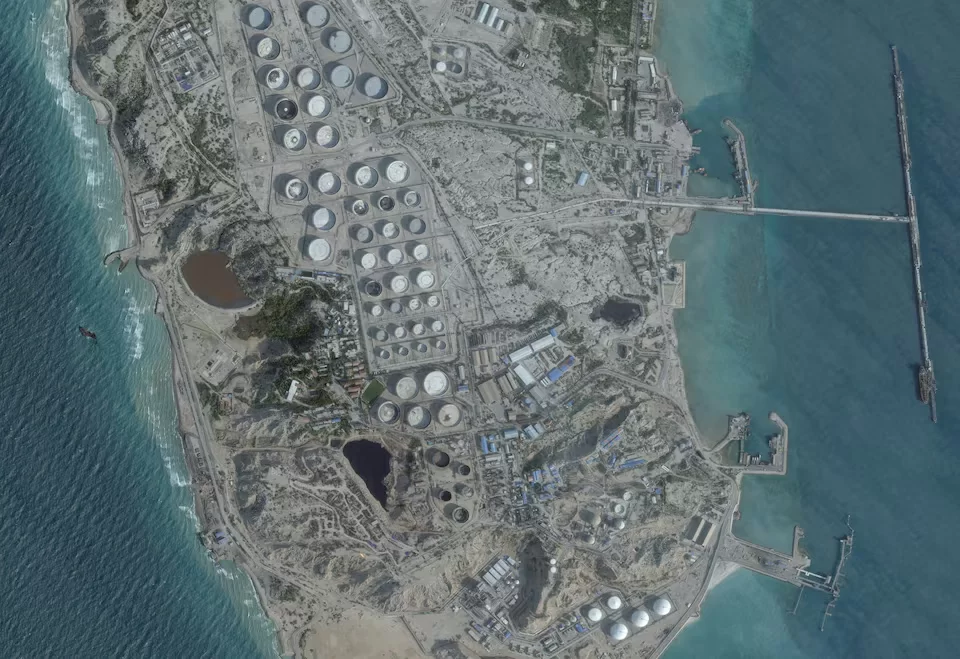
U.S. President Donald Trump has issued a stark warning to Iran, threatening to target oil infrastructure on the strategic Kharg Island if Tehran continues attacking vessels in the Strait of Hormuz. This escalation intensifies pressures on global oil markets and energy security worldwide.
Kharg Island serves as Iran’s primary oil export terminal, handling approximately 90% of the nation’s crude shipments. Located 500 kilometers northwest of the Hormuz Strait—a vital waterway transporting 20% of global oil daily—any attack on this facility could trigger significant disruptions to worldwide energy supplies.
While acknowledging previous U.S. strikes had avoided oil infrastructure, Trump declared this restraint would end if Iran continues impeding maritime transit. “I will immediately reconsider this decision,” he stated on social media, noting U.S. forces had already “completely destroyed military targets on the island.”
Iran responded defiantly, downplaying damage to Kharg while threatening enhanced retaliation including ballistic missiles. The Revolutionary Guard explicitly named parts of the United Arab Emirates (UAE) as legitimate targets, asserting Iran’s right to defend its sovereignty by striking U.S. missile assets concealed within Emirati cities.
Recent hostilities include Iran’s launch of nine ballistic missiles and 33 drones toward the UAE on Saturday, bringing total conflict numbers to 294 ballistic missiles, 15 cruise missiles, and 1,600 drones. Iranian authorities advised UAE civilians to evacuate ports and military installations to avoid casualties.
Despite attacks, Kharg Island’s oil exports continue uninterrupted according to local officials. The U.S. Navy announced plans to escort tankers through the Hormuz Strait to ensure energy security for the critical fossil fuel corridor.
Supreme Leader Mojtaba Khamenei, successor to his assassinated father, declared the Strait must remain closed as leverage while conflict persists.
The 39-kilometer Hormuz Strait represents the world’s most crucial oil transit chokepoint, connecting the Persian Gulf with the Gulf of Oman. It provides the only ocean access for Gulf exporters and facilitates one-fifth of global oil and LNG shipments.
Iran’s military warned that attacks on its energy infrastructure would trigger retaliatory strikes against regional oil facilities cooperating with the U.S.
In the UAE, a fire at Fujairah port—a key bunkering hub—temporarily halted some oil loading operations after intercepted drone debris caused blazes, though no injuries were reported.
Despite warfare, Iran has increased oil production, exporting 1.1-1.5 million barrels daily primarily to China, the world’s largest oil market.
Oil prices remain highly volatile amid Trump’s fluctuating statements regarding war duration, with escalations affecting global energy and stock markets.
Beyond military tensions, casualties continue mounting with approximately 2,000 deaths reported since the conflict’s inception—mostly in Iran but also across Lebanon and the Gulf region—displacing millions.
Additional developments include a rocket attack on the U.S. embassy in Baghdad Saturday, while Iranian media reported further missile attacks on Israel coordinated with Lebanon’s Hezbollah. An Israeli strike on a South Lebanon health center killed at least 12 medical personnel.