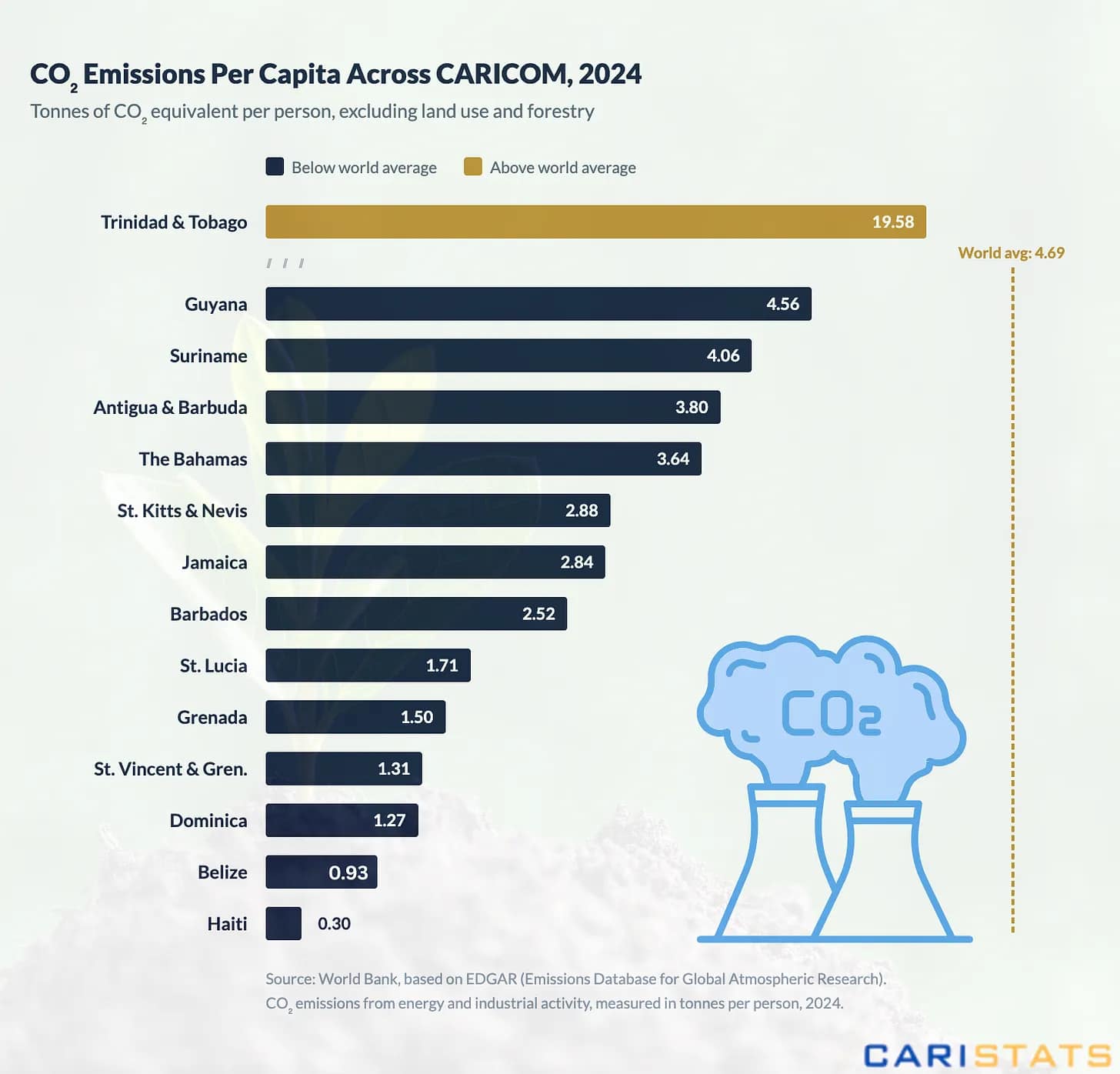
A comprehensive analysis of carbon emissions data reveals a significant disparity among Caribbean Community (CARICOM) nations, with most member states maintaining per capita emissions well below the global average. According to the latest figures from the Emissions Database for Global Atmospheric Research (EDGAR), 13 of the 14 CARICOM countries emitted less than the worldwide per capita average of 4.69 tonnes of carbon dioxide in 2024.
Trinidad and Tobago stands as the notable exception, registering 19.58 tonnes of CO₂ per person—more than quadruple the global benchmark. This elevated emission level is directly attributable to the nation’s petrochemical-dependent economy, though officials note a promising 28% reduction since 2015, coinciding with decreased output from its energy sector.
At the opposite extreme, Haiti demonstrates the region’s lowest emissions at merely 0.30 tonnes per capita, followed by Belize at 0.93 tonnes. Several Eastern Caribbean nations—including Dominica, Grenada, St. Vincent and the Grenadines, and St. Lucia—all maintained emissions below 2 tonnes per person, representing less than half the global average.
Guyana emerges as the most significant regional emitter on an upward trajectory, with per capita emissions surging 67% since 2015 from 2.73 to 4.56 tonnes. This increase parallels the rapid development of the country’s offshore oil industry.
The data underscores a persistent climate injustice: Caribbean nations that contribute minimally to global carbon emissions simultaneously face disproportionate vulnerability to climate change impacts, including rising sea levels and intensifying hurricane activity.