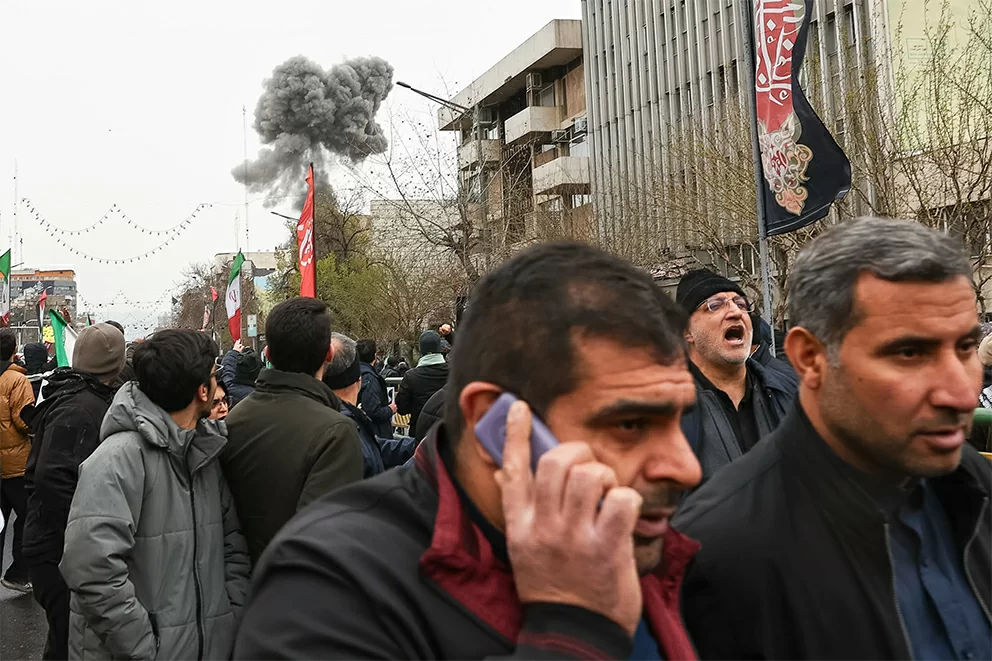
A series of explosions struck central Tehran during the annual Quds Day demonstrations, resulting in one confirmed fatality and escalating tensions in the ongoing military confrontation between Iran and the US-Israel alliance now entering its fourteenth day.
The blast occurred Friday afternoon at Ferdowsi Square where thousands had gathered for the international day of solidarity with Palestine. While the exact cause remains undetermined, the explosion came shortly after Israeli officials had warned of potential airstrikes in the area.
Iran’s state-run Press TV reported one woman killed by shrapnel from what they described as a US-Israeli aerial attack, though no further casualty details were provided. According to Iranian health authorities, the cumulative toll since February 28 stands at 1,444 fatalities and 18,551 injured from American and Israeli military operations.
Despite security concerns, state media reported continued large turnout for Quds Day commemorations across multiple Iranian cities. Participants carried Iranian flags and images of Palestinian fighters while chanting “Death to Israel” and “Death to America” during the marches.
The demonstrations were attended by senior Iranian officials including President Masoud Pezeshkian and National Security Council Secretary Ali Larijani, who asserted that Israel’s bombing campaign reflected “fear” and criticized US President Donald Trump for underestimating Iranian resolve.
The global implications of the conflict continued to intensify with Iran’s newly appointed Supreme Leader announcing the permanent closure of the Strait of Hormuz to international shipping. This strategic waterway, which typically handles approximately 20% of global oil exports, has become the focal point of escalating regional tensions.
The maritime blockade has created massive congestion with dozens of oil tankers stranded in lengthy queues, severely disrupting global energy supplies and driving crude prices to approximately $105 per barrel—a significant increase over recent months. This price surge has triggered fuel rationing measures in neighboring Gulf states including Oman, UAE, and Kuwait as governments attempt to manage limited supplies and prevent social unrest.
The economic impact extends throughout Asia and beyond, affecting all nations dependent on Hormuz transit routes. Supply chain disruptions are now affecting both transportation networks and industrial operations, increasing economic pressure across the region.