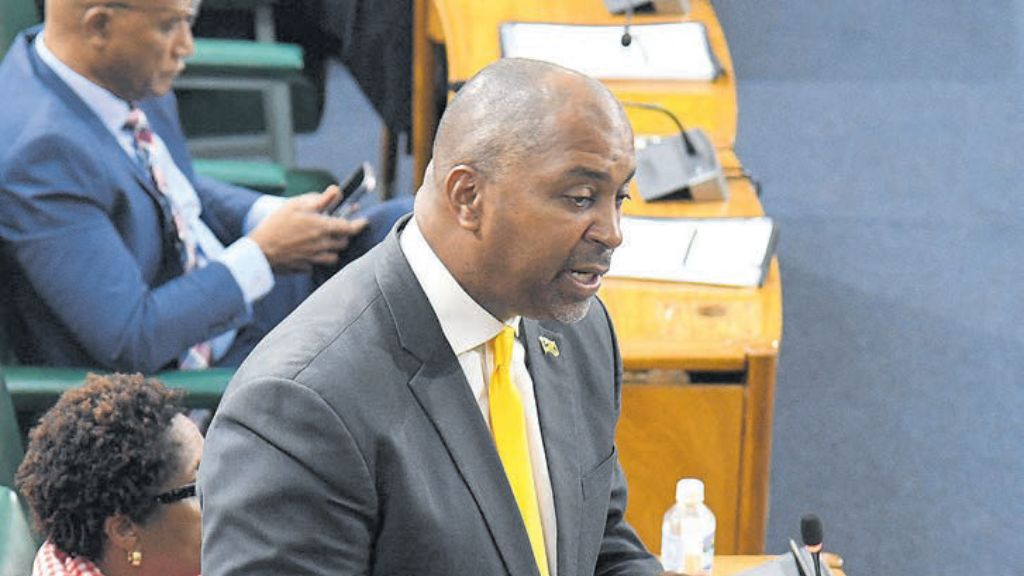
Jamaica’s economic trajectory faced scathing criticism in Parliament on Thursday as Opposition Finance Spokesman Julian Robinson launched a forceful assault on the Government’s fiscal policies, characterizing them as condemning the nation to a perpetual cycle of economic stagnation. During his address in the 2026/27 Budget Debate, Robinson articulated profound concerns regarding the nation’s long-term growth prospects, citing official projections that anticipate a mere 1% growth rate beyond 2029 following post-hurricane recovery.
The central thrust of Robinson’s argument centered on what he termed a ‘pattern of chronically low economic growth’ with devastating real-world consequences. He detailed how this stagnation manifests through inadequate wages, chronically under-resourced public services, widespread youth underemployment, and collective national frustration. The opposition spokesman particularly emphasized the alarming nature of the Government’s own fiscal projections that anticipate economic growth plateauing at 1% after a temporary recovery period from Hurricane Melissa’s October impact.
Robinson asserted that at such minimal growth levels, living standards cannot experience meaningful improvement, causing Jamaica to consistently fall short of its potential. While acknowledging the immediate priority of restoring pre-hurricane productive capacity, he insisted this should represent merely the baseline rather than the ultimate objective. The opposition finance spokesman reintroduced his Four-E strategy—focusing on energy, efficiency, education, and emerging sectors—as a comprehensive alternative to what he characterized as the Government’s inadequate tinkering around the edges of economic policy.
He concluded with a stark warning that without addressing these fundamental structural issues predating and outlasting hurricane impacts, Jamaica’s economy would remain trapped in a low-value-added system incapable of delivering improved quality of life for its citizens.